Asteroid Day Celebrated Internationally June 30; DART Asteroid Mission Target Named
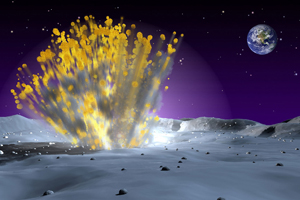
Fascination, fear and ambition are human attributes provoked by Asteroids – rocky, atmosphere-free planetoids officially designated ‘Small Solar System Bodies’ per IAU. NASA counts 958,881 asteroids and 23,013 NEOs, of which 9,164 are >140 m in diameter – largely via Steward Observatory Catalina Sky Survey and IfA Pan-STARRS on Haleakala. ESA Planetary Defense is managed by Near-Earth Object Coordination Centre, located in Italy, while international collaboration is fostered through International Asteroid Warning Network and Space Mission Planning Advisory Group. June 30 commemorates the most impactful asteroid in recorded history, the 1908 Siberian Tunguska event which flattened trees over 2,150 km2. Recognizing the existential threat Asteroids pose to life on Earth as well as the promise of scientific advancement and resources, a disparate group of intrepid futurists including Rusty Schweickart, Danica Remy, Brian May, and Grigorij Richter declared Asteroid Day in 2014, gaining formal UN recognition in 2016. ESA and NASA are collaborating on Asteroid Impact and Deflection Assessment, set for 2021 launch, in which the orbit of newly-named Dimorphos – satellite of Didymos – will be affected by the kinetic energy of NASA DART spacecraft and later analyzed by ESA Hera. Ongoing asteroid missions are JAXA Hayabusa2, on Earth return trajectory with Ryugu surface and subsurface samples, while NASA OSIRIS-Rex orbits 101955 Bennu, preparing for sample collection and 2023 return. (Image Credits: NASA, ESA, IfA, Steward Observatory, BCE, LSA, B612, SES, OHB)
MONDAY
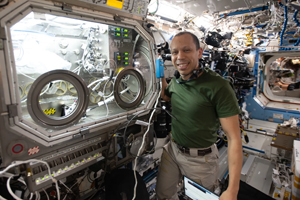
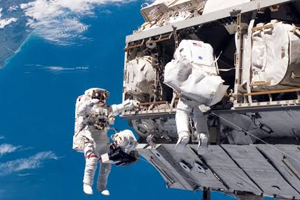
Highlights… Jun 29 — ISS, 405-km LEO: Expedition 63 five-member crew progress on capillary fluid dynamics, protein imaging, electrolysis and nutrition science missions; Cassidy and Behnkin prepare for second power system maintenance EVA; benzene leak investigation ongoing, despite Air Quality Monitor 1 device malfunction.
Jun 29 — Global: China next-gen crew capsule being developed to carry up to 6 people; Australia disburses US$7.6M and Western Australia $4.1M to bolster spacecraft development, infrastructure, computation; Russia, supported by France, proposes ban on weapons in space.
SpaceX to Launch #3 Third-Gen GPS Satellite Toward MEO to Join 31 Active USA GPS Sats
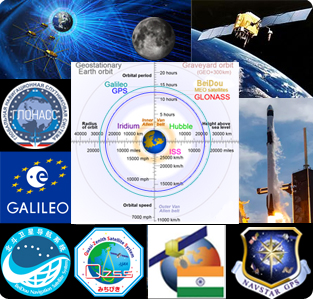
GPS 3 SV03 is scheduled to launch June 30 from Cape Canaveral AFS FL on SpaceX Falcon 9 to reach 20,180 km orbit. It incorporates the latest accuracy in the public Safety of Life (L5) frequency 1176 MHz which will enable pinpointing to ~30 cm when broadcast by 24 satellites in 2024. NASA is developing a special receiver to extend GPS to higher altitudes for a lunar comm & positioning system for Artemis human Moon missions. Russia Global Navigation Satellite System (GLONASS) with 24 sats at 19,130 km, is currently producing its 3rd-generation series K2 with ½ the mass of the previous generation and 3-year lifetime extension. Glonass accuracy is ~2.8 meters and with new improvements it is expected to reach 0.6 meters NET 2021. China / Zhongguo BeiDou “Big Dipper” Navigation Satellite System saw its 35th satellite launch June 23, the final of its 3rd gen network which is expected to have millimeter-level accuracy with post-processing. Uniquely, BeiDou has 27 at MEO, 5 at Geosynchronous Equatorial Orbit, and 3 at Inclined Geo-Synchronous Orbit. European Union Galileo positioning system with 22 satellites reaches accuracy ~1 meter for public and 1 cm for encrypted. Galileo 2nd gen sats are planned to launch late 2020s. Indian Regional Navigation Satellite System is operational at 8 satellites. 4 Japan Quasi-Zenith Satellite System sats enhance GPS in Asia-Oceania, with plans for independent GNSS of 7 sats launching 2023. (Image Credits: USAF, NASA, SpaceX, EU, ESA, CNSA, Roscosmos, ISRO, JAXA)
Jun 29-30 — USA Department of Commerce and the Department of State, Arlington VA: 2nd Space Enterprise Summit; cancelled.
Jun 29 – Jul 3 — ESA, Noordwijk, The Netherlands: Space2Connect Conference; to explore and discuss emerging space-based solutions to address challenges and opportunities of the digital economy; postponed to Q2 of 2021.
Jun 29 — Moon: At perigee (distance 368,657 km), 16:07.
Jun 29 — Asteroid 3 Juno: At opposition, 10:00.
Continued From…
Jan 2019 – Sep 2020 — New Horizons, Kuiper Belt: Full data collected from 7 instruments during KBO Arrokoth flyby to be transmitted to Earth over this time period.
Nov 2019 – Nov 2020 — Hayabusa2, Earth Trajectory: JAXA Hayabusa2 with two samples collected from C-type asteroid 162173 Ryugu on trajectory for Earth return.
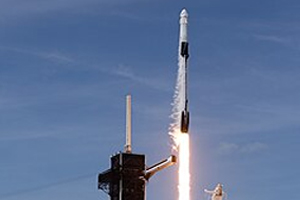
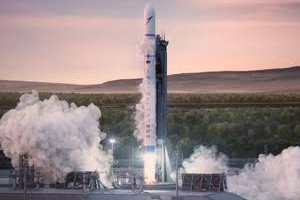
Jun 30 — SpaceX, Launch Falcon 9 / GPS 3 SV03, Cape Canaveral AFS FL: SpaceX to launch the third USAF third-generation navigation satellite for the Global Positioning System.
Jun 30 — Asteroid Day Ltd., Global: Asteroid Day 2020; education, events, films and entertainment hosted by organizations and individuals to increase awareness about asteroids.
Jun 30 — Kavli Institute for Particle Astrophysics and Cosmology (KIPAC), Stanford CA / Online:Public Lecture: Supermassive Black Holes; by Dr. Dan Wilkins, 18:00.
Jun 30 — SETI Institute,Mountain View CA / Online: Animal Intelligence and the Search for Life Beyond Earth; featuring Nathalie Cabrol (Astrobiologist and Director of the Carl Sagan Center), and Lori Marino (Neuroscientist), moderated by Simon Steel (SETI), 14:30 PDT.
Jun 30 — Mercury: At inferior conjunction with Sun, 0.563AU from Earth, 17:00.
WEDNESDAY
NET Jul — Roscosmos State Corporation, Launch Angara-A5 / Test Flight,Plesetsk Cosmodrome, Russia: Russia government Angara-A5 rocket to launch on its second orbital test flight; Angara rocket will be used for future Moon and Human missions.
Jul 1 — ISS, U.S. EVA #66, 405-km LEO: Expedition 63 Chris Cassidy and Bob Behnken to perform spacewalk up to ~7 hours for power system upgrades to ISS; coverage begins 06:00 EDT, EVA starts 07:35.
Jul 1 — Johnson Space Center, NASA, Online / Houston TX:NASA Astronaut Kate Rubins, Russia Cosmonauts Sergey Ryzhikov and Sergey Kud-Sverchkov to discuss Expedition 63/64, 16:00 EDT, live coverage available.
Jul 1 — Deep Space, Interstellar Space: Voyagers nearing 43 full years in space, continue collecting data on cosmic rays, low-energy particles and plasma waves; Voyager 2 is only craft to fly by Neptune in 1989, NASA proposes Trident to study Neptune and Triton 2038.
Jul 3 — Rocket Lab, Launch Electron / “Pics Or It Didn’t Happen”,LC1, Mahia Peninsula, New Zealand: Launch window opens for Rocket Lab Electron rocket to launch its 13th flight for Canon Electronics CE-SAT-IB Earth-imaging satellite, Planet five SuperDove CubeSats, and Faraday 1 CubeSat for In-Space Missions.
Jul 3 — ESA,Online: Due Date to submit ideas for ESA Large Lunar Lander ‘EL3’. flying to Moon 2027 as part of International Lunar Gateway contribution.
Jul 3 — Apollo Asteroid 2020 MO: Near-Earth Flyby (0.024 AU)
SATURDAY
Jul 4 — Juno, Jupiter Orbit: Spacecraft reaches 4th full year at Jupiter today, planned to continue operations at least until July 2021 before controlled impact to ensure Juno does not impact Jovian moons Europa, Ganymede and Callisto; one-way transmission signal to Earth is 48 minutes.
Jul 4 — Space Age Publishing Company, ILOA, The VI, Online / Palo Alto CA: Galaxy Forum USA 2020 Silicon Valley; 09:30-11:30 PDT, free; featuring Chris McKay (NASA Ames), Lynn Rothschild (NASA Ames), Pete Worden (Breakthrough Initiatives), Steve Durst (SPC / ILOA).
Jul 4 — Tennessee State Parks, Byrdstown TN: Lecture: Invading Mars; by NASA/JPL Solar System Ambassador volunteer Theo Wellington, at Cordell Hull Birthplace State Park.
Jul 4 — Earth: At aphelion, 1.0167 AU from Sun, 01:00.
Jul 4 — Moon: Full Buck / Thunder Moon, 18:44.
Jul 4 — Penumbral Eclipse of the Moon: Visible from N & S America, SW Europe, W Africa; 35% of Moon’s disc will be in partial shadow with no part of it in complete shadow, begins 17:07:23, maximum 18:30:00, ends 19:52:23.
Emanating from ~6km-wide comet with 5.3-year Solar orbit, visible in constellation Aquarius near star Delta Aquarii, fast, faint meteors peak on this night, best...
The International Research Conference is a federated organization dedicated to bringing together a significant number of diverse scholarly events for presentation within the conference...
Includes ~150 meetings covering the fields of COSPAR Scientific Commissions / Panels / Task Groups, such as SC B: The Earth-Moon System, Planets, and...
From 02 to 07 August 2026, a few thousand geoscientists across diverse disciplines will gather at the 23rd annual meeting of the Asia Oceania Geosciences...
2:45 pm EDT from Johnson Space Center, NASA astronaut Chris Williams will recap his recent eight-month mission aboard the International Space Station. Williams returned to...
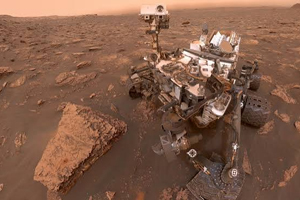
NASA Curiosity (Mars Science Laboratory) rover surpasses another full year of operations on Mars surface today; launched Nov 26, 2011 – landed Aug 5,...
Virtual Series 2026 will offer deeper conversations on why PQC matters and the practical steps businesses should be taking; starts 1:00 pm AEST. Featuring:...
This international lunar science meeting has two objectives: to provide a platform for leading experts to review recent advances across lunar research, from the...
At CSIR International Convention Centre. Key topics are Earth Observation, Developing Space Tourism, Space Supply Manufacturing. Cultural tours are offered.
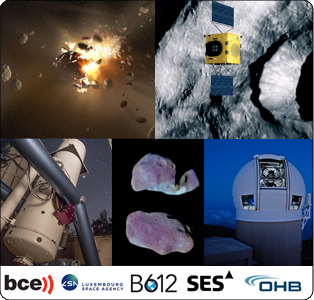 Fascination, fear and ambition are human attributes provoked by Asteroids – rocky, atmosphere-free planetoids officially designated ‘Small Solar System Bodies’ per IAU. NASA counts 958,881 asteroids and 23,013 NEOs, of which 9,164 are >140 m in diameter – largely via Steward Observatory Catalina Sky Survey and IfA Pan-STARRS on Haleakala. ESA Planetary Defense is managed by Near-Earth Object Coordination Centre, located in Italy, while international collaboration is fostered through International Asteroid Warning Network and Space Mission Planning Advisory Group. June 30 commemorates the most impactful asteroid in recorded history, the 1908 Siberian Tunguska event which flattened trees over 2,150 km2. Recognizing the existential threat Asteroids pose to life on Earth as well as the promise of scientific advancement and resources, a disparate group of intrepid futurists including Rusty Schweickart, Danica Remy, Brian May, and Grigorij Richter declared Asteroid Day in 2014, gaining formal UN recognition in 2016. ESA and NASA are collaborating on Asteroid Impact and Deflection Assessment, set for 2021 launch, in which the orbit of newly-named Dimorphos – satellite of Didymos – will be affected by the kinetic energy of NASA DART spacecraft and later analyzed by ESA Hera. Ongoing asteroid missions are JAXA Hayabusa2, on Earth return trajectory with Ryugu surface and subsurface samples, while NASA OSIRIS-Rex orbits 101955 Bennu, preparing for sample collection and 2023 return. (Image Credits: NASA, ESA, IfA, Steward Observatory, BCE, LSA, B612, SES, OHB)
 Jun 29 —
  Jun 29 — NewSpace: Virgin Galactic to provide
  Jun 29 — USA: NASA to name HQ in Washington DC after Black female Engineer
 = All times
 = All times for international terrestrial events in local time unless noted.
 = All times for space events, and…
 = All times for international space / astro events in Hawaii Standard Time unless noted. Add 10 hours to obtain UT (‘Universal Time’).