ISS Expedition 63 Nears Completion as 3 New Crewmembers Set for Launch
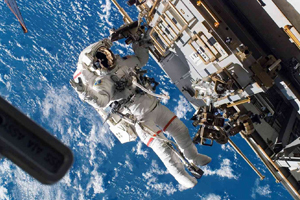
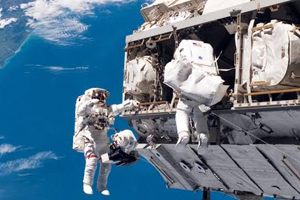
Astronaut (T-B) Kate Rubins, Cosmonauts Sergei Rizhikov and Sergei Kud-Sverchkov are to join Commander Chris Cassidy and flight engineers Anatoli Ivanishin and Ivan Vagner on the International Space Station October 14. Soyuz MS-17 is to be the fastest commute for ISS spaceworkers – a 3-hour, 2-orbit trajectory – before docking to Mini-Research Module 1 (‘Rassvet’). Prior missions to ISS have since 2012 relied on a 4-orbit, 6-hour route, which was itself a vast improvement over the original 2-day journey. Roscosmos Director Dmitry Rogozin claims the trip will be “faster than flying from Moscow to Brussels”. After spending a week together as Expedition 63 crew, on October 21 Soyuz MS-16 will be untethered from docking Mini-Research Module 2 (‘Poisk’), returning Cassidy, Ivanishin and Vagner to Earth after 196 days in LEO. Soyuz MS-17 is thought to be the last Soyuz rocket to carry NASA Astronauts, as Commercial Crew officially begins with SpaceX Crew-1, set to bring the remaining 4 members of Expedition 64 to ISS on Oct 31. The Dragon spacecraft, dubbed ‘Resilience’ by its crew – (L-R) Michael Hopkins, Shannon Walker and Victor Glover of NASA and Soichi Noguchi of JAXA – will take a 25-hour path. While transit time is currently longer than Soyuz, the increased passenger capacity of Dragon will allow for 7-member ISS crews going forward – and mark a resumption of self-reliance for the USA space program. (Image Credits: NASA, RSA)
MONDAY
Highlights… Oct 12 — ISS, ~405-km LEO: Expedition 63 three-member crew setting up experiments received among ~3,500 kg of cargo via Cygnus NG-14 / S.S. Kalpana Chawla, investigating mRNA-based leukemia treatment, microbe isolation, radish growth, soil science and virtual reality; preparations for Soyuz MS-16 load-out begin; air leak detection efforts ongoing.
Oct 12 — NewSpace: Starburst Accelerator to begin operations in India, supporting aerospace & defense startups; ExoTerra wins NASA SBIR to develop upper stage for Virgin Orbit; space transport company Momentus to offer public shares, valuation speculated to be ~US$1B.
Oct 12 — Galaxy: Chandra project is turning digital data of MWG center into sound; WSU study shows some exoplanets may be ‘superhabitable‘ and more suited for life than Earth; MPE GRAVITY instrument performs 1st direct observation of exoplanet using radial-velocity.
Oct 12 — Global:China / Zhongguo next human spaceflight set for late 2021, selects 18 new astronauts (1 woman); India to launch new SSLV rocket before 2021; East Arnhem Land, Australia to host US$1M NASA research launch site; Roscosmos announces reusable, methane-powered <US$900M Amur rocket for 2026.
Oct 12 — USA: Barry “Butch” Wilmore to replace Chris Ferguson as CST-100 Starliner Commander of 2021 Crew Flight Test; Astronaut Alvin Drew launches Patti Grace Smith Fellowship to support black space studies students; JWST full systems evaluation to begin after completing environmental sonic / vibration testing.
Oct 12 — Hawai’i: Keck II telescope adaptive optics upgrade to allow for more detailed images by correcting atmospheric distortions; Andrea Ghez wins 2020 Noble Prize in Physics; UH Space Flight Laboratory Neutron-1 cubesat at ISS awaiting mid-November deployment.
= All times
for terrestrial events in local time unless noted.
= All times for international terrestrial events in local time unless noted.
= All times for space events, and…
= All times for international space / astro events in Hawaii Standard Time unless noted. Add 10 hours to obtain UT (‘Universal Time’).
BepiColombo on Trajectory for Mercury, Prepares for Timely Venus Flyby Oct 15 After Phosphine Discovery
ESA-JAXA BepiColombo is heading into its first Venus deceleration and plane change gravity assist on October 15. The dual satellite mission of Mercury Planetary Orbiter and Mercury Magnetospheric Orbiter “Mio” will reach 2 full years in space on October 20 and aim for Mercury orbit insertion December 5, 2025. While Venus is making headlines in light of the biosignature gas Phosphine being detected, BepiColombo will collect data during its flyby – though its instruments may not be sensitive enough to research signs of life as noted by mission scientist Johannes Benkhoff. Venus atmosphere has been proposed as a site for human habitats at ~50 km level where the environment may be most Earth-like for pressure and temperature (0 to 50° C) and protected from cosmic radiation. BepiColombo will perform a 2nd Venus flyby in Aug 2021 and 6 Mercury flybys starting Oct 2021, utilizing proven low-thrust solar electric propulsion and gravity assist combo performed by ESA SMART-1 that orbited the Moon. Using a spin-ejection to separate at Mercury, MPO with 11 instruments and Mio with 5 groups of instruments (totaling 45 kg) will enter elliptical polar orbits. The craft will become the first to visit Mercury since MESSENGER impacted in 2015 and study its magnetic field, magnetosphere, exosphere and interior & surface structures for at least one year. (Image Credits: ESA, JAXA, NASA)
Oct 12-23 — IEEE,Online:22nd Virtual IEEE Real Time Conference; covering plasma and nuclear fusion, particle physics, nuclear physics, astrophysics, space science, accelerators, medical physics, nuclear power instrumentation.
Oct 12 — Moon: 4.3° NNE of Regulus, 20:00.
Continued From…
Nov 2019 – Nov 2020 — Hayabusa2, Earth Trajectory: JAXA Hayabusa2 with two samples collected from C-type asteroid 162173 Ryugu on trajectory for Earth return.
Jul 29 – Oct 31 — CNSA, Ministry of Education, Ministry of Science and Technology, Chinese Academy of Sciences, Online / Beijing, China: Students to submit ideas for payloads for Chang’e-7 lunar south pole craft, and ZhengHe mission that will return samples from Asteroid 2016HO3 and visit Comet 133P.
TUESDAY
Oct 13 — Beyond Earth,Online:Webinar: Communities Beyond Earth Defined; with ULA CEO Tory Bruno, and Beyond Earth Co-founders Steve Wolfe and Tom Marotta; 13:00-14:00 EDT.
Oct 13 — SDA Bocconi School of Management, Online:Finance and the Space Economy; featuring representatives from ESA, Astroscale, Stellar Project, European Investment Bank, Space Economy Evolution Lab, 18:30-19:30.
Oct 13 — Mars: At opposition, magnitude -2.6, 13:00.
Oct 13 — Apollo Asteroid 2018 GD2: Near Earth Flyby (0.042 AU)
WEDNESDAY
Oct 14 — Roscosmos State Corporation, Launch Soyuz MS-17 / ISS 63S, Baikonur Cosmodrome, Kazakhstan: An RSA Soyuz rocket set to launch members of ISS Expedition 63/64 crew Sergey Ryzhikov and Sergey Kud-Sverchkov of Roscosmos, and Kate Rubins of NASA are planned to stay aboard until Apr 2021; launch at 01:45:05 EDT, live coverage available.
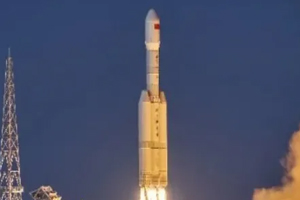
Oct 14 — CNSA, Launch Long March 6 / ÑuSat 9-18, Taiyuan Satellite Launch Center, China: China Long March 6 rocket to launch 10 ÑuSat Earth-imaging satellites for Satellogic of Argentina.
Oct 14 — NASA, ISS U.S. National LaboratoryOnline:International Destination Station; collaborative discussion featuring Astronaut Christina Koch, ISS Deputy Chief Scientist Jennifer Buchli, ISS National Lab Senior Program Director Liz Warren and ISS National Lab VP of Programs and Partnerships Christine Kretz,14:00 CDT.
Oct 14-16 — Aeronautics and Space Engineering Board (ASEB) of National Academies of Sciences, Engineering, and Medicine,Online / Washington DC:ASEB Fall 2020 Meeting.
Oct 14 — Apollo Asteroid 2020 TD: Near Earth Flyby (0.048 AU)
THURSDAY
Oct 15 —BepiColombo,Venus Flyby: European Space Agency / JAXA Mercury Planetary Orbiter (MPO) and Mercury Magnetospheric Orbiter (dubbed Mio ‘waterway or fairway’) to perform its first Venus flyby / gravity assist today on its trajectory to reach Mercury 2025 after being launched 2018.
Oct 15 — ULA, Launch Delta 4-Heavy / NROL-44,SLC-37B, Cape Canaveral SFS FL: ULA to launch classified satellite cargo for U.S. National Reconnaissance Office.
Oct 15-18 — The Mars Society, Online / Lakewood CO: Online: 2020 Mars Society International Teleconvention; bringing together leading scientists, government policymakers, commercial space executives, science journalists and space advocates.
Oct 15 — Amor Asteroid 2020 RM6: Near Earth Flyby (0.033 AU)
Oct 16 — Moon: New Moon, 09:31; 6.3° NNE of Spica, 11:00; at perigee (distance 356,921 km), 13:57.
SATURDAY
Oct 17 — INTErnational Gamma-Ray Astrophysics Laboratory (INTEGRAL), LEO: Detecting some of the most energetic radiation in Space, ESA, NASA, Roscosmos spacecraft begins 19th year of operations in Space; launched 2002, expected to run out of fuel early 2020s and fall to Earth Feb 2029.
Oct 17 — Roscosmos State Corporation, Launch Soyuz / Glonass K,Plesetsk Cosmodrome, Russia: Soyuz rocket to launch Glonass K navigation satellite.
Oct 17-19 — China Association for Science and Technology (CAST), Zhejiang Provincial People’s Government, Wenzhou, China and Online: World Young Scientist Summit.
Oct 17 — Epsilon Perseid Meteor Shower Peak: Appearing to radiate from the constellation Perseid the September Epsilon Perseids can reach up to 5 per hour traveling at ~65 km per second; peak 12:00.
Oct 17 — Moon: 6.3° NNE of Mercury, 13:00.
Oct 17 — Apollo Asteroid 2020 TG: Near Earth Flyby (0.043 AU)
SUNDAY
Oct 18 — Saturn: At east quadrature, 90° from the Sun, 04:00.
Oct 18 — Asteroid 263251 Pandabear: Near Earth Flyby (1.020 AU)
At the Spokane Convention Center. The meeting will have a broad scope, with a wide-ranging program of science and workforce topics, and celebrating planetary...
Satish Dhawan Space Center, ~14°N, Sriharikota, India
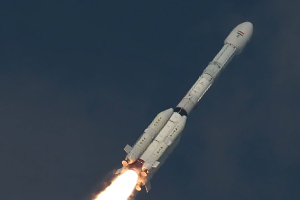
India to launch the replacement satellite for the Indian Regional Navigation Satellite System located at a geosynchronous orbit and providing India with an alternative...
Originally planned around this date for Wenchang, China -- TBC (to be confirmed); As the only professional association for astronauts, ASE supports the advancement of...
Launch Complex 1, ~39°S, Mahia Peninsula, New Zealand
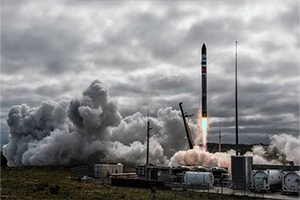
iQPS Launch 9, an Earth observation satellite with Synthetic aperture radar for Japan-based imaging company iQPS, to launch on "The Sea God Surveys" mission...
Coordinating Division Division C Education, Outreach and Heritage The IAU Symposium on Innovative Research and Techniques in Astronomy Communication will take place from November...
Change clocks back 1 hour from Daylight Saving to Standard Time; does not include Hawai’i, Arizona (except the Navajo Nation), American Samoa, Guam, Northern...
ESWW is the main annual event in the European Space Weather and Space Climate calendar. It is an international meeting organised annually within the...
IAU Symposium: IAUS409 - A Journey Towards Effective Astronomy Communication; online and at National Astronomical Observatory of Japan, 2-21-2 Osawa Mitaka, Tokyo. Topics include:...
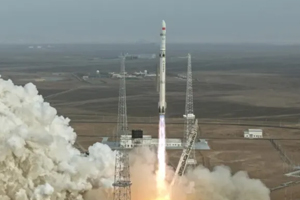
Slated for liftoff at 00:10 UTC, signifying the first constellation deployment for CAS Space's new liquid-fueled Kinetica-2 (Lijian-2) rocket. For this flight, the rocket...
Offshore Launch Platform near Jeju Island, South Korea
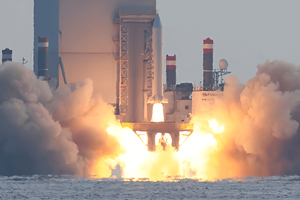
South Korea's solid‑fuel space launch vehicle, now known as Mir (a Dragon) is an orbital booster developed by the state-run Agency for Defense Development...
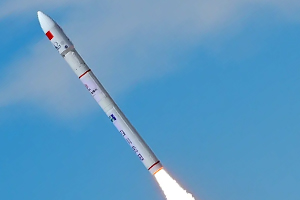
Solid-propellant launch vehicle of private aerospace company Galactic Energy of Beijing to provide low-cost commercial launches from off-shore barge. The Galactic Energy Ceres-1 rocket...
Expecting senior government and executives from NASA, Firefly, Blue Origin to discuss innovation, competitive advantages and a "space industrial revolution in LEO". Capped at...
Launch Complex 1, ~39°S, Mahia Peninsula, New Zealand
iQPS Launch 10, an Earth observation satellite with Synthetic aperture radar for Japan-based imaging company iQPS, to launch on “The Mountain God Rises” mission...
NASA launched Apollo 4, the first uncrewed test flight of the massive Saturn V rocket. It successfully demonstrated the structural integrity of the vehicle...
Promoting the New Space Economy: The first major national meeting of the space, technology and scientific industries. Three days to connect science, industry and...
 Astronaut (T-B) Kate Rubins, Cosmonauts Sergei Rizhikov and Sergei Kud-Sverchkov are to join Commander Chris Cassidy and flight engineers Anatoli Ivanishin and Ivan Vagner on the International Space Station October 14. Soyuz MS-17 is to be the fastest commute for ISS spaceworkers – a 3-hour, 2-orbit trajectory – before docking to Mini-Research Module 1 (‘Rassvet’). Prior missions to ISS have since 2012 relied on a 4-orbit, 6-hour route, which was itself a vast improvement over the original 2-day journey. Roscosmos Director Dmitry Rogozin claims the trip will be “faster than flying from Moscow to Brussels”. After spending a week together as Expedition 63 crew, on October 21 Soyuz MS-16 will be untethered from docking Mini-Research Module 2 (‘Poisk’), returning Cassidy, Ivanishin and Vagner to Earth after 196 days in LEO. Soyuz MS-17 is thought to be the last Soyuz rocket to carry NASA Astronauts, as Commercial Crew officially begins with SpaceX Crew-1, set to bring the remaining 4 members of Expedition 64 to ISS on Oct 31. The Dragon spacecraft, dubbed ‘Resilience’ by its crew – (L-R) Michael Hopkins, Shannon Walker and Victor Glover of NASA and Soichi Noguchi of JAXA – will take a 25-hour path. While transit time is currently longer than Soyuz, the increased passenger capacity of Dragon will allow for 7-member ISS crews going forward – and mark a resumption of self-reliance for the USA space program. (Image Credits: NASA, RSA)
 Oct 12 —
 Oct 12 — NewSpace:
 Oct 12 — USA: Barry “Butch” Wilmore to replace Chris Ferguson as

 = All times
 = All times for international terrestrial events in local time unless noted.
 = All times for space events, and…
 = All times for international space / astro events in Hawaii Standard Time unless noted. Add 10 hours to obtain UT (‘Universal Time’).
 ESA-JAXA BepiColombo is heading into its first Venus deceleration and plane change gravity assist on October 15. The dual satellite mission of Mercury Planetary Orbiter and Mercury Magnetospheric Orbiter “Mio” will reach 2 full years in space on October 20 and aim for Mercury orbit insertion December 5, 2025. While Venus is making headlines in light of the biosignature gas Phosphine being detected, BepiColombo will collect data during its flyby – though its instruments may not be sensitive enough to research signs of life as noted by mission scientist Johannes Benkhoff. Venus atmosphere has been proposed as a site for human habitats at ~50 km level where the environment may be most Earth-like for pressure and temperature (0 to 50° C) and protected from cosmic radiation. BepiColombo will perform a 2nd Venus flyby in Aug 2021 and 6 Mercury flybys starting Oct 2021, utilizing proven low-thrust solar electric propulsion and gravity assist combo performed by ESA SMART-1 that orbited the Moon. Using a spin-ejection to separate at Mercury, MPO with 11 instruments and Mio with 5 groups of instruments (totaling 45 kg) will enter elliptical polar orbits. The craft will become the first to visit Mercury since MESSENGER impacted in 2015 and study its magnetic field, magnetosphere, exosphere and interior & surface structures for at least one year. (Image Credits: ESA, JAXA, NASA)