Artemis II to Show the Way, Closely Observe the Moon
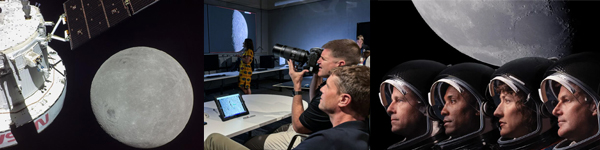
Artemis II crewed lunar flyby, likely April 5 with April 1 launch, will travel beyond Apollo 13 distances and also restore something absent for 50+ years: human eyes directly observing the Moon from a “mere” 6,400-9,000 km. Flying aboard Orion, Astronauts Reid Wiseman, Victor Glover and Christina Koch of NASA and Jeremy Hansen of CSA-ASC will pass close enough above the surface to see subtle variations in color, brightness / albedo and surface texture in ways orbital instruments cannot. They will record images and write observations and descriptions, focusing on impact flashes and geological and terrain features near the lunar south pole. These human interpretations, integrating perception, context and judgment, will inform landing site selection for future missions. Simultaneously, Orion life-support systems, manual spacecraft control and reentry performance are evaluated. Hansen noted, every task “buys down risk” for the next crew. “We’re going to make sure that the flying qualities of the Orion spacecraft are suitable for the more complex missions,” said Glover. Wiseman realizes, “Mach 39 at entry … there’s risk in that.” Koch believes “The privilege of carrying everyone’s dreams with you into space also comes with a responsibility … to bring your best every day.” (Image Credits: NASA, NASA-Kelsey Young)
Comets from Near and Far; Possibility of Naked-Eye Viewing
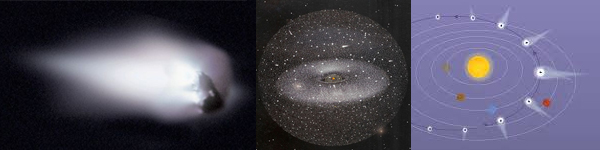
Comet C/2026 A1 (MAPS) reaches perihelion April 4, coming within ~160,000,000 km of the Sun, where temperatures and solar radiation tremendously increase outgassing. If the nucleus, typically a few kilometers across, remains intact, the heating that drives outgassing can form a bright head / coma, and also a tail that can extend millions of kilometers while always pointing away from the Sun. However, structural failure is common; many comets fragment or disintegrate near perihelion. A similar case, Comet C/2025 R3 (PANSTARRS), will reach perihelion April 19 (21:00 UTC) at ~76,000,000 km. Both are likely first-time visitors from the distant Oort Cloud, a massive spherical shell of icy objects at the outermost boundary of the Sun’s gravitational influence. While unobserved directly due to its extreme distance, it is known as the source of long-period comets. Fewer than 10 such new comets are discovered annually with C/2026 A1 (MAPS) holding the record for being the furthest such comet from the Sun at time of its discovery (January 13, 2026). More than 3,800 comets have been cataloged. Short-period comets (under 200 years) such as Halley’s are likely from the Kuiper Belt. Long-period comets may take a million years to orbit the Sun. (Image Credits: NASA, ESA)
Humans in Space
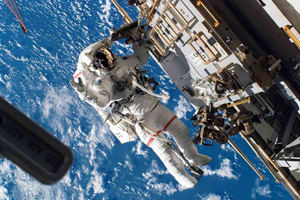
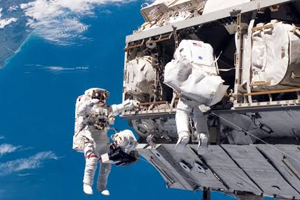
☆ International Space Station, ~415-km LEO: Expedition 74 seven-member crew continue to unload ~6,000 kg of food, fuel and other supplies from Progress 94 Roscosmos craft, while continuing health research, biology experiments and cleaning; biological samples were prepared and stowed at -80°C, drinking water was assessed for microbial growth. Astronauts are exercising 2 hours daily, whether on treadmill, bicycle or a resistive device to simulate weight-lifting. Roscosmos Cosmonauts disassembled the docking mechanism in the Poisk module, did general maintenance and data transfers.
☆ Tiangong Space Station, ~390-km LEO: Shenzhou-21 three-member crew harvested a bountiful crop of cherry tomatoes after supporting growth of the plants for many weeks. They cleaned experiment chambers and filled them with new samples, and maintained motors of a sample handling mechanism and cleaned its windows. Crew also replaced the burner and a cover inside a combustion-science device, and put more experimental samples into a fluid-physics cabinet. Upcoming cultivation experiments are planned for wheat, carrots and a plant in the mustard / Brassica family.
◐ Lunar Enterprise News: NASA Administrator Jared Isaacman spoke to representatives of ~35 countries, announcing ~US$20B investment to build a Moon base by 2033, Artemis 3 lunar lander(s) in orbit by 2027, and Artemis 4 human Moon landing in 2028. Gateway is paused; 3 phases for Moon base: 1) support industry via CLPS rovers, instruments and technology, for mobility, power, communications, navigation, surface ops, science; 2) semi-habitable infrastructure / Astronaut ops on surface such as with JAXA pressurized rover; 3) affordable and sustained permanence such as with Italy’s habitation module.
Near-Earth Objects Close Approaches – Mon Mar 30: Apollo Asteroid 2026 FN1 (0.021 AU); Tue Mar 31: Aten Asteroid 2026 FJ (0.019 AU); Fri Apr 3: Aten Asteroid 2019 FQ1 (0.024 AU); Sat Apr 4: Apollo Asteroid 2023 DZ2 (0.006 AU)
First Woman FLIES to the Moon …
NET (no earlier than)
Days
First Woman LANDS on the Moon …
Days
Loading Moon data for your location...
Loading planet data...
Land your name on the Moon!
Have your name sent to the Moon for FREE on the ILO-1 lunar mission via Astrolab FLEX rover (NET 2027). You will automatically be signed up for our weekly Space Calendar.
With guests Astronaut Chris "Hanks" Sembroski and daughter, included is tour of Virgin Galactic launch site and simulated human mission at Las Cruces Challenger Education Center. New Mexico lunar analogs Aden Crater, Kilbourne Hole and the Carrizozo lava flow are on the tour. Also joined by Mark Wagner. Kirby Runyon […]
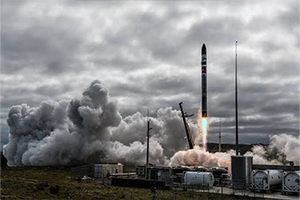
Launch window 03:20-04:17 PDT | 00:20-01:17 HST | 10:20-11:17 UTC for dozens of small microsatellites and nanosatellites for commercial and government customers to sun-synchronous orbit
Washington DC-area US Alumni Association features Marcella Kneppers and Bastiaan van den Berg. Kneppers is Kingdom of the Netherlands Senior Advisor for Innovation, Science, and Technology at the Washington Embassy and will speak on technological and scientific developments, and policy trends in the aerospace and energy sectors in both the […]
Launch window 19:00-21:14 China Time | 01:00-03:14 HST | 11:00-13:14 UTC by Space Pioneer of Beijing, a private launch company founded in 2015 by Kang Yonglai. Tianlong-2 can take 4,000 kg to LEO and 3,000 kg to SSO via 3 stages powered by RP-1 and LOX.
5th annual event, expecting 500+ attendees and 40+ speakers, discussing space and satellite business among space agencies and industry. At InterContinental Hotel, 2 Shakhrisabz Street in Trilliant Business Park near Amir Temur Square. Speakers include Christian Feichtinger of IAF.
A conversation on the energy and computing needs driving the push toward orbital data centers. No cost, registration required. With Star Catcher CEO Andrew Rush, and Foundation for American Innovation Research Fellow Daniel King. At 13:00-13:45 EDT | 17:00-17:45 UTC | 07:00-07:45 HST
At campus of the American University in Dubai (AUD), 15:00-18:00 UTC+4, organized by Armen V. Papazian, Visiting Professor of Space Economics to share United Arab Emirates' vision and strategy in space science, economics and technology. Public event features the president of AUD, and the director general of the UAE Space […]
To be held June 30-July 4, 2026. Online event held every 5 years, keynote speakers include SRI president Bernard Foing, Michelle Hanlon, Madhu Thangavelu, Frank White, Rick Tumlinson, Giuseppe Reibaldi. SRI is now an official Observer for UN COPUOS. Legacy of Gerard K. O'Neill space settlement concepts is of great […]
For U.S. spacewalk 95, planned for April, two NASA Astronauts (yet to be named) will prepare the station’s 3B power channel for a future solar array installation. NASA will provide more information on the date and time of the spacewalk, and other details, closer to the operation. The spacewalks will […]
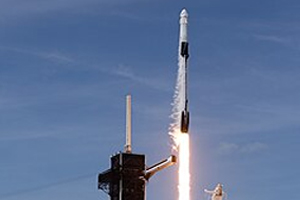
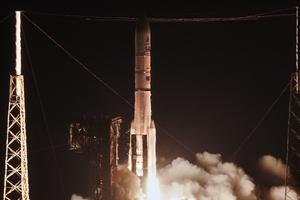
Launch window 18:24-20:24 EDT | 22:24 UTC | 12:24 HST for crew of 4 in Orion spacecraft on around-the-Moon flight to last 9-10 days; 3 USA and 1 Canada Astronaut: Commander Reid Wiseman, Pilot Victor Glover, Mission Specialists Christina Koch and Jeremy Hansen; mission will also deploy numerous CubeSats; launch […]
Commemorations occur today in honor of 1st ever NASA Space Shuttle Columbia carrying John Young and pilot Robert Crippen around Earth on 54.5-hour mission in 1981.
2nd orbital launch, attempt for booster recovery, by commercial launch firm Landspace of China; follows successful 1st orbital launch of Zhuque-3 stainless steel methalox rocket
Majoring in STEM is popular among Singapore students, but university admissions do not evaluate all applicants equally! Join Crimson Education & Space Faculty Singapore for advice. 19:00 Singapore Time | 01:00 HST | 11:00 UTC
Winners of the local hackathons will compete for international semi-finals and finals. This event takes place every two years and is currently preparing its 6th edition. Last time, 1 800 participants from all over the world took part in ACT in SPACE, dispatched into 410 teams, with 50+ sites hosting […]
19:00 UT, in person and online, join us for a special evening with Dr. Mykhailo Andriievskyi, Head of Propulsion Department at Skyrora, the company that has become the most visible symbol of the UK’s push for sovereign launch capability, which policymakers and media routinely frame as the litmus test of […]
NASA Postdoctoral Program offers US and international scientists the opportunity to advance their research while contributing to NASA’s scientific goals. The NPP supports fundamental science; explores the undiscovered; promotes intellectual growth; and encourages scientific connections. Selected by a competitive peer-review process, NPP Fellows complete one- to three-year Fellowship appointments that […]
Yuri’s Night joins Kennedy Under the Stars to host the official East Coast flagship event, 18:00 EDT (entry at 17:00). Yuriʻs Night honors the first human in space and the launch of the first Space Shuttle, both with anniversaries on April 12. It is an international organization with worldwide events. […]
Predicted date for the comet to make a close pass by the Sun (perihelion), potentially triggering a sudden brightening and dramatic tail. If it survives the encounter, it may become visible to the naked eye. This event is part of a rare opportunity in April to potentially view two comets—C/2026 […]
NASA Astronaut and scientist, he flew on Space Shuttle Columbia for STS-83 and STS-94, flew on 5 Spacelab flights, led research on semiconductor material, and was founding co-chair of the International Microgravity Science Strategic Planning Group.
Through May 13; Don Edberg -- Professor of Aerospace Engineering, Cal Poly Pomona; Adjunct Lecturer, Astronautical Engineering, University of Southern California (USC); Former Boeing Technical Fellow -- convenes 12 classes, every Monday and Wednesday, 10:30-13:30 EDT | 07:30-10:30 PDT | 14:30-17:30 UTC (36 hours). All sessions will be recorded and […]
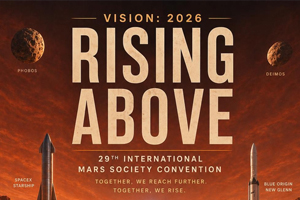
At the University of Southern California, the world's largest gathering dedicated to human Mars exploration. For nearly three decades, the International Mars Society Convention...
NASA spacecraft surpasses another full year in orbit around Mars today, holds record for longest-surviving continually active spacecraft in orbit around a planet other...
At the Spokane Convention Center. The meeting will have a broad scope, with a wide-ranging program of science and workforce topics, and celebrating planetary...
Convene, connect, and collaborate at the 19th annual von Braun Space Exploration Symposium! This year’s event will spotlight how bold ideas, emerging technologies, and...
Themes include: Space & the Arctic; Space & AI; Space & International Collaboration. There is a Student Session, a Technical Session, a Frontier Session,...
Oslo Spaceport Norway offers monthly a knowledgeable speaker and opportunity for networking, 17:00-20:00 local time; free entry but registration required. Ground Control is for...
45 satellites to launch for Amazon Leo, formerly named Project Kuiper. This LEO mega constellation will offer broadband internet access with 3,276 satellites.
Occurring 31 October from 09:00-11:00 local time (16:00-18:00 HST, 19:00-21:00 PDT, 22:00-24:00 EDT on 30 October), this Galaxy Forum will be in hybrid format...
Originally planned around this date for Wenchang, China -- TBC (to be confirmed); As the only professional association for astronauts, ASE supports the advancement of...
Coordinating Division Division C Education, Outreach and Heritage The IAU Symposium on Innovative Research and Techniques in Astronomy Communication will take place from November...
Change clocks back 1 hour from Daylight Saving to Standard Time; does not include Hawai’i, Arizona (except the Navajo Nation), American Samoa, Guam, Northern...
ESWW is the main annual event in the European Space Weather and Space Climate calendar. It is an international meeting organised annually within the...
IAU Symposium: IAUS409 - A Journey Towards Effective Astronomy Communication; online and at National Astronomical Observatory of Japan, 2-21-2 Osawa Mitaka, Tokyo. Topics include:...
Launch Complex 1, ~39°S, Mahia Peninsula, New Zealand
iQPS Launch 9, an Earth observation satellite with Synthetic aperture radar for Japan-based imaging company iQPS, to launch on "The Sea God Surveys" mission...
 Near-Earth Objects Close Approaches – Mon Mar 30: Apollo Asteroid 2026 FN1 (0.021 AU); Tue Mar 31: Aten Asteroid 2026 FJ (0.019 AU); Fri Apr 3: Aten Asteroid 2019 FQ1 (0.024 AU); Sat Apr 4: Apollo Asteroid 2023 DZ2 (0.006 AU)