Event Horizon Telescope Gets New Director, 3 Additional Observatories, Campaign Plan for 2021
The next observational campaign for Event Horizon Telescope (EHT) is set to commence March 2021 and involve at least 350 scientists, 60 institutions from 20 countries and regions. New incoming Director, Leiden Astronomer Huib van Langevelde (top), will oversee the global EHT project with Very Long Baseline Interferometry collaborations soon coming from 11 telescopes: Atacama Large Millimeter Array and Atacama Pathfinder Experiment (Chile), Heinrich Hertz Submillimeter Telescope and Kitt Peak 12-meter Telescope (Arizona), IRAM 30m telescope (Spain), JCMT / East Asian Observatory and Submillimeter Array (Hawai’i / Aloha State), Large Millimeter Telescope (Mexico), NOEMA Observatory (France), South Pole Telescope (Antarctica) and The Greenland Telescope. Still under study is EHT image of Pōwehi M87 black hole (55M LY away) published April 10, 2019 for data about its nested rings of light, spacetime distortion and the history of the visible universe. Closer to home at Milky Way Galaxy Center ~26,000 LY, supermassive black hole Sagittarius A* continues to be observed by EHT. No image has yet been produced because of the complex nature of its shorter timescale / quicker evolution which needs to be modeled. Future plans include improving the resolution of EHT array with more telescopes and taking shorter-wavelength observations. By adding an instrument on the Moon to the array, Michael Johnson of Harvard-Smithsonian Center for Astrophysics, remarks “that’s where I think we would really be looking at entirely new science”. (Image Credits: EHT, NASA, ESO, ESA, Hubble, M. Kornmesser, N. Bartman, CfA, Univ. of Leiden)
MONDAY
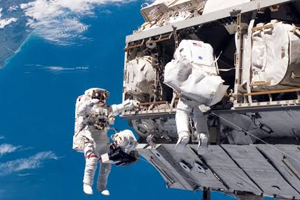
Highlights… Aug 10 — ISS, ~405-km LEO: Expedition 63 Commander Chris Cassidy, Anatoly Ivanishin and Ivan Vagner working on experiments involving water droplet formation, plant habitat, robotics hardware; transferring cargo from Progress 75P, 76P and HTV-9; Russia aiming to launch crews to ISS in 2 orbits / under 3 hours.
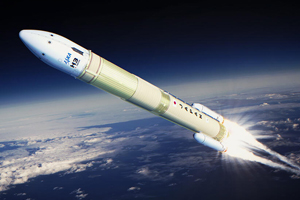
Aug 10 — NewSpace: SpaceX Starship Moon, Mars flights closer to reality with recent flight test success; ispace of Japan shares progress on Hakuto-R lunar lander being prepared for 2022 launch; Virgin Galactic now planning Q1 2021 flights.
Aug 10 — Galaxy: VLBA using astrometric ‘wobble detection’ technique discovers exoplanet, providing data for future tracking; TVIW hosts series on interstellar matters via YouTube; ALMA observations add to information on planet formation, protoplanetary disk evolution.
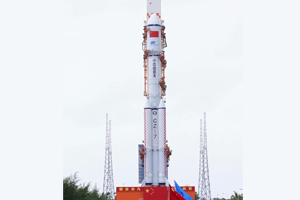
Aug 10 — Global: ISRO investigating possibility that Pragyan rover survived Chandrayaan-2 lander impact; China / Zhongguo Chang’e-5 set for Nov 24 launch, CE-6 payloads being selected, CE-7 and -8 in development; Rocket Lab could launch again this month from New Zealand Mahia Peninsula.
Aug 10 — USA: Full funding, multi-partisan support needed for 2024 Artemis Human Moon Landings; KSC re-opens visitor Complex at reduced capacity; American Astronomical Society HAD launches Astronomy Genealogy project containing 33,000 astronomers bios; Amazon planning 3,236 Kuiper satellite constellation.
Aug 10 — Hawai’i:Keck data aids in understanding supernova mechanism for creating calcium; Subaru observations combine with computer algorithms to find early galaxy with very low oxygen rate; Maunakea Scholars Program Hokuala (rising Star) Scholarship to support 3 students pursuing astronomy degrees.
= All times
for terrestrial events in local time unless noted.
= All times for international terrestrial events in local time unless noted.
= All times for space events, and…
= All times for international space / astro events in Hawaii Standard Time unless noted. Add 10 hours to obtain UT (‘Universal Time’).
Canada LEAPS Ahead with Lunar Tech Developments and Funding
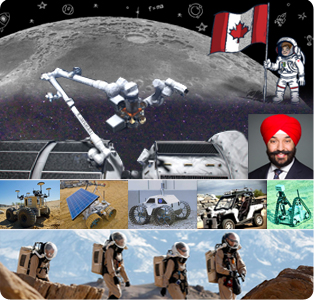
As part of the 21st Century Canada Space Strategy committing US$1.4B over 24 years and allotting $112M over 5 years for the Lunar Exploration Accelerator Program (LEAP), Canadian Space Agency (CSA-ASC) is collecting proposals for LEAP Phase 0 studies for lunar science instruments until August 10. Up to 5 selected contracts could receive ~$450K each. The estimated $10.5M Announcement of Opportunity early 2019 (somewhat similar to NASA CLPS program) for Canada companies to participate in the Artemis supply chain for Human Moon Landings 2024 remains open until March 31, 2022. It will issue contributions up to $1.5M for 18-month projects, allowing for companies to request an additional $3M as well. Navdeep Bains, Minister Of Innovation, Science And Economic Development spoke about Canadian ‘commitment to contribute Canadarm3 to the Lunar Gateway’ announcing MDA as the winner of the yet-to-be-disclosed contract. CSA-ASC is also funding Lunar Surface Autonomous Science Payloads R&D program totaling ~$3.3M, giving 2 contracts to Canadensys Aerospace Corporation, and 1 contract each to Mission Control Space Services, Magellan Aerospace, Western University, Bubble Technology and ABB Inc. Western University newly established Institute for Earth and Space Exploration, directed by Gordon Osinski, is participating in CanMoon lunar sample return analog missions on Canary Islands and developing multi-wavelength LIDAR (Light Detection and Ranging) and multispectral imager for future rovers – of which Canada boasts 11 Moon, Mars and terrestrial prototypes. (Image Credits: CSA-ASC, Western University, MDA)
Aug 10-13 — SmarterShows, Online / Long Beach CA: Space Tech Expo USA 2020 Connect; interactive digital event to facilitate business connections, peer-to-peer networking, and opportunities to share the latest ideas, technologies, supply chain solutions.
Jan 2019 – Sep 2020 — New Horizons, Kuiper Belt: Full data collected from 7 instruments during KBO Arrokoth flyby to be transmitted to Earth over this time period.
Nov 2019 – Nov 2020 — Hayabusa2, Earth Trajectory: JAXA Hayabusa2 with two samples collected from C-type asteroid 162173 Ryugu on trajectory for Earth return.
Jul 29 – Oct 31 — CNSA, Ministry of Education, Ministry of Science and Technology, Chinese Academy of Sciences, Online / Beijing, China: Students to submit ideas for payloads for Chang’e-7 lunar south pole craft, and ZhengHe mission that will return samples from Asteroid 2016HO3 and visit Comet 133P.
Aug 9-12 — AAS Space Flight Mechanics Committee, AIAA Astrodynamics Technical Committee, Online / South Lake Tahoe CA:2020 AAS/AIAA Astrodynamics Specialist Conference; featuring Artemis Program Special Session.
TUESDAY
Aug 11 — OSIRIS-REx, Asteroid 101955 Bennu (1999 RQ36): Origins-Spectral Interpretation-Resource Identification-Security-Regolith Explorer (OSIRIS-REx) spacecraft scheduled to perform touchdown rehearsal maneuver prior to sample collection on October 20.
Aug 11 — Moon: At last quarter, 06:47.
WEDNESDAY
Aug 12 — Parker Solar Probe,Heliocentric Orbit: NASA craft to come within 6.16M km of the Sun, well within the orbit of Mercury and ~7 times closer than any spacecraft has before – reaches 2nd full year in Space today; launched Aug 12, 2018.
Aug 12— Advanced Maui Optical and Space Surveillance Technologies Conference (AMOS), Space Generation Advisory Council (SGAC), Boeing, SWF, SAIC, Online:Registration Due: 2020 EMER-GEN; being held Sep 12-15.
Aug 12-14 — Space Frontier Foundation, Kent WA: NewSpace 2020; reset to 2021.
Aug 12 — Perseid Meteor Shower Peak: Appearing to radiate from constellation Perseus, shower can produce up to 100 meteors per hour, which are fast, bright and frequently leave persistent trains.
Emanating from ~6km-wide comet with 5.3-year Solar orbit, visible in constellation Aquarius near star Delta Aquarii, fast, faint meteors peak on this night, best...
The International Research Conference is a federated organization dedicated to bringing together a significant number of diverse scholarly events for presentation within the conference...
Includes ~150 meetings covering the fields of COSPAR Scientific Commissions / Panels / Task Groups, such as SC B: The Earth-Moon System, Planets, and...
From 02 to 07 August 2026, a few thousand geoscientists across diverse disciplines will gather at the 23rd annual meeting of the Asia Oceania Geosciences...
2:45 pm EDT from Johnson Space Center, NASA astronaut Chris Williams will recap his recent eight-month mission aboard the International Space Station. Williams returned to...
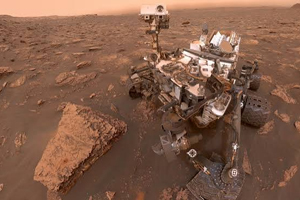
NASA Curiosity (Mars Science Laboratory) rover surpasses another full year of operations on Mars surface today; launched Nov 26, 2011 – landed Aug 5,...
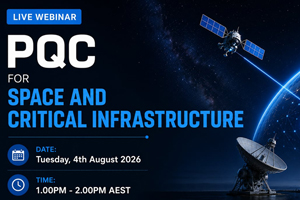
Virtual Series 2026 will offer deeper conversations on why PQC matters and the practical steps businesses should be taking; starts 1:00 pm AEST. Featuring:...
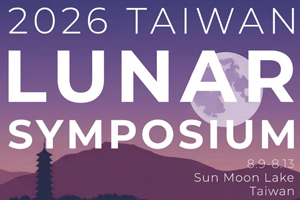
This international lunar science meeting has two objectives: to provide a platform for leading experts to review recent advances across lunar research, from the...

 Aug 10 —
  Aug 10 — NewSpace:
  Aug 10 — USA:
 = All times
 = All times for international terrestrial events in local time unless noted.
 = All times for space events, and…
 = All times for international space / astro events in Hawaii Standard Time unless noted. Add 10 hours to obtain UT (‘Universal Time’).