Hubble Space Telescope Continues Legacy with Solar System Complete and Beyond Observations
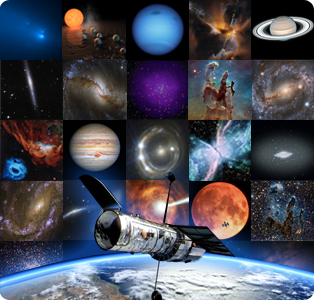
One of the largest and most versatile space telescopes, Hubble, a vital research tool for astrophysics and public education, is nearing 31 years in LEO and could possibly remain operational into the 2040s. A co-effort of NASA, ESA and STScI, Hubble has 4 active instruments: Advanced Camera for Surveys, Cosmic Origins Spectrograph, Space Telescope Imaging Spectrograph and Wide Field Camera 3; with Near Infrared Camera and Multi-Object Spectrometer kept in hibernation. In an almost circular orbit at 550 km, it is best seen between latitudes of 28.5° N to 28.5° S. Some New Year flybys can be seen over Hawai’i island on December 31, January 1 and beyond. Hubble is an aerospace engineering success and its impacts on astronomy have so far resulted in 15,000+ papers based on Hubble data published in peer-reviewed journals, important discoveries for the age and expansion of the universe, black holes, and the mass and size of the Milky Way Galaxy. As ESA, Canadian Space Agency and NASA prepare for the long-awaited James Webb launching NET October 2021, some international space observatories already working in Space include India Astrosat, ESA Gaia, USA Chandra, Swift and NuSTAR. Future lunar surface and cislunar observatories / instruments are also being planned to launch on NASA CLPS missions second half 2021 which will join China Chang’e-3, -4 and -5 already on lunafirma. (Image Credits: NASA, ESA, STScI)
MONDAY
Highlights… Dec 28 — ISS, ~405-km LEO: Seven-member Expedition 64 crew planning for in-flight education events, Holiday / New Year celebrations with family, finalizing Cygnus CRS-14 for its release this week, donning radiation-vest, working with yeast and plant habitat studies.
Dec 28 — USA: Incoming Administration may consider full support of Space Policy Directive-1 to land first woman on the Moon asap; NASA to receive US$23.271B for fiscal year 2021, $2B less than requested; US Space Force service member nomenclature to be designated ‘Guardians’.
Dec 28 — Hawai’i: JAXA analyzing Subaru images of asteroid 1998 KY26, next target for Hayabusa-2; Keck Observatory continues Astronomy Talks schedule through the New Year; ISS captures Kilauea from LEO, International Disaster Charter eruption monitoring possible.
= All times
for terrestrial events in local time unless noted.
= All times for international terrestrial events in local time unless noted.
= All times for space events, and…
= All times for international space / astro events in Hawaii Standard Time unless noted. Add 10 hours to obtain UT (‘Universal Time’).
2020s Multi World Civilization: The Moon, Global Revolutions, and Egalitarian Considerations
Commercial spacecraft in 2021 — Peregrine from Astrobotic and Nova-C from Intuitive Machines — are expected to attempt landings on the Moon for the first such American efforts in almost half a century, joining more-recent landers Chang’e-3, -4, -5, and ahead of India Chandrayaan-3, Russia Luna 25, and ispace of Japan. The 2020s landing of first women on the Moon should be as influential for the 21st century as the landing of first men on the Moon was for the 20th, and will expand the sphere of women’s freedom and activity by almost 1,000,000,000 times. Rapidly rising considerations for lunar resources and operations are manifest in the advocacies from LEAG, Moon Village Association, Artemis Accords, China Lunar Research Station, Open Lunar Foundation, and many more American and international Luna-interested enterprises and organizations. Perennial questions “Whose Moon Is It” and “Who Owns the Moon” now demand clear, principled, logical and operational understanding. As the Moon clearly belongs to Earth, and Earth’s people, it’s utilization may best be realized through a social-political-economic-international entity representing all humans and enabling both cooperative enterprise for the common wealth and egalitarian consideration for individual property. (Image Credits: NASA, ILOA Hawai’i, ESO, MVA, LEAG, OLF)
Dec 28 — Arianespace, Launch Soyuz / CSO 2, Sinnamary, French Guiana: Arianespace Soyuz rocket, designated VS25, to launch second Composante Spatiale Optique military reconnaissance satellite for CNES and DGA.
Dec 29 — The Space Show,Online / Tiburon CA: Dr. David Livingston hosts the annual end-of-year traditional review with Tom Olson, a business systems engineer and analyst in communications, aerospace and publishing sectors.
Dec 29 — Moon: 0.42° NE of M35 cluster, 06:00; Full Cold Moon, 17:29.
Dec 29 — Apollo Asteroid 2020 XZ4: Near Earth Flyby (0.014 AU)
Dec 29 — Apollo Asteroid 162173 Ryugu: Near Earth Flyby (0.061 AU)
WEDNESDAY
Dec 30 — ISS, ~405-km LEO: In-flight interviews with Expedition 64 Astronauts Mike Hopkins, Victor Glover starting 10:20 EST; and Shannon Walker and Soichi Noguchi staring 12:40, live coverage available.
Dec 30 — Juno, Perijove 31 / 30th Science Flyby,Jupiter Orbit: NASA craft in 53-day orbit to come within ~3,500 km of Jupiter cloud tops during Perijove 31, its 31st close flyby of Jupiter and 30th science flyby with instruments turned on, 21:45:12 UTC.
Dec 30 — Moon: 7.4° S of Castor, 17:00; 3.8° S of Pollux, 21:00.
Dec 30 — Aten Asteroid 2012 UK171: Near Earth Flyby (0.040 AU)
THURSDAY
Dec 31 — Hubble Space Telescope, LEO: Spacecraft makes visible pass over Hawai’i starting 05:45:12 from NNW to 05:49:30 in NE, magnitude 2.1.
FRIDAY
NET 2021 — ISRO, Launch PSLV / Chandrayaan-3,Satish Dhawan Space Center, Sriharikota, India: Polar Satellite Launch Vehicle to attempt next lander and rover mission to Moon South Pole region possibly late this year; Chandrayaan-2 in lunar orbit to act as relay.
NET 2021 — International Lunar Observatory Association, Canadensys Aerospace Corp., Launch ILO-1, TBD: Launch of independent ILOA multifunctional observatory to Moon South Pole; will conduct radio astronomy, scientific & commercial communications, serve as catalyst for lunar base build-out.
NET 2021 — ISRO, Launch GSLV / Mars Orbiter Mission-2,Satish Dhawan Space Center, Sriharikota, India: India 2nd Mars mission to be launched this year with advanced science instruments to Mars orbit of 200 km x 2,000 km.
NET 2021 — Vera C. Rubin Observatory, Cerro Pachón, Chile: Previously dubbed Large Synoptic Survey Telescope, VCR Observatory team expects first light this year with full science operations starting Oct 2022.
Jan 1 — Hubble Space Telescope, LEO: Spacecraft makes visible pass over Hawai’i starting 05:35:04 from N to 05:35:25 in N, magnitude 2.2.
Jan 1 — Deep Space,Kuiper Belt: New Horizons, collecting data from the edge of the Solar System, nearly 50 AU from Earth, will have 600-page technical compendium titled ‘The Pluto System after New Horizons’ published in 2021.
SATURDAY
Jan 2 — Earth: At perihelion, 0.9833 AU from Sun, 03:00.
Jan 2 — Moon: 4.5° NNE of Regulus, 16:00.
Jan 2, 3 — Quadrantids Meteor Shower Peak: Appearing to radiate from constellation Quadrans Muralis; can produce up to 110 meteors per hour.
SUNDAY
Jan 3 — Chang’e-4 Lander and Yutu-2 Rover, Statio Tianhe (Milky Way Base),Von Kármán crater, Moon South Pole–Aitken Basin, 177.6°E, 45.5°S: Spacecraft enter 3rd year / reach 2 full years on Moon far side, landed 2019.
Jan 3 — The Space Show,Online / Tiburon CA: Dr. David Livingston talks with Robert Wilson from the Aerospace Corp.
Jan 3 — Aten Asteroid 2020 YA1: Near Earth Flyby (0.010 AU)
Jan 3 — Aten Asteroid 2019 QW2: Near Earth Flyby (0.022 AU)
Jan 3 — Aten Asteroid 2003 AF23: Near Earth Flyby (0.047 AU)
Jan 4 — SpaceX, Launch Falcon 9 / Turksat 5A,Cape Canaveral SFS FL: Falcon 9 rocket to launch Turksat 5A communications satellite for Ku-band television broadcast services over Turkey, Middle East, Europe and Africa.
Jan 4 — Aten Asteroid 2012 BT1: Near Earth Flyby (0.016 AU)
Jan 5 — The Space Show,Online / Tiburon CA: Dr. David Livingston talks with Trent Tresch about SAM (Space Analog for the Moon and Mars) project.
Jan 5 — Moon: At last quarter, 23:37.
WEDNESDAY
Jan 6 — ISS, NG Cygnus CRS-14 Release, LEO: Northrop Grumman Cygnus freighter dubbed S.S. Kalpana Chawla to be released from ISS 09:45 EST with waste for re-entry disintegration in Earth atmosphere, live coverage available; NASA Glenn SAFFIRE V experiment to be conducted to examine fire growth in the range of pressures and oxygen concentrations.
Jan 6 — Hubble Space Telescope, LEO: Spacecraft makes visible pass over Hawai’i starting 06:19:29 from WNW to 06:23:09 in SSW, magnitude 0.8.
Jan 6 — Moon: 6.4° NNE of Spica, 20:00.
Jan 6 — Apollo Asteroid 2018 KP1: Near Earth Flyby (0.021 AU)
Jan 6 — Apollo Asteroid 332446 (2008 AF4): Near Earth Flyby (0.025 AU)
Jan 6 — Apollo Asteroid 2016 CO247: Near Earth Flyby (0.049 AU)
THURSDAY
Jan 7 — ISS, ~405-km LEO: In-flight education event with Million Girls Moonshot Education Group in San Diego CA and NASA Astronauts Kate Rubins and Shannon Walker, live coverage available.
Jan 7, 8 — American Astronomical Society, Online / Phoenix AZ:22 Workshops and Meetings, in conjunction with American Astronomical Society meeting 237.
Jan 10-15 — European Microwave Association, Institute of Engineering and Technology, IEEE, AESS, et al, Online / Utrecht, The Netherlands: 50th European Microwave Week; in conjunction with 17th European Radar Conference and 15th European Microwave Integrated Circuits Conference.
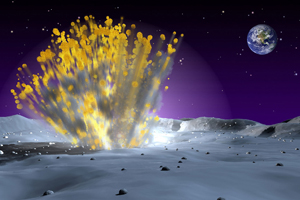
Emanating from ~6km-wide comet with 5.3-year Solar orbit, visible in constellation Aquarius near star Delta Aquarii, fast, faint meteors peak on this night, best...
The International Research Conference is a federated organization dedicated to bringing together a significant number of diverse scholarly events for presentation within the conference...
Includes ~150 meetings covering the fields of COSPAR Scientific Commissions / Panels / Task Groups, such as SC B: The Earth-Moon System, Planets, and...
From 02 to 07 August 2026, a few thousand geoscientists across diverse disciplines will gather at the 23rd annual meeting of the Asia Oceania Geosciences...
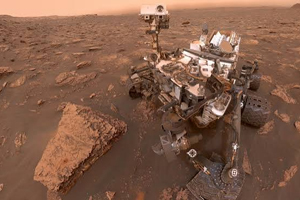
NASA Curiosity (Mars Science Laboratory) rover surpasses another full year of operations on Mars surface today; launched Nov 26, 2011 – landed Aug 5,...
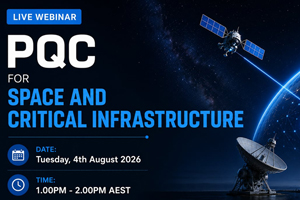
Virtual Series 2026 will offer deeper conversations on why PQC matters and the practical steps businesses should be taking; starts 1:00 pm AEST. Featuring:...
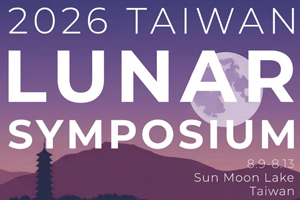
This international lunar science meeting has two objectives: to provide a platform for leading experts to review recent advances across lunar research, from the...
At CSIR International Convention Centre. Key topics are Earth Observation, Developing Space Tourism, Space Supply Manufacturing. Cultural tours are offered.
Participants will receive theoretical and hands-on training in electron imaging and X-ray spectroscopy for application to planetary samples. This training opportunity is targeted at...
 Dec 28 —
  Dec 28 — NewSpace:
  Dec 28 — USA: Incoming Administration may consider full support of Space Policy Directive-1 to land
 = All times
 = All times for international terrestrial events in local time unless noted.
 = All times for space events, and…
 = All times for international space / astro events in Hawaii Standard Time unless noted. Add 10 hours to obtain UT (‘Universal Time’).
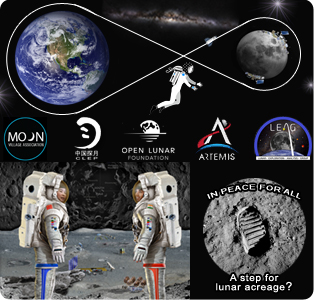 Commercial spacecraft in 2021 — Peregrine from Astrobotic and Nova-C from Intuitive Machines — are expected to attempt landings on the Moon for the first such American efforts in almost half a century, joining more-recent landers Chang’e-3, -4, -5, and ahead of India Chandrayaan-3, Russia Luna 25, and ispace of Japan. The 2020s landing of first women on the Moon should be as influential for the 21st century as the landing of first men on the Moon was for the 20th, and will expand the sphere of women’s freedom and activity by almost 1,000,000,000 times. Rapidly rising considerations for lunar resources and operations are manifest in the advocacies from LEAG, Moon Village Association, Artemis Accords, China Lunar Research Station, Open Lunar Foundation, and many more American and international Luna-interested enterprises and organizations. Perennial questions “Whose Moon Is It” and “Who Owns the Moon” now demand clear, principled, logical and operational understanding. As the Moon clearly belongs to Earth, and Earth’s people, it’s utilization may best be realized through a social-political-economic-international entity representing all humans and enabling both cooperative enterprise for the common wealth and egalitarian consideration for individual property. (Image Credits: NASA, ILOA Hawai’i, ESO, MVA, LEAG, OLF)