17 Could Be in Space This Week with ISS / TSS New Crews, Blue Origin Suborbital Launch
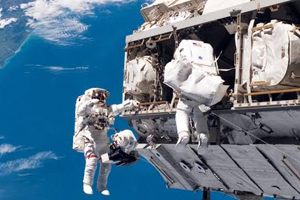
International Space Station, nearing 21 full years of continuous human occupation in November, is active with 10 people aboard including 8 members of the Expedition 65 crew and 2 spaceflight participants. Currently filming ‘The Challenge’ Actress Yulia Peresild and Director Klim Shipenko are scheduled to return to Earth in Soyuz MS-18 on October 16 with Cosmonaut Oleg Novitsky – marking the start of Expedition 66 commanded by Thomas Pesquet with 1 JAXA, 2 Roscosmos, 3 NASA Astronauts. The Shenzhou-13 crew heading to Tiangong Space Station for a record-breaking 6-month stay is planned to launch from Jiuquan, China on October 16 local time. The crew has not officially been announced, but it is speculated to be Ye Guangfu, Wang Yaping and Zhai Zhigang. The Taikonauts will continue to configure Tianhe core module, set up and conduct experiments, and work with 6,000+ kg of cargo from Tianzhou-3. Tianzhou 4 cargo ship is planned to launch March 2022, followed by Experiment Module 1, Wentian (Quest for the Heavens) May 6, and Shenzhou 14 crew later in May. Blue Origin New Shepard NS-18 suborbital launch window opens Oct 12, with an 08:30 CDT planned flight from Corn Ranch TX above the 100-km line. The newly dubbed Astronauts will be – Actor William Shatner, Audrey Powers of Blue Origin, Chris Boshuizen of Planet Labs and Glen de Vries of Medidata. (Image Credits: NASA, CNSA, Blue Origin, CMS, CNSA, Xinhua)
MONDAY
Highlights… Oct 11 — ISS, ~405-km LEO: Expedition 65 / 10 aboard ISS readying for Soyuz MS-18 departure with 3 people, and start to Exp 66 later this week; working with payloads involving luminescence of tissues, fuel tank liquid displacement, radiation measurements.
Oct 11 — Tiangong Space Station, ~370-km LEO: Tianzhou-3 cargo craft docked to station awaiting potential arrival of 3 crew members; 1,000+ experiments approved to fly to TSS after 2022 completion, including 9 via UNOOSA collaboration.
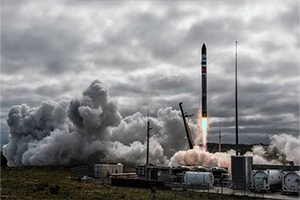
Oct 11 —NewSpace: Relatively Space, valued at US$4B+, making progress on FAA clearance; Honda Motors of Japan to build reusable launch system and robots for Moon.
Oct 11 — Solar System: Scientists search for signs of Uranium and Helium-3 in Chang’e-5 lunar samples; Instrument data and imagery from ESA / JAXA mission BepiColombo under analysis; Roscosmos considers 2-launch, 12-satellite lunar GNSS.
Oct 11 —Galaxy: Possible 3-star orbiting planet being observed with ALMA; Pulsar emission may correlate with black hole formation per OzGrav research.
Oct 11 — Global: China plans completion of LM-9 SHLLV by 2028, Human Moon landings via reconfigured LM-5 by 2028-30; Mexico to work with Russia on space program, Airbus on Lunar ISRU, and Argentina, Bolivia, Costa Rica, Ecuador, Honduras and Paraguay under Latin American and Caribbean Space Agency.
Oct 11 — Hawai’i: IfA Director Doug Simons focuses on future of Mauna Kea Astronomy as 65-year lease expires in 2033; Keck observation thought to be gamma-ray emission from GN-z11 likely space debris; Gemini survey ExoGemS finds WASP-76b has 2,427° C surface temp, ionized calcium.
= All times for terrestrial events in local time unless noted.
= All times for international terrestrial events in local time unless noted.
= All times for space events, and…
= All times for international space / astro events in Hawaii Standard Time unless noted. Add 10 hours to obtain UT (‘Universal Time’).
Launch Window Opens for Lucy, 1st Mission to Jupiter Trojans, Visiting 8 Asteroids
NASA Lucy is set launch October 16 from Cape Canaveral in Florida on ULA Atlas 5 401 at cost of US$148.3 million. The 12-year mission (13th of NASA Discovery Program) is to investigate various mid-solar system C, P and D type asteroids – 7 in Jupiter Trojan / Greek camps (located 60° ahead of / behind Jupiter in same orbital path at L4, L5 respectively) and 1 main belt asteroid. Jupiter Trojans are numerically similar to main asteroid belt population (~1M objects >1km), but less data exists on Trojan composition – low albedo and density is suggestive of similar structure to comets or KBOs, with thin carbon dust layer masking ice. Scientists at Goddard Space Flight Center, Southwest Research Institute, Kennedy Space Center led by Principal investigator Harold Levison (SwRI) are attempting to glean insight into Solar System formation as origin of material that may predate the Jovian system and reflect early stages of planetary accretion. After 2 gravity assist maneuvers around Earth, Lucy is to flyby main belt asteroid – Donaldjohanson (April 2025) before heading to Trojans clustered around Jupiter L4: Eurybates (August 2027), Polymele (September 2027), Leucus (April 2028) and Orus (November 2028); after returning for yet another Earth gravity assist, Lucy will venture out to binary asteroids Patroclus / Menoetius in March 2033 – for a total of 8 distinct targets, a record for all space missions. (Image Credits: NASA, Lockheed Martin, SwRI)
Oct 11 — Apollo Asteroid 2021 TY2: Near-Earth Flyby (0.026 AU)
Oct 11 — Amor Asteroid 2021 QF5: Near-Earth Flyby (0.040 AU)
Oct 11 — Apollo Asteroid 2019 SE5: Near-Earth Flyby (0.042 AU)
Continued From…
Aug 2 – Oct 31 — SpaceBase, Planet, Christchurch, New Zealand and Online: Space for Planet Earth Challenge; seeking innovative ideas from New Zealand, Australia, and Pacific Island residents at High School and University / Start-up level to address climate change through space technologies.
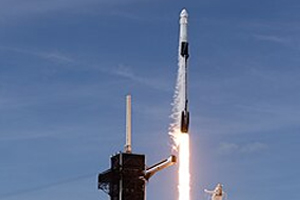
Oct 12 — Blue Origin, Launch New Shepard NS-18, Corn Ranch TX: Second New Shepard suborbital flight with 4-member crew, including Actor William Shatner, Audrey Powers of Blue Origin, Chris Boshuizen of Planet Labs and Glen de Vries of Medidata, 08:30 CDT.
Oct 14 — Roscosmos, Launch Soyuz / OneWeb 11, Baikonur Cosmodrome, Kazakhstan: Russia Soyuz rocket to launch 34 satellites to orbit for OneWeb.
Oct 14 — JAXA, Launch Epsilon / RAISE-2,Uchinoura Space Center, Japan: Japan Epsilon rocket to launch Rapid Innovative Payload Demonstration Satellite 2 (RAISE-2) technology demonstration satellite with 8 rideshare payloads.
Oct 14-15 — Extraterrestrial Materials Analysis Group (ExMAG), NASA, Online / Washington DC: ExMAG Fall Meeting.
Oct 14 — Apollo Asteroid 2021 SM1: Near-Earth Flyby (0.018 AU)
Oct 14 — Amor Asteroid 2021 TS3: Near-Earth Flyby (0.028 AU)
Oct 14 — Apollo Asteroid 2021 TC1: Near-Earth Flyby (0.037 AU)
FRIDAY
NET Oct 15 — CNSA, Launch Long March 2F / Shenzhou 13,Jiuquan Launch Center, China: 3-day launch window opens for three-member Shenzhou 13 crew to launch to Tiangong Space Station for 6-month mission.
Oct 15 — Moon: 4.0° SE of Jupiter, 03:00.
Oct 15 — Apollo Asteroid 2021 SM3: Near-Earth Flyby (0.034 AU)
SATURDAY
Oct 16 — ISS, Soyuz MS-18 Undocking / Crew Return to Earth, ~405-km LEO: Russia Soyuz MS-18 craft with Cosmonaut Oleg Novitsky and spaceflight participants Klim Shipenko and Yulia Peresild to depart from ISS; marks start of Expedition 66 commanded by ESA Astronaut Thomas Pesquet; undocking, 21:12 EDT, live coverage available.
Oct 16 — Parker Solar Probe, Heliocentric Orbit: Spacecraft performs 5th flyby of Venus today.
Oct 16 — United Launch Alliance, Launch Atlas V / Lucy, SLC-41, Cape Canaveral SFS FL: Planned 12-year mission to 8 different asteroids, visiting Main Belt asteroid as well as 7 Jupiter Trojans.
Oct 16 — Mt Tam Astronomy Program, San Francisco Amateur Astronomers, Wonderfest, Online / San Francisco CA:Galactic Archaeology: Galaxy Assembly with Globular Star Clusters; by Charli Sakari, Assistant Professor of Physics & Astronomy at San Francisco State University, 19:30 PDT.
Oct 16 — International Observe the Moon Night Organization, Global: International Observe the Moon Night 2021; encouraging observation, appreciation, understanding of the Moon and its connection to planetary science & exploration; 1st quarter Moon is considered the best time to observe the Moon.
Oct 16 — Venus: 1.44° NNE of Antares, 11:00.
SUNDAY
Oct 17 — European Space Agency, Online / Europe: Name ideas for solar weather monitoring mission to Lagrange L5 due on this date.
Oct 17 — Moon: 3.7° SE of Neptune, 08:00.
Oct 17 — Apollo Asteroid 469219 Kamo`oalewa: Near-Earth Flyby (0.142 AU)
At the Spokane Convention Center. The meeting will have a broad scope, with a wide-ranging program of science and workforce topics, and celebrating planetary...
Occurring 31 October from 09:00-11:00 local time (16:00-18:00 HST, 19:00-21:00 PDT, 22:00-24:00 EDT on 30 October), this Galaxy Forum will be in hybrid format...
Originally planned around this date for Wenchang, China -- TBC (to be confirmed); As the only professional association for astronauts, ASE supports the advancement of...
Coordinating Division Division C Education, Outreach and Heritage The IAU Symposium on Innovative Research and Techniques in Astronomy Communication will take place from November...
Change clocks back 1 hour from Daylight Saving to Standard Time; does not include Hawai’i, Arizona (except the Navajo Nation), American Samoa, Guam, Northern...
ESWW is the main annual event in the European Space Weather and Space Climate calendar. It is an international meeting organised annually within the...
IAU Symposium: IAUS409 - A Journey Towards Effective Astronomy Communication; online and at National Astronomical Observatory of Japan, 2-21-2 Osawa Mitaka, Tokyo. Topics include:...
Launch Complex 1, ~39°S, Mahia Peninsula, New Zealand
iQPS Launch 9, an Earth observation satellite with Synthetic aperture radar for Japan-based imaging company iQPS, to launch on "The Sea God Surveys" mission...
Launch window 10:34am - 2:34pm local time for the 15th batch of classified satellites for a reconnaissance constellation built by SpaceX and Northrop Grumman...
Expecting senior government and executives from NASA, Firefly, Blue Origin to discuss innovation, competitive advantages and a "space industrial revolution in LEO". Capped at...
Launch Complex 1, ~39°S, Mahia Peninsula, New Zealand
iQPS Launch 10, an Earth observation satellite with Synthetic aperture radar for Japan-based imaging company iQPS, to launch on “The Mountain God Rises” mission...
Promoting the New Space Economy: The first major national meeting of the space, technology and scientific industries. Three days to connect science, industry and...
Major international forum in space hardware environmental testing for research and development and qualification. It provides a unique opportunity for engineers, technicians and scientists...
At the Jakarta International Expo (JIExpo) Kemayoran. This event represents one of Southeast Asia’s most significant aerospace gatherings, connecting industry leaders, innovators, policymakers, and...
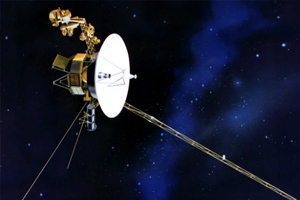
NASA interstellar craft set to reach 16.1 billion miles today, marking one full light-day of communication delays. Craft is operating with only 2 science...

 Oct 11 — ISS, ~405-km LEO: Expedition 65 / 10 aboard ISS readying for Soyuz MS-18 departure with 3 people, and start to Exp 66 later this week; working with payloads involving luminescence of tissues, fuel tank liquid displacement, radiation measurements.
 Oct 11 — NewSpace:
 Oct 11 — USA: NASA soliciting proposals for commercial

 = All times for terrestrial events in local time unless noted.
 = All times for international terrestrial events in local time unless noted.
 = All times for space events, and…
 = All times for international space / astro events in Hawaii Standard Time unless noted. Add 10 hours to obtain UT (‘Universal Time’).
 NASA Lucy is set launch October 16 from Cape Canaveral in Florida on ULA Atlas 5 401 at cost of US$148.3 million. The 12-year mission (13th of NASA Discovery Program) is to investigate various mid-solar system C, P and D type asteroids – 7 in Jupiter Trojan / Greek camps (located 60° ahead of / behind Jupiter in same orbital path at L4, L5 respectively) and 1 main belt asteroid. Jupiter Trojans are numerically similar to main asteroid belt population (~1M objects >1km), but less data exists on Trojan composition – low albedo and density is suggestive of similar structure to comets or KBOs, with thin carbon dust layer masking ice. Scientists at Goddard Space Flight Center, Southwest Research Institute, Kennedy Space Center led by Principal investigator Harold Levison (SwRI) are attempting to glean insight into Solar System formation as origin of material that may predate the Jovian system and reflect early stages of planetary accretion. After 2 gravity assist maneuvers around Earth, Lucy is to flyby main belt asteroid – Donaldjohanson (April 2025) before heading to Trojans clustered around Jupiter L4: Eurybates (August 2027), Polymele (September 2027), Leucus (April 2028) and Orus (November 2028); after returning for yet another Earth gravity assist, Lucy will venture out to binary asteroids Patroclus / Menoetius in March 2033 – for a total of 8 distinct targets, a record for all space missions. (Image Credits: NASA, Lockheed Martin, SwRI)