Texas Emerging as Astronautical Hub of NewSpace Rocket Construction & Testing
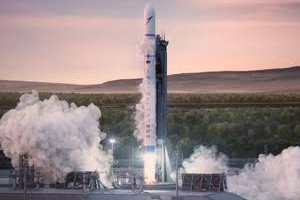
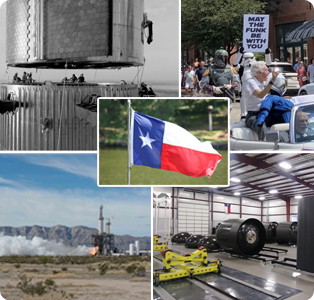
Commonly known as the Lone Star State, properly the Friendship State, Texas is increasingly central to the USA space effort. Home to some 6,290 aerospace engineers, second only to California per U.S. Bureau of Labor Statistics, space enterprises new and legacy have established major operations in the geographically massive state. World launch mass leader SpaceX is still officially headquartered in Hawthorne CA; however, CEO Elon Musk has relocated himself and much of company operations to the SpaceX South Texas launch site near the southernmost tip of the state, 8 km from the Mexico border, dubbed ‘Starbase’. The largest rocket in history (Starship 20, 120 m) is being prepared at the site for first orbital test planned to land in the Pacific off the island of Kaua’i. Musk has declared ambitious plans for Starbase, including launch of human Mars missions. On the west side of Texas, 40 km north of Van Horn, Blue Origin Launch Site One ‘Corn Ranch’ sits on 668 km2, famous for the July 20 New Shepard launch of both the oldest (Wally Funk, 82, TR) and youngest (Oliver Daemen, 18) people to reach space. Firefly Aerospace, recipient of $93.3M NASA CLPS contract, is developing Blue Ghost lunar lander from its HQ and 15,240 km2 manufacturing facility in Cedar Park, 25 km north of downtown Austin in central Texas. (Image Credits: Elon Musk Via Twitter, Grapevine Convention & Visitors Bureau, Blue Origin, Firefly)
MONDAY
Highlights… Aug 16 — ISS, ~405-km LEO: Expedition 65 seven-member crew transferring 3,700 kg of cargo from NG-16 Cygnus S.S. Ellison Onizuka including loose regolith 3D printer for Moon-Mars, muscle tissue experiment, space heat loss investigation; reviewing procedures for U.S. EVA #77 planned next Tuesday for solar array bracket installation.
Aug 16 — Tiangong Space Station, ~370-km LEO: Shenzhou 12 three-member crew planning second EVA, to departure TSS in ~30 days; second cargo ship Tianzhou 3 may launch in Sep, followed by Shenzhou 13 / 6-month 3-crew mission in Oct.
Aug 16 —NewSpace: Varda Space Industries orders 3 Photon spacecraft from Rocket Lab; SpaceX to acquire Swarm Technologies including 120-satellite constellation, frequencies.
Aug 16 — Solar System: Day / night cycle apparent cause of methane level discrepancy between detectors on Mars; magnetic field induced auroras cause 426 C° atmospheric temperature on Jupiter.
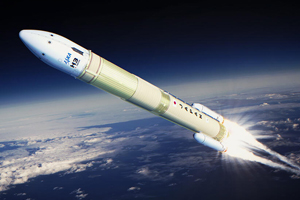
Aug 16 — Global: JAXA making progress on Pulse Detonation Engine, testing in S-520 rocket; Capstone to launch to elliptical lunar orbit from New Zealand in Q4.
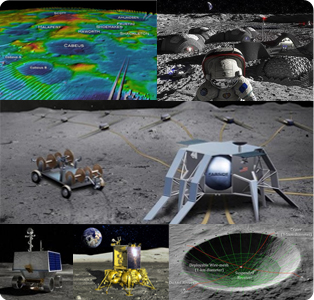
Integrating input from science communities, commercial companies and NASA Divisions are Lunar Surface Science Workshops – now holding #10 Fundamental and Applied Lunar Surface Research in Physical Sciences August 18-19, online. Under Space Policy Directive-1, human lunar return at Moon South Pole 2024 and sustaining a Moon base by 2028, LSSWs work to preempt necessary tools, payloads, experiments and infrastructure to maximize science and exploration by Astronauts. This Workshop will see ~80 talks, 40 posters, 2 plenary, 2 breakout and 8 concurrent sessions. During Fundamental Physics Research session Jan Harms will talk about Lunar Gravitational Wave Antenna, Gerard van Belle on Optical Interferometer for Ultra-High-Resolution Astronomy from the Lunar Surface, Simone Dell’Agnello on MoonLIGHT + MPAc, Ashish Goel on Lunar Crater Radio Telescope, with others talking about neutron sensors, laser ablation / ionization mass spectrometry, and time & metrology on the lunar surface. Apollo 17 Astronaut Harrison Jack Schmitt will give a Keynote on Day 2 on Apollo Legacy, followed by Carle Pieters (Moon’s Properties and Its Geology), Kevin Cannon (Lunar Ice and Mapping), Zach Pirtle (CLPS) and Tony Colaprete (VIPER). Other presentations will discuss dusty plasma investigations with PmL Instrument on Luna-25 and New Shepard as a Suborbital Lunar-g Testbed. LSSW #11 Lunar Science Accomplished with a Robotic Arm Part 1 is set for September 9 followed by Part 2 Sep 30. (Image Credits: NASA, JPL-Caltech, Jack Burns, Univ. of CO – Boulder, Saptarshi Bandyopadhyay, GSFC)
Aug 2 – Oct 31 — SpaceBase, Planet, Christchurch, New Zealand and Online: Space for Planet Earth Challenge; seeking innovative ideas from New Zealand, Australia, and Pacific Island residents at High School and University / Start-up level to address climate change through space technologies.
Aug 17 — Kappa Cygnids Meteor Shower Peak: Shower appears to line up in sky by Cygnus and star Kappa Cygni, typically produces slow (25 km/sec) mostly faint meteors 3-5 per hour with a few very bright.
Aug 19 — W. M. Keck Observatory, Rob and Terry Ryan Foundation, Online / Kamuela HI: Astronomy Talks: Exploring Galaxies and Beyond; by Lauren Corlies, Deputy Head of Education and Public Outreach at Vera C. Rubin Observatory, 17:00 HST.
Aug 19 —Jupiter: At opposition in longitude, magnitude -2.9, 14:00.
Aug 19 — Apollo Asteroid 2021 PJ4: Near-Earth Flyby (0.017 AU)
FRIDAY
Aug 20 — Voyager 2, Interstellar Space: NASA spacecraft begins 45th year in space today, launched Aug 20, 1977 – seventeen days before Voyager 1; expected to send data to Earth until ~2025 when power may run out.
Aug 20 — Apollo Asteroid 2021 PV: Near-Earth Flyby (0.047 AU)
SATURDAY
Aug 21 — Ad Astra Kansas Foundation, Space Age Publishing Company, ILOA, Hutchinson KS and Online: Galaxy Forum Kansas 2021: James Webb Space Telescope; 13th annual Galaxy Forum, featuring Scott Acton of Ball Aerospace, 13:00 at the Cosmosphere.
Aug 21 — International Institute of Space Law, Secure World Foundation, Online / Paris, France: 7th IISL Happy Hour; SWF Executive Director Peter Martinez to speak on African Space Policy, 15:00 UTC.
Emanating from ~6km-wide comet with 5.3-year Solar orbit, visible in constellation Aquarius near star Delta Aquarii, fast, faint meteors peak on this night, best...
The International Research Conference is a federated organization dedicated to bringing together a significant number of diverse scholarly events for presentation within the conference...
Includes ~150 meetings covering the fields of COSPAR Scientific Commissions / Panels / Task Groups, such as SC B: The Earth-Moon System, Planets, and...
From 02 to 07 August 2026, a few thousand geoscientists across diverse disciplines will gather at the 23rd annual meeting of the Asia Oceania Geosciences...
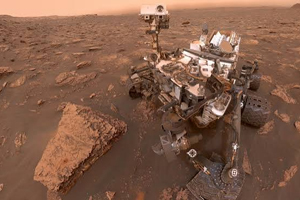
NASA Curiosity (Mars Science Laboratory) rover surpasses another full year of operations on Mars surface today; launched Nov 26, 2011 – landed Aug 5,...
This international lunar science meeting has two objectives: to provide a platform for leading experts to review recent advances across lunar research, from the...
At CSIR International Convention Centre. Key topics are Earth Observation, Developing Space Tourism, Space Supply Manufacturing. Cultural tours are offered.
Participants will receive theoretical and hands-on training in electron imaging and X-ray spectroscopy for application to planetary samples. This training opportunity is targeted at...
"Leading Australia’s Space Future for Our Strategic Advantage". Southern Space 2026 brings together decision-makers who set the direction for Australia’s space sector. It is...
 Aug 16 — ISS, ~405-km LEO: Expedition 65 seven-member crew transferring 3,700 kg of cargo from NG-16 Cygnus S.S. Ellison Onizuka including loose regolith 3D printer for Moon-Mars, muscle tissue experiment, space heat loss investigation; reviewing procedures for U.S. EVA #77 planned next Tuesday for solar array bracket installation.
 Aug 16 — NewSpace: Varda Space Industries orders
  Aug 16 — USA:
 = All times for terrestrial events in local time unless noted.
 = All times for international terrestrial events in local time unless noted.
 = All times for space events, and…
 = All times for international space / astro events in Hawaii Standard Time unless noted. Add 10 hours to obtain UT (‘Universal Time’).