National / Independent Japan Space Organizations Making Progress Toward 2022 Lunar Landings
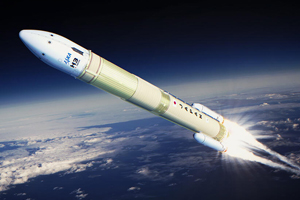
The 4th nation to reach orbit (Ohsumi, February 1970) is advancing in cislunar space: JAXA aims to launch Smart Lander for Investigating Moon (SLIM) NET 2022, its 3rd Moon probe and 1st landing on lunar surface. SLIM is to validate low-processing power / crater map based algorithmic precision landing technique. Sharing a ride on H-2A rocket built and operated by Mitsubishi Heavy Industries with X-Ray Imaging and Spectroscopy Mission (XRISM), the next generation space telescope in that spectrum – itself heading to ~550-km LEO to conduct its astronomy mission, SLIM is to land near Marius Hills. Structures in the region are thought to contain lava tubes possibly suitable for human habitation, and possible ‘skylight’ identified by SELENE (Kaguya) will be investigated while Multi-Band Camera to characterize nature of exposed mantle material relevant to Giant-impact hypothesis of lunar formation. ispace of Japan is also eager to launch 30-kg payload capacity HAKUTO-R, competing with NASA CLPS providers to land the world’s 1st commercial Moon lander (Mission 1) NET 2022 – to be followed by Mission 2 (2023) and Mission 3 (2024), in which 500-kg payload capacity Series 2 lander is to be deployed. UAESA and CSA-ASC are to fly rovers with ispace. Japan is also planning on sending humans to the Moon, with Artemis Generation application period running Dec 20 – Mar 4. JAXA hopes to increase diversity (currently, all 7 Japan astronauts are male, with 52-year average age) with outreach by Astronaut Naoko Yamazaki and revamped requirements. (Image Credits: JAXA, NASA, ispace, Nissan)
MONDAY
Dec 13 — ISS, ~405-km LEO: Seven-member Expedition 66 working with experiments involving colloids & magnetic fields, MAND 3D printer, flow boilers / heat exchange; to be joined by visitors Yusaku Maezawa and Yozo Hirano, Cosmonaut Alexander Misurkin.
Dec 13 — Tiangong Space Station, ~370-km LEO: Shenzhou 13 crew of 3 configuring Tianhe for Wentian arrival in ~6 months; Shenzhou 14 craft at Jiuquan readied in case of emergencies while its crew perform technical recovery training to prepare for future missions.
Highlights…
NewSpace: Astra to launch NASA payload from CCSFS Jan 2022; ULA anticipates receipt of BE-4 engines for Vulcan Centaur early 2022; Earth observation venture Planet Labs is latest space company to offer public shares via SPAC.
Solar System: S Korea planning 2029 orbiter to observe / map Apophis; NEO monitoring system Sentry-2 capable of correcting for Yarkovsky effect now in use; Planetary scientists anticipate Jupiter / Neptune moons exploration, planetary defense, space telescopes enabled by Starship.
Galaxy: Hubble is fully back online, conducting science operations; ASTRON researchers utilizing VLA identify very diffuse galaxy lacking dark matter, threatening Lambda-CDM model.
Global: ISRO and Roscosmos agree to further cooperation on launch vehicles, planetary exploration; Arianespace to launch reusable smallsat rocket Maïa NET 2026; CLEP engineer Ye Peijian reaffirms Taikonauts on Moon possible before 2030 while Yutu-2 bears NW toward cube-shaped object.
USA: SpaceX to fly 3 additional ISS missions under Commercial Crew contract; 2021 NASA astronaut class includes 4 women / 6 men begin training Jan 2022; University of North Dakota working on 3D-printed spacesuits with reutilization capability under EPSCoR.
AGU 2021 Expects 25,000 From 100+ Countries in New Orleans & Online Dec 13-17
The American Geophysical Union 2021 meeting with theme ‘Science is Society’ is being held December 13-17 in New Orleans LA and Online. AGU21 will feature 6 keynotes, 26 workshops, 10 field trips (of which 1 is to John C. Stennis Space Center, and 4 online field trips), 32 awards, poster sessions, lightning talks, town halls and numerous lectures under 25 sections including: atmospheric sciences, Earth and planetary surface processes, education, ocean sciences, sciences & society, volcanology, geochemistry and petrology. Some of the speakers are (L-R) Paul Schenk (LPI) talking on Perseverance, Curiosity and Opportunity in the Outer Solar System; Mei-Ching Hannah Fok (GSFC) on The Interconnected Inner Magnetosphere: A Modeler’s Perspective; Athena Coustenis (Paris Observatory) on Search for Habitable Conditions in the Outer Solar System. Emily Cooperdock (USC) on Weaving Diversity, Equity, and Inclusion into Geoscience Education. Among dozens of related events are: The United Nations Sustainable Development Stage, Climate Science 2021: The latest from the IPCC, and Latest Science from the Biggest Story in Solar System: NASA’s Juno Mission to Jupiter. Founded 1919 and headquartered in Washington DC, AGU is currently directed by Susan Lozier and now has >62,000 individual members from 137 countries under its new centennial logo and tagline ‘Advancing Earth and Space Science’. It publishes online magazine Eos and ~20 peer-reviewed scientific journals. (Image Credits: AGU)
Dec 13 — Roscosmos, Launch Proton / Ekspress-AMU 3 & 7, Baikonur Cosmodrome, Kazakhstan: Russia Proton rocket to launch two communication satellites.
Dec 13 — AIAA Greater Huntsville Section, Online / Huntsville AL: Associate Fellow Recognition Event; with AIAA Executive Director Dan Dumbacher.
Dec 13-14 — Geminids Meteor Shower Peak: Appearing to radiate from constellation Gemini, shower can produce 80-130 meteors per hour; bright, medium-slow meteors (35 km/sec), few leave persistent trains.
Dec 13 — Apollo Asteroid 2021 WZ5: Near-Earth Flyby (0.012 AU)
Dec 13 — Aten Asteroid 2019 XQ1: Near-Earth Flyby (0.036 AU)
Dec 13 — Apollo Asteroid 2021 WW2: Near-Earth Flyby (0.036 AU)
Dec 13 — Apollo Asteroid 2021 VW27: Near-Earth Flyby (0.048 AU)
Dec 6 – Jan 20 — STEAMSPACE, Enterprise in Space, Janet’s Planet, Online / Austin TX: Registration Open: Cities in Space Micro Challenge; 9 week challenge open to 3rd and 4th grade students, globally; free to participate.
TUESDAY
Dec 14 — Chang’e-3 Lander, Guang Han Gong, Sinus Iridum / Mare Imbrium, 44.12°N 19.51°W, Moon Surface: Spacecraft reaches 8 full years / enters 9th year on Moon surface, landed 2013.
Dec 14 — NEOWISE, LEO: NASA Wide-field Infrared Survey Explorer spacecraft (redubbed Near-Earth Object WISE – NEOWISE) reaches 12 full years / begins 13th year in space; launched 2009.
Dec 14 — SpaceX, Launch Falcon 9 / CSG 2, Cape Canaveral SFS FL: SpaceX Falcon 9 to launch second COSMO-SkyMed Second Generation, radar surveillance satellite for Italian space agency.
Dec 14 — AIAA Sydney Section, Online: Melbourne Space Lab / SpIRIT; with Simon Barraclough, SpIRIT Nanosatellite Technical Director, University of Melbourne; 19:00-20:00 (AEST).
Dec 14 — Apollo Asteroid 2021 WZ4: Near-Earth Flyby (0.013 AU)
Dec 14 — Apollo Asteroid 2021 VT6: Near-Earth Flyby (0.020 AU)
WEDNESDAY
Dec 15 — Beyond Earth Institute,Online: Recognizing Property and Ownership in Space; featuring Michelle Hanlon (For All Moonkind), Robert Brumley (Commstar), Christopher Borgen (St. John’s University School of Law); 15:00-17:00 EST.
Dec 15 — Aten Asteroid 2004 YC: Near-Earth Flyby (0.045 AU)
THURSDAY
Dec 16 — U.S. Chamber of Commerce, Boeing, Online / Washington DC: Launch | Expanding Commercial and Civil Space Partnerships; featuring panels on space debris, Artemis 1 & 2, commercial space, Keynotes with Peter Beck (Rocket Lab) and Stephen Dickson (FAA), 13:00-15:00 EST.
Dec 17 — Moon: 6.2° NNW of Aldebaran, 07:00; at apogee (distance 406,288 km), 16:00.
Dec 17 — Aten Asteroid 163899 (2003 SD220): Near-Earth Flyby (0.036 AU)
SATURDAY
Dec 18-19 — SpaceX, Launch Falcon 9 / Turksat 5B,SLC-40 Cape Canaveral SFS FL: SpaceX Falcon 9 to launch Turksat 5B for broadband services over Turkey, Middle East and regions of Africa; launch window 22:58-00:28 EST.
Dec 19 — Gaia,Sun-Earth L2 Lagrange Point: ESA spacecraft reaches 8 full years / enters 9th year in space today; now in extended mission phase working to map more than 1 billion stars; launched in 2013.
Dec 19 — ISS, Soyuz MS-20 Undocking / Return to Earth,~405-km LEO: Soyuz MS-20 craft to undock 18:30 EST (live coverage available) with Cosmonaut Alexander Misurkin and space tourists Yusaku Maezawa and Yozo Hirano; landing scheduled 22:18.
Dec 19 —French Space Agency (CNES), Paris, France: Centre National d’études Spatiales celebrates its 60th year since founding today and recent accomplishments such as plans for joint UAE lunar missions, and USA cooperation on Space Climate Observatory.
Emanating from ~6km-wide comet with 5.3-year Solar orbit, visible in constellation Aquarius near star Delta Aquarii, fast, faint meteors peak on this night, best...
The International Research Conference is a federated organization dedicated to bringing together a significant number of diverse scholarly events for presentation within the conference...
Includes ~150 meetings covering the fields of COSPAR Scientific Commissions / Panels / Task Groups, such as SC B: The Earth-Moon System, Planets, and...
From 02 to 07 August 2026, a few thousand geoscientists across diverse disciplines will gather at the 23rd annual meeting of the Asia Oceania Geosciences...
NASA Curiosity (Mars Science Laboratory) rover surpasses another full year of operations on Mars surface today; launched Nov 26, 2011 – landed Aug 5,...
This international lunar science meeting has two objectives: to provide a platform for leading experts to review recent advances across lunar research, from the...
At CSIR International Convention Centre. Key topics are Earth Observation, Developing Space Tourism, Space Supply Manufacturing. Cultural tours are offered.
Participants will receive theoretical and hands-on training in electron imaging and X-ray spectroscopy for application to planetary samples. This training opportunity is targeted at...
"Leading Australia’s Space Future for Our Strategic Advantage". Southern Space 2026 brings together decision-makers who set the direction for Australia’s space sector. It is...
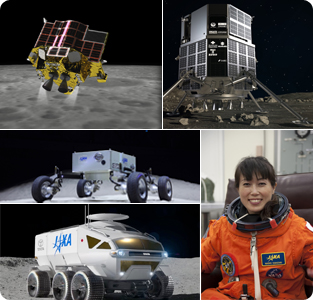 The 4th nation to reach orbit (Ohsumi, February 1970) is advancing in cislunar space: JAXA aims to launch Smart Lander for Investigating Moon (SLIM) NET 2022, its 3rd Moon probe and 1st landing on lunar surface. SLIM is to validate low-processing power / crater map based algorithmic precision landing technique. Sharing a ride on H-2A rocket built and operated by Mitsubishi Heavy Industries with X-Ray Imaging and Spectroscopy Mission (XRISM), the next generation space telescope in that spectrum – itself heading to ~550-km LEO to conduct its astronomy mission, SLIM is to land near Marius Hills. Structures in the region are thought to contain lava tubes possibly suitable for human habitation, and possible ‘skylight’ identified by SELENE (Kaguya) will be investigated while Multi-Band Camera to characterize nature of exposed mantle material relevant to Giant-impact hypothesis of lunar formation. ispace of Japan is also eager to launch 30-kg payload capacity HAKUTO-R, competing with NASA CLPS providers to land the world’s 1st commercial Moon lander (Mission 1) NET 2022 – to be followed by Mission 2 (2023) and Mission 3 (2024), in which 500-kg payload capacity Series 2 lander is to be deployed. UAESA and CSA-ASC are to fly rovers with ispace. Japan is also planning on sending humans to the Moon, with Artemis Generation application period running Dec 20 – Mar 4. JAXA hopes to increase diversity (currently, all 7 Japan astronauts are male, with 52-year average age) with outreach by Astronaut Naoko Yamazaki and revamped requirements. (Image Credits: JAXA, NASA, ispace, Nissan)
  NewSpace:
  Solar System: S Korea planning 2029 orbiter to
  USA: SpaceX to fly 3 additional ISS missions under
 = All times for terrestrial events in local time unless noted.
 = All times for international terrestrial events in local time unless noted.
 = All times for space events, and…
 = All times for international space / astro events in Hawaii Standard Time unless noted. Add 10 hours to obtain UT (‘Universal Time’).