Who Will Claim Malapert Mountain, Most Valuable Point Near the Moon South Pole?
International Lunar Observatory Association ILO-1 flagship mission, destined for Malapert ‘Point E’ since its conception in 2006, continues to seek collaboration, enterprise, customers, partners in international space agencies, Blue Origin, SpaceX, and other pioneers. Mission and site characterization studies funded by ILOA and developed by Canadensys Aerospace Corp. (2015-current), Moon Express (2010-2019), MDA (2008-2010) and SpaceDev (2003-2008) conclude Malapert massif is a most valuable strategic, infrastructure platform. 5-kilometer Malapert mountain at 86°S towers above the Solar System’s largest impact crater, 2,500-km diameter South Pole-Aitken Basin within sight of Shackleton Rim. Malapert offers strategic advantages for lunar base buildout including near-continuous line-of-sight for Earth observations and communications, ‘Peak Of Eternal Light’ illuminated areas for ~300 Earth days, more moderate thermal environment, access to permanently shadowed regions / small cold traps, shielded far-side flank for radio astronomy, and ISRU resources to support fuel / life systems / manufacturing. This high ground is a unique location for commerce, Galaxy and local environment observations, science, education and possible contingency / emergency support point for Moon bases or satellite relay communication fail-safes. Artemis human landings NLT 2025-26 are being planned for a location within 6° of Moon South Pole while Russia-China International Lunar Research Station, Moon Village, India Chandrayaan, National Space Agencies, and commercial groups target robotic and human surface landings with similar mission requirements: sunlight availability, likelihood of finding water, navigable area and elevation. (Image Credits: JAXA, NHK, NASA, ESO, SpaceX)
MONDAY
☆ Jul 11 — ISS, ~405-km LEO: Expedition 67 seven-member crew working with grip experiments, new 3D printer, food audits, waste disposal via Nanoracks Airlock; Artemyev and Cristoforetti planning for Russia EVA next week.
☆ Jul 11 — Tiangong Space Station, ~370-km LEO: Shenzhou 14 crew Chen Dong, Liu Yang, Cai Xuzhe preparing for upcoming work with Wentian module launch scheduled in 12 days.
Highlights…
o NewSpace: 2024/5 OneWeb deal raises total contracted launch services to US$1.2B for Relativity Space of Long Beach CA; Virgin Galactic striving for commercial passenger spaceflight Q1 2023, hires Boeing subsidiary Aurora Flight Sciences to build 2 motherships expected to fly NET 2025.
☆ Solar System: ESA Mars Express orbiter being prepared for operating system upgrade; Advanced Space and Terran Orbital restore communication with CAPSTONE, plan next orbital correction en route to Moon orbit.
☆ Galaxy: University of Portsmouth study posits early universe quasars are result of turbulent gas / dark matter interactions accelerating star / black hole cycle; S4716, fastest known star, is orbiting Sgr A* at 29,000,000 kph, observed by 5 telescopes including Keck.
o Global: First China commercial spaceport in Wenchang, Hainan Island (19° N) under construction; Data collected from ESA lunar analog ARCHES to be used to set perimeters for rovers controlled from Gateway, haptic feedback; 72 launches during first half 2022 puts world on track to surpass 2021 record of 135.
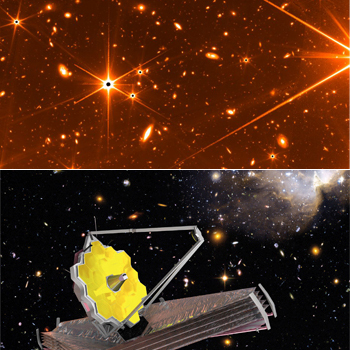
James Webb Space Telescope Images Set to Revolutionize Understanding of Cosmos July 12
NASA James Webb Space Telescope (JWST), in halo orbit around Sun-Earth L2 (~1,500,000 km from Earth) nearing completion of 17 mode checkout for its 4 science instruments. Near Infrared Imager and Slitless Spectrograph, developed for CSA-ASC cleared checkout on June 27, Mid-InfraRed Instrument confirmed science readiness June 30, while Near InfraRed Spectrograph, built for ESA by ESTEC, was ready July 7. Near InfraRed Camera, led by University of Arizona / Lockheed-Martin, is expected to follow suit shortly, with official declaration of fully operation / release of initial images and spectroscopy data planned for July 12 at 04:30 HST (14:30 UTC). Aggregate spectrum coverage ranges from 0.6 to 28 microns, or visible orange to mid-IR, with ~ 25 m2 of light collecting area over 18 gold plated beryllium mirror segments (6.5-meter diameter combined). All near-IR sensors utilized by JWST (16 total) are HAWAII-2RG, developed on Mauna Kea at UH88 telescope by IfA astronomers. NASA is counting down to the first release, and hosting a Virtual Global Social July 5-19. JWST can be tracked with NASA Eyes solar system visualization tool or directly with JPL ephemeris data made easily accessible by Unistellar / SETI tool. The initial JWST images will be posted here, and the first 6,000-hour Cycle 1 General Observers will be available from Space Telescope Science Institute. (Image Credits: NASA, ESA)
★ Jun 28 – Nov 13 — CAPSTONE, Near-Rectilinear Halo Orbit Trajectory: Cislunar Autonomous Positioning System Technology Operations and Navigation Experiment heading to operating position at NRHO / cislunar space.
o Jul 5 – Aug 2 — KARI, Incheon International Airport, S Korea:South Korea lunar orbiter ‘Danuri’ on its way to Cape Canaveral SFS for integration and testing prior to scheduled August 5 launch on Falcon 9.
☆ Jul 12 — James Webb Space Telescope, Sun-Earth Lagrange point (L2): Release of JWST first full-color images and spectroscopic data scheduled for today.
☆ Jul 13 — International Space Station, ~405-km LEO: ISS Expedition 67 in-flight interview with WHP-TV, Harrisburg PA and NASA Astronaut Bob Hines on the Space Station, starts 13:00 EDT, live coverage available.
☆ Jul 13 — Arianespace, Launch Vega C / LARES 2, SLC, Kourou, French Guiana: Inaugural flight of Vega C rocket to launch Italian Space Agency (ASI) LARES 2 satellite – covered in laser mirrors to enable precise tracking from the ground, enabling research into geoodynamics and general relativity.
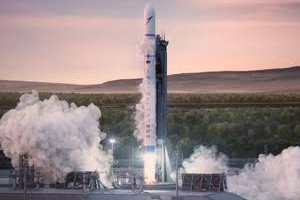
★ NET Jul 14 — SpaceX, Launch Falcon 9 / Dragon CRS-25, LC-39A, Kennedy Space Center FL: Dragon 2 spacecraft to launch on its 5th cargo resupply mission / 25th mission overall for SpaceX under Commercial Resupply Services contract.
● Jul 16 — NASA, 53rd Observation of Apollo 11 Launch,Nationwide USA / Global: The launch of the Apollo 11 mission / first humans to the Moon is celebrated today while NASA SLS mega Moon rocket is being prepared for inaugural launch NET August 23 – September 6.
In celebration of the 25th anniversary of the creation of the Astrophysics Group at the University of Exeter, we are pleased to announce the international...
Emanating from ~6km-wide comet with 5.3-year Solar orbit, visible in constellation Aquarius near star Delta Aquarii, fast, faint meteors peak on this night, best...
The International Research Conference is a federated organization dedicated to bringing together a significant number of diverse scholarly events for presentation within the conference...
Includes ~150 meetings covering the fields of COSPAR Scientific Commissions / Panels / Task Groups, such as SC B: The Earth-Moon System, Planets, and...
From 02 to 07 August 2026, a few thousand geoscientists across diverse disciplines will gather at the 23rd annual meeting of the Asia Oceania Geosciences...
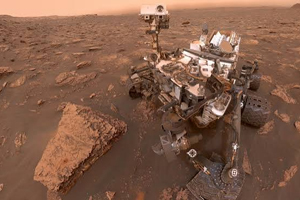
NASA Curiosity (Mars Science Laboratory) rover surpasses another full year of operations on Mars surface today; launched Nov 26, 2011 – landed Aug 5,...
This international lunar science meeting has two objectives: to provide a platform for leading experts to review recent advances across lunar research, from the...
At CSIR International Convention Centre. Key topics are Earth Observation, Developing Space Tourism, Space Supply Manufacturing. Cultural tours are offered.
Participants will receive theoretical and hands-on training in electron imaging and X-ray spectroscopy for application to planetary samples. This training opportunity is targeted at...