Twin Voyagers Reach 45 Years Since Launch, Continue Science in Interstellar Space
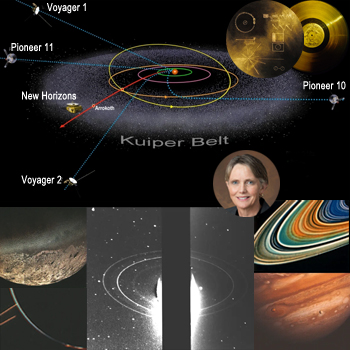
Celebrating twin Voyager spacecraft reaching 45 full years in space (August 20 for V2, September 5 for V1), Project Manager Suzzane Dodd presents a webinar August 18 from JPL / Caltech in Pasadena CA, 19:00 PDT. Dodd became PM in 2010, 2 years before V1 became the first confirmed craft to enter interstellar space on Aug 25, 2012. Voyager 2 left the heliosphere November 5, 2018 and is predicted to overtake Pioneer 10 as the 2nd most distant spacecraft in April 2023. Both have working instruments: Cosmic Ray Subsystems, Low-Energy Charged Particles, Magnetometers, and Plasma Wave Subsystems – and V2 operates Plasma Science experiment. Decades old science continues to be studied showing new findings such as V2 data collected on a Uranus plasmoid 34 years ago. V1 is ~157 AU from the Sun taking ~22 hours to communicate to Earth, and V2 is 131 AU taking 18 hours. While V1 recently (May 2022) sent inaccurate telemetry data on its location, the craft is operating nominally having enough hydrazine to cruise through 2040. V2 hydrazine will last until ~2034. Fueled by plutonium-238 radioactive decay, the RTGs which run instruments and communications equipment are decreasing in power by ~4 watts a year, though NASA is hoping to extend operations beyond 2025. Pioneer 11 may cross into interstellar space 2027, followed by New Horizons in 2040s, and Pioneer 10 in 2057. (Image Credits: NASA, JPL, Caltech, JHUAPL, SwRI)
MONDAY
☆ Aug 15 — ISS,~415-km LEO: Expedition 67 seven-member crew maneuvering Space Station Remote Manipulator System for Dragon CRS-25 undocking procedures; Russia EVA #55 with Artemyev and Matveev to commence this week.
☆ Aug 15 — Tiangong Space Station, ~390-km LEO: Newest TSS module Wentian undergoing integration and testing including new sleeping quarters for Shenzhou 14 three-member crew; Mengtian being readied at Hainan spaceport for October launch.
Highlights..
o NewSpace: Momentus working to deploy 3 remaining (out of 10) customer satellites from Vigoride-3 Orbital Transfer Vehicle, targeting Nov for next launch; Weather / earthquake monitoring startup Yunyao Yuhang of Tianjin, China to deploy GNSS-RO / GNSS-R satellite payloads with ~US$14.8M capital; Astra suspending 2022 launches, refocusing efforts on 600kg lift Launch System 2.0.
☆ Solar System: NASA JPL investigating origin of “small hairline object” observed on Mars Perseverance drill; Simulation performed by UC-Riverside researchers indicates Galilean moons are cause of insubstantiality of Jupiter rings; latest Pluto-Charon study from New Horizons indicates endogenic source of volatiles in KBOs may be plausible.
☆ Galaxy: JWST to image AS 209, potentially youngest known planet at 1.6Myr / 395 LY distant from Earth as characterized by ALMA; Harvard / Galileo Project scientists plan recovery mission of interstellar meteorite CNEOS 2014-01-08 submerged in Pacific near Papua New Guinea.
o Global: SSLV will soon launch again after “marginal failure”, per former ISRO Chair Kiran Kumar; Rocket Lab CEO Peter Beck confident in 10-15/yr Electron launch cadence, noting “rockets are often ready before the spacecraft”.
●USA: FCC assessing future regulatory framework for Servicing, Assembly, And Manufacturing In Space; Northrop Grumman partnering with Firefly to build domestic Antares 330 powered by 7 Miranda engines; Space X Starship / Super Heavy on track for orbital test flight following successful static firings.
● Hawai’i: Stanford astronomers utilize Keck observatory to study heaviest known Neutron Star / most dense object, ‘Black Widow’ PSR J0952-0607; Gemini North images 90km blue jet / red sprite above thunderstorm.
● = Terrestrial events, and…
o = International terrestrial events in local time.
★ = Space events, and… ☆ = International space / astro events in Hawaii Standard Time unless noted. Add 10 hours to obtain UT (‘Universal Time’).
International Space Elevator Consortium Conference 2022 Considers Space Access Beyond Chemical Propulsion
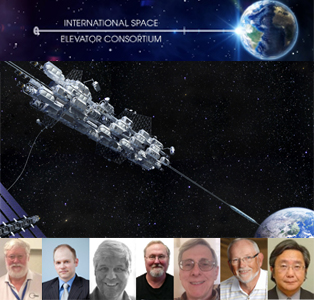
Running online Aug 19-20 with themes of Dual Space Access Architecture, Materials Science and Engineering, Tether/Climber Interface, Transformational Permanent Space Infrastructure, and Significant Questions to be Answered, ISEC Conference 2022 is to gather leading proponents of sustainable, mechanized entry to space. RP-1 rockets currently emit ~ 1,000 metric tons of carbon, a figure estimated to grow 10x within 2 decades by University College London / Cambridge / MIT study. In contrast to other rocket alternatives such as centrifugal and electromagnetic coil launch, the space elevator concept is appropriate for human travel up to and beyond LEO, and could in theory replace much of the world’s current space infrastructure. ISEC Conference 2022 will feature presentations by ISEC president / Galactic Harbor, Inc Senior VP (L-R) Peter Swan on Space Elevator 101 / Engineering Baseline; Dynamics of a Space Elevator with a GEO station by Vanier College physics professor Stephen Cohen; Economics of Infrastructure for Sustainable Space Access by Phil Swan; and Planetary Defense by Paul Phister. Mini workshops on Tether-Climber Interface and Dual Space Access Architecture to be conducted by ISEC VP Dennis Wright and Director Jerry Eddy. ISEC will also hold an in-person Space Elevator Session at the 73rd International Astronautical Congress in Paris, France on September 19. The Space Elevator event at IAC 2022 will be co-chaired by Peter Swan and Yoji Ishikawa of Obayashi Corporation. (Image Credits: ISEC, ISDC, Obayashi Corporation, ResearchGate)
☆ Aug 15 — Apollo Asteroid 2021 EW2: Near-Earth Flyby (0.070 AU)
☆ Aug 15 — Aten Asteroid 2017 QC36: Near-Earth Flyby (0.077 AU)
Continued From…
★ Jun 28 – Nov 13 — CAPSTONE, Near-Rectilinear Halo Orbit Trajectory: Cislunar Autonomous Positioning System Technology Operations and Navigation Experiment heading to operating position at NRHO / cislunar space.
☆ Aug 4 – Dec 16 — Korea Pathfinder Lunar Orbiter (KPLO), Lunar Trajectory: South Korea ‘Danuri’ to search for lunar resources, test technologies using Ballistic Lunar Transfer, 3 highly elliptical Earth orbits to initiate a trans-lunar injection and arrive at 100-km lunar orbit.
TUESDAY
● Aug 16 — Maryland Space Business Roundtable (MSBR), Greenbelt MD: MSBR luncheon with Dr. Christyl Johnson, Deputy Director for Technology and Research at NASA Goddard Space Flight Center; 11:30-13:30.
☆ Aug 16 — Apollo Asteroid 2022 PW: Near-Earth Flyby (0.003 AU)
WEDNESDAY
☆Aug 17 — ISS, Russia EVA #55, ~405-km Altitude: Roscosmos Cosmonauts Oleg Artemyev and Denis Matveev to exit International Space Station through Poisk airlock to install cameras and switch to grapple mode on European Robotic Arm to prepare it for relocation to Poisk; live coverage available, starts 9:20 EDT.
☆ Aug 17 — Venus: 0.64° S of Beehive Cluster, 15:00.
☆ Aug 17 — Apollo Asteroid 2012 QV2: Near-Earth Flyby (0.044 AU)
☆ Aug 17 — Apollo Asteroid 2015 FN35: Near-Earth Flyby (0.054 AU)
☆ Aug 17 — Apollo Asteroid 2022 OR: Near-Earth Flyby (0.089 AU)
☆ Aug 17 — Apollo Asteroid 2021 DC1: Near-Earth Flyby (0.092 AU)
THURSDAY
☆ Aug 18 — ISS, Dragon CRS-25 Undocking / Return to Earth, ~415-km LEO: Dragon cargo ship set to departure ISS and return to Earth with experiments and cargo; undocking scheduled 11:05 EDT, live coverage available.
● Aug 18 — JPL, Caltech, NASA, Online / Pasadena CA: Webinar: Voyager – 45 Years in Space; by Suzanne Dodd, Voyager Project Manager at JPL, 19:00.
☆ Aug 18 — Moon: 0.64° NNE of Uranus, 05:00; at last quarter, 18:35.
☆ Aug 18 — Aten Asteroid 2022 PC: Near-Earth Flyby (0.042 AU)
☆ Aug 18 — Aten Asteroid 2021 RZ3: Near-Earth Flyby (0.067 AU)
☆ Aug 19 — Moon: 2.57° NNW of Mars, 01:00; 2.90° SE of Pleiades, 04:00; 7.4° N of Aldebaran, 22:00.
☆ Aug 19 — Apollo Asteroid 2019 AV13: Near-Earth Flyby (0.049 AU)
SATURDAY
★ Aug 20 — Voyager 2, Interstellar Space: NASA spacecraft begins 46th year / reaches 45 full years in space today, launched Aug 20, 1977 – seventeen days before Voyager 1; expected to send data to Earth until ~2025 when power may run out.
In celebration of the 25th anniversary of the creation of the Astrophysics Group at the University of Exeter, we are pleased to announce the international...
Emanating from ~6km-wide comet with 5.3-year Solar orbit, visible in constellation Aquarius near star Delta Aquarii, fast, faint meteors peak on this night, best...
The International Research Conference is a federated organization dedicated to bringing together a significant number of diverse scholarly events for presentation within the conference...
Includes ~150 meetings covering the fields of COSPAR Scientific Commissions / Panels / Task Groups, such as SC B: The Earth-Moon System, Planets, and...
From 02 to 07 August 2026, a few thousand geoscientists across diverse disciplines will gather at the 23rd annual meeting of the Asia Oceania Geosciences...
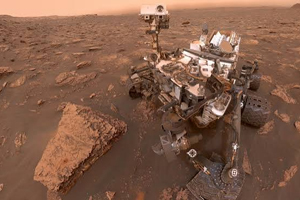
NASA Curiosity (Mars Science Laboratory) rover surpasses another full year of operations on Mars surface today; launched Nov 26, 2011 – landed Aug 5,...
This international lunar science meeting has two objectives: to provide a platform for leading experts to review recent advances across lunar research, from the...
At CSIR International Convention Centre. Key topics are Earth Observation, Developing Space Tourism, Space Supply Manufacturing. Cultural tours are offered.
Participants will receive theoretical and hands-on training in electron imaging and X-ray spectroscopy for application to planetary samples. This training opportunity is targeted at...