Chang’e-6 lead isotope data shows that a massive impact, rather than just the early Lunar Magma Ocean, heavily modified the lunar crust in the South Pole–Aitken region. | Astrobotic Griffin-1 lander is to be sent to JPL later this month for environmental testing, in preparation for its launch late 2026. | Lunar Outpost, recently awarded US$220 million, has discussed details about its Pegasus rover. | Lunar Resources plans to open HELIX-1 factory in Utah, which will employ over 400 people. | Reportedly NASA is lobbying for billions of dollars to support Moon mission orders and timelines put forth by U.S. Administration. | Chang’e-7, carrying ILO-C payload, is planned to be the next mission to launch to the Moon. | The Green Bank Telescope image of Artemis II is a contender for the longest-distance picture of humans ever taken from Earth. | A paper published in Nature discusses using small (<1.5 km) lunar craters as landing pads to naturally inhibit plume surface interactions (PSIs). | 45 years and 2.5 million “lunar deeds” later, Lunar Embassy founder Dennis Hope is still keeping the conversation around private space property rights alive. | Open Lunar Foundation kicks off its summer webinar series.
Rescuing Swift: Time-Critical Mission to Boost NASA's Space Telescope
Due to increased solar activity, the Neil Gehrels Swift Observatory’s orbit has prematurely decayed, threatening to end the mission by the end of this year. Launched in 2004, the multiwavelength telescope utilizes three co-aligned instruments to detect and observe gamma-ray bursts in gamma-ray, X-ray, and UV/optical light. Now circling Earth at about 370 km, the spacecraft could operate for at least five more years if returned to its optimal near-circular 600-km Low Earth Orbit (LEO) at an inclination of 20.6° relative to the equator as its science instruments, solar arrays, batteries, and other components are all operating nominally. In order to return it to the desired 600-km altitude, NASA, Katalyst Space Technologies and Northrop Grumman have created an ambitious plan: On June 27, a Northrop Grumman Stargazer aircraft will deploy a Pegasus XL rocket from which the Katalyst’s LINK spacecraft will separate and autonomously rendezvous with and capture Swift using three robotic arms to push the craft to a higher orbit using ion thrusters. Stargazer will take off from the Kwajalein Atoll, part of the Republic of the Marshall Islands in the South Pacific Ocean. Incredibly, Katalyst designed, built, and fully tested the LINK satellite in under eight months. This mission also marks the final launch of the Pegasus XL rocket, which had its first flight in 1994. (Image Credits: NASA, Katalyst, NG)
HUMANS IN SPACE
☆ International Space Station, ~415-km LEO: The seven-member Expedition 74 crew is investigating how bacteria that cause pneumonia can lead to long-term heart damage, as well as testing IVGEN hardware, which filters drinking water to produce medical-grade IV fluid. Augmented and virtual reality technologies are also being tested to advance astronaut care. Options to resolve the ongoing air leak in the Zvezda service module’s transfer tunnel include further sealant applications, repairs, or possibly decommissioning the section. Soyuz MS-29, with a crew of three, is now planned to launch to the ISS in mid-July.
☆ Tiangong Space Station, ~390-km LEO: Shenzhou-23 crew is tasked with a rice cultivation experiment to study its genetic stability and regenerative capacity in support of future deep space missions. China has confirmed it is moving forward with plans to double the current size of the station (currently consisting of three modules) by using its repurposed Tianhe backup module, eventually expanding it to a six-module station.
Near-Earth Objects Close Approaches –Mon June 22: Amor Asteroid 2026 MQ (0.019 AU) |Thu June 25: Apollo Asteroid 2026 LJ3 (0.037 AU) | Fri June 26: Apollo Asteroid 2014 NV63 (0.055 AU) | Sat June 27: Aten Asteroid 152637 / 1997 NC1 (0.026 AU)
Loading Moon data for your location...
Loading planet data...
Land your name on the Moon!
Have your name sent to the Moon for FREE on the ILO-1 lunar mission via Astrolab FLEX rover (NET 2027). You will automatically be signed up for our weekly Space Calendar.
At the University of Southern California, the world's largest gathering dedicated to human Mars exploration. For nearly three decades, the International Mars Society Convention...
NASA spacecraft surpasses another full year in orbit around Mars today, holds record for longest-surviving continually active spacecraft in orbit around a planet other...
At the Spokane Convention Center. The meeting will have a broad scope, with a wide-ranging program of science and workforce topics, and celebrating planetary...
Convene, connect, and collaborate at the 19th annual von Braun Space Exploration Symposium! This year’s event will spotlight how bold ideas, emerging technologies, and...
Themes include: Space & the Arctic; Space & AI; Space & International Collaboration. There is a Student Session, a Technical Session, a Frontier Session,...
Oslo Spaceport Norway offers monthly a knowledgeable speaker and opportunity for networking, 17:00-20:00 local time; free entry but registration required. Ground Control is for...
45 satellites to launch for Amazon Leo, formerly named Project Kuiper. This LEO mega constellation will offer broadband internet access with 3,276 satellites.
Occurring 31 October from 09:00-11:00 local time (16:00-18:00 HST, 19:00-21:00 PDT, 22:00-24:00 EDT on 30 October), this Galaxy Forum will be in hybrid format...
Originally planned around this date for Wenchang, China -- TBC (to be confirmed); As the only professional association for astronauts, ASE supports the advancement of...
Coordinating Division Division C Education, Outreach and Heritage The IAU Symposium on Innovative Research and Techniques in Astronomy Communication will take place from November...
Change clocks back 1 hour from Daylight Saving to Standard Time; does not include Hawai’i, Arizona (except the Navajo Nation), American Samoa, Guam, Northern...
ESWW is the main annual event in the European Space Weather and Space Climate calendar. It is an international meeting organised annually within the...
IAU Symposium: IAUS409 - A Journey Towards Effective Astronomy Communication; online and at National Astronomical Observatory of Japan, 2-21-2 Osawa Mitaka, Tokyo. Topics include:...
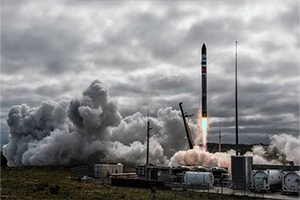
Launch Complex 1, ~39°S, Mahia Peninsula, New Zealand
iQPS Launch 9, an Earth observation satellite with Synthetic aperture radar for Japan-based imaging company iQPS, to launch on "The Sea God Surveys" mission...


 Near-Earth Objects Close Approaches – Mon June 22: Amor Asteroid 2026 MQ (0.019 AU) |Thu June 25: Apollo Asteroid 2026 LJ3 (0.037 AU) | Fri June 26: Apollo Asteroid 2014 NV63 (0.055 AU) | Sat June 27: Aten Asteroid 152637 / 1997 NC1 (0.026 AU)