Inner Solar System Exploration Progresses with BepiColombo Mercury Flyby, Upcoming Venus Missions
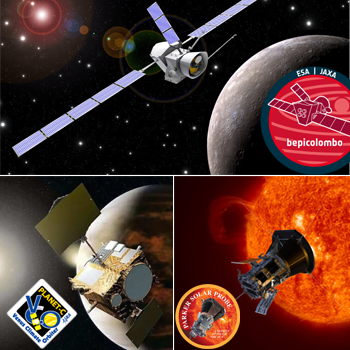
ESA / JAXA joint mission BepiColombo is set to make its 3rd Mercury flyby on June 20. Three additional flybys are scheduled (Sep 5, 2024; Dec 2, 2024; Jan 9, 2025) before insertion into Mercury orbit on December 5, 2025. From orbit, the BepiColombo craft will separate into its constituent elements – first the ESA-built Mercury Transfer Module propulsion module will detach from Mercury Magnetospheric Orbiter Mio (JAXA) and Mercury Planetary Orbiter (ESA), followed by the two science modules uncoupling via spin eject. MPO will operate 11 instruments from a 480 × 1,500 km orbit, while Mio will observe with 5 instruments from 590 × 11,640 km, both with a polar inclination. NASA Parker Solar Probe to reach 16th perihelion (~ 13 R☉ / 9 Gm) on June 22. Data from this distance has already provided new understanding of magnetic interactions which create coronal holes and solar wind. Parker is also making its 6th Venus flyby on August 21, while ESA Solar Orbiter isn’t due in Venusian proximity for its 4th flyby until Feb 18, 2025. JAXA Akatsuki is the sole craft currently observing Venus, from a highly elliptical 1,000 – 370,000 km orbit, with several missions working to join: ISRO Shukrayaan-1 may launch NET December 2024, Rocket Lab / MIT targeting January 2025, CNSA VOICE 2026, UAESA mission 2028, NASA DAVINCI & VERITAS, Roscosmos Venera-D 2029, and ESA EnVision 2031 (Image Credits: ESA, JAXA, NASA)
MONDAY
☆ Jun 19 — International Space Station,~415-km LEO: Expedition 69 seven-member crew commanded by Sergey Prokopyev preparing for Russia EVA #59 with radiation sensors attached to suits; Roll Out Solar Array (IROSA) installations / servicing continue.
☆ Jun 19 — Tiangong Space Station, ~390-km LEO: Shenzhou 16 three-member crew with first civilian Taikonaut working on experiments including quantum communication.
Highlights…
o NewSpace: Varda in-space pharmaceutical manufacturing experiment now on orbit, company can fund 3 additional missions with US$100M seed funds; The Spaceport Company to further develop offshore launch platform with $1.5M Defense Innovation Unit contract; Firefly acquiring Spaceflight Inc., developing medium-lift launch vehicle with Northrop Grumman.
☆ Solar System: Germany-Japan study of Cassini data indicating high concentration of phosphorus may spur increased exploration of Enceladus; Astronauts may require 3-year recovery period following space travel to counter ventricle expansion; SpacePNT satnav receiver being integrated with SSTL Lunar Pathfinder spacecraft targeting late 2025 launch.
☆ Galaxy: 20 exoplanets to receive names (7 based on indigenous etymology) selected from 603 entries / 91 countries by IAU NameExoWorlds; 2nd discovered circumbinary planetary system (BEBOP-1 / TOI-1338) being characterized with ESO spectrographs at La Silla / VLT; University of Toronto-led study posits axion – dark matter connection which may be observed in next decade via Rubin Observatory.
o Global: Saudi Arabia striving to increase national space activity under newly created Saudi Space Agency; Philippine Maya-5 and Maya-6 CubeSats to be deployed from ISS after launch on SpaceX Falcon 9; Astra Carta document on space / Moon settlement written with input from Chris Hadfield and Charles Mountbatten-Windsor to be released this month.
Paris AirShow to Host Nearly 100 Countries, Present New Technologies, Provide Aerospace Experiences
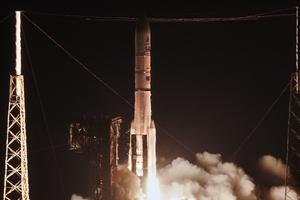
54th Paris AirShow will take place at Le Bourget Parc des Expositions June 19-25 hosting ~316,500 visitors, 304 delegations from 98 countries, 7 international organizations, with 2,497 exhibitors from 54 countries in 125,000 square meters of exhibition space, organized by SIAE, subsidiary of GIFAS. Airbus, Lockheed, NASA, ESA, Boeing, Chinese Academy of Sciences, China Commercial Space Alliance, Society of Japanese Aerospace Companies, DLR (German Aerospace Center), Hindustan Aeronautics Limited, Thales Alenia Space are among participants. At Boeing Pavilion, visitors can experience the roar / heat of rocket engines with Artemis experience and learn about its historic 2022 launch, Artemis II 2024 launch. Boeing rep Chris Raymond will give a presentation. Thales will showcase latest space solutions in telecommunications, Earth observation, space exploration and navigation; its CEO Yannik Assouad to speak on lunar exploration, environmental monitoring, bridging the digital divide, European space sovereignty, geolocation solutions. DLR to present how small rockets are developing market potential in microlauncher sector. DLR is also working towards spaceflight with recent hot-firing test of ESA Ariane 6 upper stage at DLR facility. Ariane 6 is the next-generation launch vehicle capable of carrying payloads ~21,000 kg to LEO. Keynote speakers also include Robert Pearce leading aeronautics research mission strategic planning at NASA, H55 cofounder André Borschberg, and Safran Chief Executive Officer Olivier Andriès. (Image Credits: Paris AirShow, Thales, NASA, Boeing, Airbus, DLR, ESA, et al)
o Jun 19-25 — French Aerospace Industries Association (GIFAS), Paris Le Bourget, France:International Paris Air Show.
☆ Jun 19 — Moon: 5.1° S of Castor, 18:00.
☆ Jun 19 — Apollo Asteroid 2016 LK49: Near-Earth Flyby (0.044 AU).
Continued From…
●Jun 12 – Aug 12 — Institute for Scientist & Engineer Educators at University of California Observatories, University of Hawai’i,Hilo HI: Akamai Internship Program 2023.
☆ Jun 20 — BepiColombo, Third Mercury Flyby / Gravity Assist,Mercury Flyby: European Space Agency / JAXA Mercury Planetary Orbiter (MPO) and Mercury Magnetospheric Orbiter (dubbed Mio ‘waterway or fairway’) to perform its third Mercury flyby today on its planned schedule to enter Mercury orbit December 5, 2025 after being launched 2018.
o Jun 20 — Seradata Ltd., Russell, Slingshot Aerospace, Gallagher Specialty, Room, Space News, Space Intel, London, United Kingdom:5th Seradata Space Conference; at Leonardo Royal Hotel.
☆ Jun 20 — Moon: 1.72° S of Pollux, 00:00.
WEDNESDAY
★ Jun 21 — ULA, Launch Delta IV Heavy / NROL-68, SLC-37B,Cape Canaveral SFS FL: Second to last launch of Delta IV to lift classified US National Reconnaissance Office payload.
● Jun 21 — Space & Satellite Professionals International (SSPI), New York Space Business Roundtable,Online: Webinar: Is Space The Wild West, East, North & South? with Krystal Azleton (Secure World Foundation), Rob Scheige (Willis Towers Watson) and Steven Kaufman (Hogan Lovells); 12:00-13:15 EDT.
● Jun 21-23 — NASA Planetary Science Advisory Committee,Washington DC: Meeting of the Planetary Advisory Committee; soliciting scientific and technical information relevant to program planning.
☆ Jun 21 — June Solstice: Longest day of the year (opposite in Southern Hemisphere) as Sun reaches a point farthest north of celestial equator, 05:01.
☆ Jun 21 — Moon: 3.8° NNE of Beehive Cluster, 04:00; 3.5° NNE of Venus, 18:00; with Venus and Mars within circle of diameter 4.95°, 22:00.
☆ Jun 21 — Apollo Asteroid 2023 HF1: Near-Earth Flyby (0.031 AU).
THURSDAY
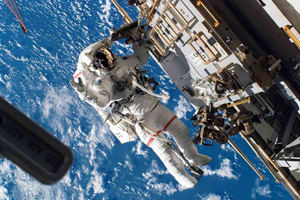
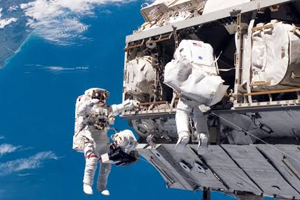
☆ Jun 22 — International Space Station, Russia EVA #59, 415-km LEO: Roscosmos Cosmonauts Sergey Prokopyev and Dmitriy Petelin to perform EVA to remove experiment hardware and install new data transmission hardware, starts 04:20 EDT; live coverage available.
★ Jun 22 — Parker Solar Probe, Heliocentric Orbit: Spacecraft reaches 16th perihelion today.
☆ Jun 22 — Moon: 3.6° NNE of Mars, 04:00; at apogee (distance 405,394 km), 09:00.
FRIDAY
☾ Jun 23 — Lunar Reconnaissance Orbiter, Moon Orbit: NASA spacecraft reaches 14 full years / enters 15th year in Moon orbit today; launched Jun 18, 2009, arrived at Moon 5 days later.
At the Spokane Convention Center. The meeting will have a broad scope, with a wide-ranging program of science and workforce topics, and celebrating planetary...
Convene, connect, and collaborate at the 19th annual von Braun Space Exploration Symposium! This year’s event will spotlight how bold ideas, emerging technologies, and...
Themes include: Space & the Arctic; Space & AI; Space & International Collaboration. There is a Student Session, a Technical Session, a Frontier Session,...
Oslo Spaceport Norway offers monthly a knowledgeable speaker and opportunity for networking, 17:00-20:00 local time; free entry but registration required. Ground Control is for...
45 satellites to launch for Amazon Leo, formerly named Project Kuiper. This LEO mega constellation will offer broadband internet access with 3,276 satellites.
Occurring 31 October from 09:00-11:00 local time (16:00-18:00 HST, 19:00-21:00 PDT, 22:00-24:00 EDT on 30 October), this Galaxy Forum will be in hybrid format...
Originally planned around this date for Wenchang, China -- TBC (to be confirmed); As the only professional association for astronauts, ASE supports the advancement of...
Coordinating Division Division C Education, Outreach and Heritage The IAU Symposium on Innovative Research and Techniques in Astronomy Communication will take place from November...
Change clocks back 1 hour from Daylight Saving to Standard Time; does not include Hawai’i, Arizona (except the Navajo Nation), American Samoa, Guam, Northern...
ESWW is the main annual event in the European Space Weather and Space Climate calendar. It is an international meeting organised annually within the...
IAU Symposium: IAUS409 - A Journey Towards Effective Astronomy Communication; online and at National Astronomical Observatory of Japan, 2-21-2 Osawa Mitaka, Tokyo. Topics include:...
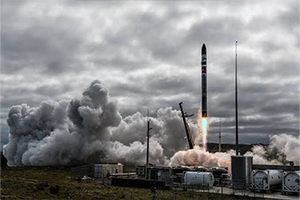
Launch Complex 1, ~39°S, Mahia Peninsula, New Zealand
iQPS Launch 9, an Earth observation satellite with Synthetic aperture radar for Japan-based imaging company iQPS, to launch on "The Sea God Surveys" mission...
Launch window 10:34am - 2:34pm local time for the 15th batch of classified satellites for a reconnaissance constellation built by SpaceX and Northrop Grumman...
Expecting senior government and executives from NASA, Firefly, Blue Origin to discuss innovation, competitive advantages and a "space industrial revolution in LEO". Capped at...
Launch Complex 1, ~39°S, Mahia Peninsula, New Zealand
iQPS Launch 10, an Earth observation satellite with Synthetic aperture radar for Japan-based imaging company iQPS, to launch on “The Mountain God Rises” mission...
Promoting the New Space Economy: The first major national meeting of the space, technology and scientific industries. Three days to connect science, industry and...