ISRO to Launch Chandrayaan-3 Mission to Moon South Pole with Lander, Rover; USA- India Collaborate on Space Exploration Projects
India Space Research Organization (ISRO) set to launch Chandrayaan-3 mission of lander and rover to Moon South Pole region targeting July 14 02:35 IST (window) extending to July 19, 4 km x 2.4 km landing site at 69.36° S, 32.34° E, following Chandrayaan-2 landing attempt failure in 2019. Mission life of lander and rover to equal one lunar day ~14 Earth days. Objectives include soft landing success, deployment of rover and measurements of near surface plasma ions, analysis of chemical and mineralogical composition of lunar surface. Propulsion module to carry lander and rover configuration to 100-km lunar orbit, with Spectro-polarimetry of Habitable Planet Earth (SHAPE) payload. Radio Anatomy of Moon-bound Hypersensitive Ionosphere and Atmosphere (RAMBHA) is one of four science payloads on the lander also carrying a retroreflector. The two rover payloads include LASER Induced Breakdown Spectroscope (LIBS) and Alpha Particle S-Ray Spectrometer (APXS). Furthering NASA-ISRO collaboration, India signs Artemis Accords, Prime Minister Modi and USA President Biden meeting signals progress towards joint space exploration including NASA to provide training for India Astronauts (Vyomanauts) at Johnson Space Center for ISS 2024 mission. Further collaborative project is NASA-ISRO Synthetic Aperture Radar (NISAR) science instrument to combine payloads with radar systems from USA and India, to provide first dual imaging satellite. Gaganyaan also to be first independent India human spaceflight mission launching 3-member Vyomanaut crew to orbit of 400 km for 3 days in 2025. (Image Credits: ISRO, NASA)
MONDAY
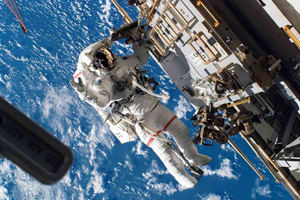
☆ Jul 10 — International Space Station,~415-km LEO: Crew Bowen, Hoburg, Alneyadi working with data from BEAM investigations (module is >7 years old); Expedition 69 ongoing experiments are protein crystallization, Zero T2 exercise device, fluid science.
☆ Jul 10 — Tiangong Space Station, ~390-km LEO: Shenzhou 16 three-member crew working with international payloads (9 projects from 17 countries) – first installed is flame experiment from Japan.
Highlights…
o NewSpace: Industry and government consider extension of commercial spaceflight regulatory moratorium set to expire Oct 1; Astra Spacecraft Engines subsidiary incorporated in Delaware may allow company to access global workforce; Blue Origin looking to expand into Europe & increase Washington state operations ahead of Artemis 4 landing.
☆ Solar System: Curiosity to drive 50 meters to next impact craters, will use multispectral observations to characterize bedrock at ‘Roghi’; JUICE (now >1.6 AU from Sun) en route to Jupiter produces ultraviolet data of Milky Way; JWST images of Solar System 4 gas giants in near- and mid-infrared aiding studies of rings structures & search for undiscovered moons.
☆ Galaxy: USA-India research team proposes observation of lensed gravitational waves to measure cosmic expansion; Researchers using IceCube detector in Antarctica to map Milky Way using high-energy neutrinos; TESS observing ~200,000 brightest stars, finds 2 sub-Neptune exoplanets adding to its tally of 6,700 candidate exoplanets.
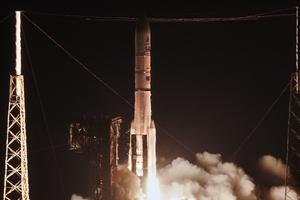
o Global: Starlink leaking EM radiation in 110-188 MHz, poising risk to protected radio observation band (150.05-53 MHz) per LOFAR; Ariane 5 now retired after 117 flights, Ariane 6 likely to launch NLT May 2024; Maritime Launch Services working to complete Spaceport Nova Scotia construction following first successful sub-orbital launch.
●USA: Upgraded Mojave Air and Spaceport now open following first significant renovation in 20+ years; NASA plans media event while SpaceX Crew-7 and spacecraft Endurance prepare for August launch; 20 regional space companies in Washington state meet with NASA Admin Nelson and Sen. Maria Cantwell.
● Hawai’i: ESA Euclid observing >1/3rd of celestial sky to ~10B LY to be complemented with 3 Hawai’i telescopes’ optical data, producing 3D map; Univ of Auckland study of Pan-STARRS, SDSS, DES data shows time dilation for 12 billion-year-old quasars is 5x that of local frame of reference; Subaru and JWST used by Kavli astronomers in China and Japan to characterize quasar host galaxies from 860 million years post Big Bang.
● = Terrestrial and… o = International terrestrial events
☾ = Moon activity
★ = Space and… ☆ = International space / astro events in Hawaii Standard Time unless noted. Add 10 hours to obtain UT (‘Universal Time’).
Interstellar Research Group Goes International with 8th Symposium in Quebec, Canada
The Interstellar Symposium is gathering July 10-13 at McGill University in downtown Montreal under theme In the Light of Other Suns to discuss how best to explore and live outside our Solar System. Conference organizer Interstellar Research Group (reconstituted from the regional Tennessee Valley Interstellar Workshop in 2020) is now partnering with International Academy of Astronautics and Breakthrough Initiatives, while maintaining ties to International Space University, British Interplanetary Society, and the Initiative for Interstellar Studies as it seeks to augment technological, philosophical, and economic infrastructure necessary to achieve the extension of human activity to new star systems. Pre-Symposium Seminars on space law and national space forces will be held July 9, followed by formal conference opening on July 10. Tulane University mathematical physicist Frank Tipler is scheduled to give the first keynote address on The Ultimate Rocket and the Ultimate Energy Source, and Their Use in the Ultimate Future, followed talks by philosopher Joseph Gottlieb of Texas Tech University and SETI Astronomer Claudio Maccone. Interstellar Travel: Are We Ready? panel featuring NASA Technologist Les Johnson, Helicity Space Board Advisor Alan Stern, UCSB Experimental Cosmology Laboratory Director Philip Lubin, et al is free and open to the public. In-person Canadian Space Agency Headquarters tour Space Explorers: THE INFINITE virtual reality tour of the ISS will be available to participants following the Symposium. (Image Credits: IRG, IAA, Breakthrough Initiatives, McGill University, OpenAI)
● Jul 10 — NASA, Online / Washington DC: Proposals Due: Lunar Terrain Vehicle Contract; LTV intended to be used for crewed operations beginning with Artemis 5 in 2029; contract award scheduled for November 2023.
o Jul 10-13 — Interstellar Research Group, International Academy of Astronautics (IAA), Breakthrough Initiatives, Montreal, Quebec, Canada:8th Interstellar Symposium: In the Light of Other Suns; in coordination with McGill University.
●Jun 12 – Aug 12 — Institute for Scientist & Engineer Educators at University of California Observatories, University of Hawai’i,Hilo HI: Akamai Internship Program 2023.
o Jun 26 – Aug 25 — International Space University, ESA, Netherlands Space Office, Delft University of Technology, Leiden University,São José dos Campos, Brazil:35th ISU Space Studies Program (SSP 2023).
o Jul 8-17 — National Space Foundation, NOIRLab, International Dark-Sky Association, AURA, Online / Global: Globe at Night July Campaign; to raise awareness of light pollution by inviting citizen-scientists to measure & submit night sky brightness observations.
● Jul 11-13 — NASA Small Bodies Assessment Group (SBAG),Hybrid / Washington DC and Online:Meeting of the NASA SBAG; at University of Arizona Center for Outreach and Collaboration.
o Jul 11-13 — NascentEdge Group Limited, Shenzhen, China:Shenzhen Satellite Expo; expecting up to 1,000 participants.
☆ Jul 11 — Moon: 2.09° NNW of Jupiter, 11:00.
☆ Jul 11 — Apollo Asteroid 2023 MD2: Near-Earth Flyby (0.014 AU).
☆ Jul 12 — LandSpace, Launch Zhuque-2,Jiuquan Satellite Launch Center, China: Second launch attempt, will be first methalox rocket to reach orbit if successful.
☆ Jul 12 — Moon: 2.17° N of Uranus, 07:00, 1.61° SE of Pleiades, 23:00.
☆ Jul 12 — Mars: Summer solstice north hemisphere, 14:00.
☆ Jul 12 — Apollo Asteroid 2018 UY: Near-Earth Flyby (0.019 AU).
THURSDAY
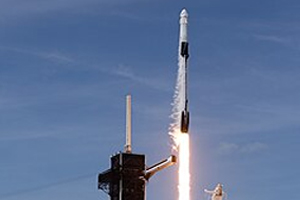
★ Jul 13 — SpaceX, Launch Falcon 9 / Starlink 5-15, SLC-40, Cape Canaveral SFS FL: Falcon 9 to carry last batch of Starlink V1.5 internet satellites to LEO; first stage booster to land on drone ship Shortfall of Gravitas.
☆ Jul 13 — Marsand Neptune: At heliocentric opposition, 17:00.
FRIDAY
☆ NET Jul 14 — ISRO, Launch LVM-3 (Launch Vehicle Mark-3) / Chandrayaan-3,Satish Dhawan Space Center, Sriharikota, India: India to launch Chandrayaan-3 mission of lander and rover to Moon South Pole region about ~110km east of Chandrayaan-2 attempted landing site between Manzinus N and Manzinus U (70.83°S, 22.67°E).
☆ Jul 14 — Mercury: 0.46° NNE of Beehive Cluster, 19:00.
SATURDAY
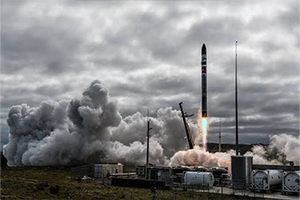
☆ Jul 15 — Rocket Lab, Launch Electron / ‘Baby Come Back’, Mahia Peninsula, New Zealand: The Electron Rocket to loft (08:23 NZST) multiple payloads for NASA Starling mission, Telesat and Spire Global; Electron first stage attempt to be recovered after ocean splashdown.
● Jul 16 — NASA,54th Anniversary of Apollo 11 launch observed today, Nationwide USA / Global: The launch of 1969 Apollo 11 Mission / first humans to Moon with Commander Neil Armstrong, Command Module Pilot Michael Collins and Lunar Module Pilot Edwin “Buzz” Aldrin, landing on Moon July 20.
At the Spokane Convention Center. The meeting will have a broad scope, with a wide-ranging program of science and workforce topics, and celebrating planetary...
Convene, connect, and collaborate at the 19th annual von Braun Space Exploration Symposium! This year’s event will spotlight how bold ideas, emerging technologies, and...
Themes include: Space & the Arctic; Space & AI; Space & International Collaboration. There is a Student Session, a Technical Session, a Frontier Session,...
Oslo Spaceport Norway offers monthly a knowledgeable speaker and opportunity for networking, 17:00-20:00 local time; free entry but registration required. Ground Control is for...
45 satellites to launch for Amazon Leo, formerly named Project Kuiper. This LEO mega constellation will offer broadband internet access with 3,276 satellites.
Occurring 31 October from 09:00-11:00 local time (16:00-18:00 HST, 19:00-21:00 PDT, 22:00-24:00 EDT on 30 October), this Galaxy Forum will be in hybrid format...
Originally planned around this date for Wenchang, China -- TBC (to be confirmed); As the only professional association for astronauts, ASE supports the advancement of...
Coordinating Division Division C Education, Outreach and Heritage The IAU Symposium on Innovative Research and Techniques in Astronomy Communication will take place from November...
Change clocks back 1 hour from Daylight Saving to Standard Time; does not include Hawai’i, Arizona (except the Navajo Nation), American Samoa, Guam, Northern...
ESWW is the main annual event in the European Space Weather and Space Climate calendar. It is an international meeting organised annually within the...
IAU Symposium: IAUS409 - A Journey Towards Effective Astronomy Communication; online and at National Astronomical Observatory of Japan, 2-21-2 Osawa Mitaka, Tokyo. Topics include:...
Launch Complex 1, ~39°S, Mahia Peninsula, New Zealand
iQPS Launch 9, an Earth observation satellite with Synthetic aperture radar for Japan-based imaging company iQPS, to launch on "The Sea God Surveys" mission...
Launch window 10:34am - 2:34pm local time for the 15th batch of classified satellites for a reconnaissance constellation built by SpaceX and Northrop Grumman...
Expecting senior government and executives from NASA, Firefly, Blue Origin to discuss innovation, competitive advantages and a "space industrial revolution in LEO". Capped at...
Launch Complex 1, ~39°S, Mahia Peninsula, New Zealand
iQPS Launch 10, an Earth observation satellite with Synthetic aperture radar for Japan-based imaging company iQPS, to launch on “The Mountain God Rises” mission...
Promoting the New Space Economy: The first major national meeting of the space, technology and scientific industries. Three days to connect science, industry and...