SpaceX Continues to Lead World in Launch Frequency and Upmass While Starlink Buoys Balance Sheet
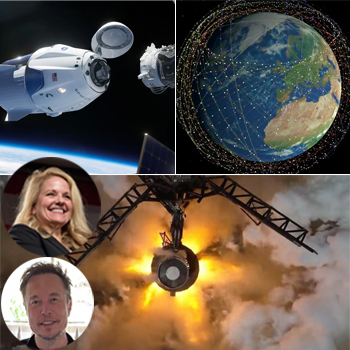
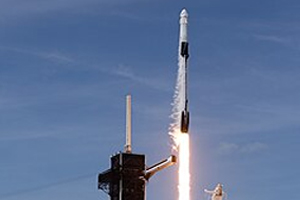
Striving to reach 100 launches in 2023, SpaceX has now conducted 61 orbital launches with Falcon-family rockets year-to-date, with ~25 more planned before 2024. This cadence firmly establishes the company as global launch leader for the 2nd year in a row, followed by CNSA, Roscosmos, Rocket Lab and ISRO. In total, Falcon 9 has launched 252 times, with 1 complete and 1 partial failure, while Falcon Heavy has had 7 successful launches. The latest space vehicle designed and built by SpaceX, Starship, is being prepared for its second test launch per CEO Elon Musk – however, FAA clearance remains pending, with Fish and Wildlife Service investigation into 3.5-acre fire started by first launch in April showing significant environmental impact. Starship is to be the lynchpin of the Artemis human return to the Moon, providing the crucial last leg of the journey from Lockheed Martin Orion spacecraft to the lunar surface at a TBD site within 6° of the Moon South Pole NET Dec 2025. SpaceX is also making progress on the financial front, turning a profit (US$55M) in Q1 2023 for the first time in 2 years, due in part to revenue derived from the 1.5M subscribers to Starlink internet service, now available in 60+ nations. 5,027 Starlink satellites have been launched to LEO since May 2019, with 4,652 still functioning in orbit. The constellation is expected to reach 12,000-42,000 total, including Starshield DoD variant. (Pictured: SpaceX President Gwynne Shotwell, CEO Elon Musk; Image Credits: SpaceX, NASA / Bill Ingalls, Twitter / @elonmusk)
MONDAY
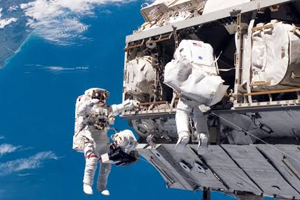
☆ Sep 4 — International Space Station,~415-km LEO: Crew-7 Jasmin Moghbeli (NASA), Andreas Mogensen (ESA), Satoshi Furukawa (JAXA), Konstantin Borisov (Roscosmos) working as part of now 7-member Expedition 69 following Crew-6 undocking / spashdown; SpaceX Crew Dragon Endurance docked to Harmony zenith port.
☆ Sep 4 — Tiangong Space Station, ~390-km LEO: Shenzhou 16 three-member crew preparing to implement international projects in collaboration with UNOOSA and ESA following 60+ successful experiments in materials science, biology, microgravity.
Highlights…
o NewSpace: Rocket Lab working toward full booster reusability following first successful reflight of Rutherford engine on Electron rocket; SpaceX is partnering with Cloudflare to boost Starlink satellite internet performance; TransAstra to build inflatable orbital debris gathering bag under $850,000 Phase 2 NASA SBIR contract.
☆ Solar System: SwRI to launch observing campaign to Jupiter moon Io utilizing Hubble and JWST concurrent with Juno flybys starting Dec 30; ‘Asteroid autumn‘ ahead as OSIRIS-REx set to return Bennu sample, Psyche launching, and Lucy to reach Main Belt before winter; NASA, NSF and NOAA preparing for 2024-2033 Heliophysics Decadal Survey guide for future solar missions.
☆ Galaxy: Photometric redshift measurement error rate may explain puzzling observations of ancient galaxies via JWST; Galileo Project paper which suggests beryllium, lanthanum, uranium alloy found in South Pacific is of interstellar origin being reviewed by peers; NASA Deep Space Network with stations in USA, Spain and Australia struggling to maintain bandwidth as needs increase.
o Global: Chandrayaan-3 Pragyan rover searching for hydrogen following detection of sulphur, aluminium, calcium, iron, chromium, titanium, manganese, silicon & oxygen; UNIDIR and Secure World Foundation releases Lexicon for Outer Space Security to “facilitate a shared understanding of key topics and terms”; Analysis of suspected Luna-25 impact site with 10-m impact crater imaged by LRO at 57.865°S, 61.360°E ongoing.
●USA: NASA TEMPO satellite is providing scientists with first nationwide assessment of air pollution; ULA awaiting calm weather for Atlas 5 launch of NROL-107 reconnaissance satellite following Hurricane Idalia; New Frontiers 5 selection now NET 2026 as NASA realigns program to meet 2023-2032 planetary science decadal goals including Uranus exploration.
● Hawai’i: Disassembly of Caltech Submillimeter Observatory telescope on Maunakea progresses towards summer 2024 completion; Innu-origin CFHT Astronomer Laurie Rousseau-Nepton stars in upcoming National Film Board of Canada documentary North Star (Étoile du Nord); NOIRLab continues investigation of cyberattack which has forced Gemini North & South, Víctor M. Blanco, and SOAR Telescopes to suspend observations.
● = Terrestrial and… o = International terrestrial events
☾ = Moon activity
★ = Space and… ☆ = International space / astro events in Hawaii Standard Time unless noted. Add 10 hours to obtain UT (‘Universal Time’).
Focus on Europe: Astrobiology Institute Summer School, 30th Conference of European Society for Astronomy in Culture
European Astrobiology Institute Summer School will give students hands-on experience learning the role of meteorite, comet impacts in the formation of Earth atmosphere and evolution of life. Session is to take place September 5-14 in town in Nördlingen Ries crater in southern Germany. About 15 million years ago the crater, 25 km in diameter, was created when an asteroid measuring more than a kilometer collided with Earth. Lectures to cover roles of impacts in the formation of habitable planets, physical and chemical properties of comets and meteorites, detection and investigation of impact craters by geological methods and remote sensing from space, ecological consequences of impacts and the role of impacts in mass extinctions. Many instructors from Vienna, Austria participating include Stefan Hölzl (Ries Crater Museum), Ludovic Ferrière (Natural History Museum), and Alexandra Pontefract (Johns Hopkins University). A two-day excursion around the Ries and the smaller Steinheim Crater (40 km to the west) is included. In Warsaw, Poland, the 30th Conference of the European Society for Astronomy in Culture (SEAC) will recognize Nicolas Copernicus at Between Ancient and Modern Astronomy Conference Sep 6-9. Event to explore relationship between astronomy and archeology, cultural, religious, and mythological aspects of civilization. Steven Gullberg (University of Oklahoma) to speak on Cultural Astronomy & Modern Skywatching and Danielle Alexander (University of Wales) speaking on Pleiades as an Avenue for Empathy. (Image Credits:IAU, astrobioalex, LMU, Natural History Museum, Vienna, Academia, Times of India, EAI, SEAC)
☆ Aug 23 – Sep 6 — ISRO, Chandrayaan-3 lunar mission, Shiv Shakti Point, Moon: Nominal mission duration of Vikram lander and Pragyan rover at 69.373°S, 32.319°E.
☆ Aug 31 – Sep 15 — JAXA, Launch H-2A / Smart Lander for Investigating Moon (SLIM) and X-Ray Imaging and Spectroscopy Mission (XRISM), Tanegashima Space Center, Japan: SLIM Moon mission project date to launch (09:34:57 JST) to small crater in Mare Nectaris on Moon near side equatorial region, with X-Ray Imaging and Spectroscopy Mission (XRISM) for studying galactic plasma; will test technologies for future lunar missions.
● Sep 1-4 — KLOUDbusters, Argonia KS: AIRFest 29; launch of high-power rockets throughout 4 days.
TUESDAY
★ Sep 5 — Voyager 1, Interstellar Space: NASA spacecraft begins 47th year in space today, launched Sep 5, 1977; farthest spacecraft from Earth, first to reach interstellar space.
● Sep 6 — Smithsonian National Air and Space Museum, Chantilly VA: Trailblazers in Conversation: Astronauts Fisher, Seddon, Sullivan; Celebrating NASA 45th anniversary of selecting its first six women Astronauts in 1978, coincides with journalist Lauren Grush book release “The Six” on Sep. 12.
☆ Sep 6 — Apollo Asteroid 2021 JA5: Near-Earth Flyby (0.034 AU).
THURSDAY
★ Sep 7 — Juno, Perijove 54 / 53rd Science Flyby,Jupiter Orbit: NASA craft to perform Jupiter flyby during Perijove 54, its 54th close flyby of Jupiter and 53rd science flyby with instruments turned on.
★ NET Sep 8 — Virgin Galactic, Launch Galactic 03 / VSS Unity,Spaceport America NM: Launch planned for suborbital flight carrying pilots Nicola Pecile, Michael Masucci, and 3 paid passengers yet to be announced.
★ Sep 8 — OSIRIS-REx, Asteroid 101955 Bennu (1999 RQ36): Origins-Spectral Interpretation-Resource Identification-Security-Regolith Explorer (OSIRIS-REx) spacecraft collecting 60 grams of asteroid reaches 7 full years / enters 8th year in Space, planned to return to Earth 24 Sep 2023.
● Sep 8 — NASA, Online / Washington DC:NASA Astrobiology Town Hall; Updates on Astrobiology Program, Research Coordination Networks, Future Mars Missions.
☆ Sep 8 — Apollo Asteroid 2020 GE: Near-Earth Flyby (0.038 AU).
SATURDAY
☆ Sep 9 — 239th Galactic Tick Day, Milky Way Galaxy: Highlighting Galaxy awareness by celebrating the Solar System traveling around Milky Way Galaxy Center every ~225 million Earth years, one Galactic Tick happens every 633.7 days; first Tick Day was one Tick after October 2nd, 1608 when the first telescope patent was filed.
☆ Sep 9 — Moon: 5.0° S of Castor, 12:00; 1.53° S of Pollux, 18:00.
SUNDAY
☆ Sep 10 — Moon: 3.8° NNE of Beehive Cluster, 23:00.
☆ Sep 10 — Apollo Asteroid 2023 QF6: Near-Earth Flyby (0.017 AU).
At the Spokane Convention Center. The meeting will have a broad scope, with a wide-ranging program of science and workforce topics, and celebrating planetary...
Convene, connect, and collaborate at the 19th annual von Braun Space Exploration Symposium! This year’s event will spotlight how bold ideas, emerging technologies, and...
Themes include: Space & the Arctic; Space & AI; Space & International Collaboration. There is a Student Session, a Technical Session, a Frontier Session,...
Oslo Spaceport Norway offers monthly a knowledgeable speaker and opportunity for networking, 17:00-20:00 local time; free entry but registration required. Ground Control is for...
45 satellites to launch for Amazon Leo, formerly named Project Kuiper. This LEO mega constellation will offer broadband internet access with 3,276 satellites.
Occurring 31 October from 09:00-11:00 local time (16:00-18:00 HST, 19:00-21:00 PDT, 22:00-24:00 EDT on 30 October), this Galaxy Forum will be in hybrid format...
Originally planned around this date for Wenchang, China -- TBC (to be confirmed); As the only professional association for astronauts, ASE supports the advancement of...
Coordinating Division Division C Education, Outreach and Heritage The IAU Symposium on Innovative Research and Techniques in Astronomy Communication will take place from November...
Change clocks back 1 hour from Daylight Saving to Standard Time; does not include Hawai’i, Arizona (except the Navajo Nation), American Samoa, Guam, Northern...
ESWW is the main annual event in the European Space Weather and Space Climate calendar. It is an international meeting organised annually within the...
IAU Symposium: IAUS409 - A Journey Towards Effective Astronomy Communication; online and at National Astronomical Observatory of Japan, 2-21-2 Osawa Mitaka, Tokyo. Topics include:...
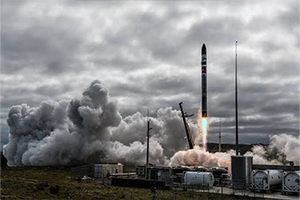
Launch Complex 1, ~39°S, Mahia Peninsula, New Zealand
iQPS Launch 9, an Earth observation satellite with Synthetic aperture radar for Japan-based imaging company iQPS, to launch on "The Sea God Surveys" mission...
Launch window 10:34am - 2:34pm local time for the 15th batch of classified satellites for a reconnaissance constellation built by SpaceX and Northrop Grumman...
Expecting senior government and executives from NASA, Firefly, Blue Origin to discuss innovation, competitive advantages and a "space industrial revolution in LEO". Capped at...
Launch Complex 1, ~39°S, Mahia Peninsula, New Zealand
iQPS Launch 10, an Earth observation satellite with Synthetic aperture radar for Japan-based imaging company iQPS, to launch on “The Mountain God Rises” mission...
Promoting the New Space Economy: The first major national meeting of the space, technology and scientific industries. Three days to connect science, industry and...