ISS Surpasses 23 Years of Continuous Human Occupation This Week While Exp 70 Perform Multiple EVAs
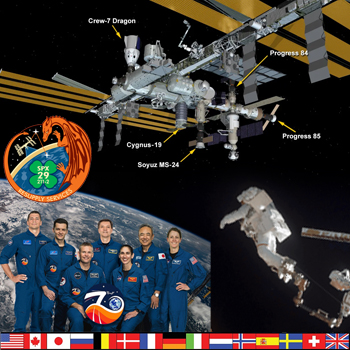
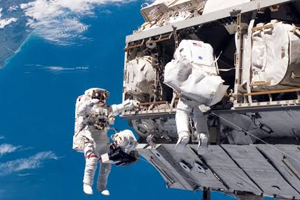
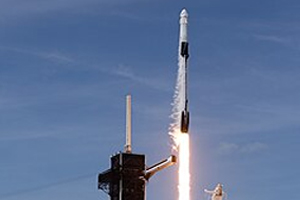
The start to the 24th year of International Space Station continuous human occupation commences November 3 with Expedition 70 crew and Andreas Mogensen as Commander. The crew is represented by 1 ESA, 1 JAXA, 2 NASA and 3 Roscosmos Astronauts who are focusing on experiments for human health, cancer treatments and space manufacturing techniques. U.S. EVA #89 will see the removal of radio frequency group hardware and the replacement of a trundle bearing assembly by Loral O’Hara and Andreas Mogensen on October 30; and soon followed by EVA #90 with Loral O’Hara and Jasmin Moghbeli exiting the station. Russia EVA #61 last week lasted 7 hours 41 minutes for the installation of a synthetic radar communications system, deployment of a solar sail satellite and to image the 13-year-old external radiator mounted on Nauka for ongoing leak investigations. The crew are also prepared to receive SpaceX Dragon CRS 29 cargo ship after its launch November 5 aboard Falcon 9 from LC-39A, Kennedy Space Center FL. Dragon will carry ~3,500-kg of cargo including ILLUMA-T to be installed on the Japan module exposed facility for testing laser communication, AWE to measure atmospheric gravity waves, Aquamembrane-3 water filtration demonstration, and ovarian, skeletal & respiratory studies. Private sector investment at ISS is increasing The next commercial Axiom Mission 3 will carry 3 passengers including a Turkish Space Agency representative as early as January 10 to ISS. (Image Credits: ISS Partners, NASA, SpaceX)
MONDAY
☆ Oct 30 — International Space Station,~415-km LEO: Expedition 70 working with HAM radio, plant habitat, sleep monitoring studies; prepacking items for Dragon cargo ship arrival and carrying out activities for spacewalks.
☆ Oct 30 — Tiangong Space Station, ~390-km LEO: Shenzhou 17 crew Tang Hongbo, Tang Shengjie and Jiang Xinlin being oriented to TSS operations as 3-member Shenzhou 16 crew return to Earth.
Highlights…
o NewSpace: Qosmosys of Singapore aiming to land ZeusX craft on Moon NET 2027 with US$100M seed funding, Airbus partnership; Thales Alenia Space preparing to ship first iteration of Axiom crew module ‘Hab One’ to Houston for final assembly by EOY; CMSA considering commercial proposals for cargo transport systems to Tiangong Space Station and crewed lunar rover.
☆ SolarSystem: CO School of Mines / IMF study suggests asteroid mining of copper, nickel, cobalt may eclipse terrestrial extraction in 30-40 years; Cause of 4,800-km long jet stream in Jovian atmosphere may be discovered via long-duration observation with JWST & Hubble; Main-belt asteroid discovered with Pan-STARRS designated (357243) Jefferies by IAU in recognition of IfA founder John Jefferies.
☆ Galaxy: Project Manager Suzanne Dodd estimates both Voyager 1 & 2 will have sufficient fuel to operate in interstellar space until 2030 following thruster reprogramming; NASA study of DSCOVR, LCROSS and EPOXI data coupled with TRAPPIST-1e synthetic observations finds JWST is capable of detecting biosignatures of Earth-like planets.
o Global: Pakistan and Belarus are latest nations to join China, Russia, UAE, Venezuela, South Africa and Azerbaijan in International Lunar Research Station initiative; ispace to be supported by $80M Japan SBIR grant for development of Series 3 lunar lander launching NLT 2027; 4 ESA Galileo GNSS satellites to be launched by SpaceX in 2024 under TBC deal.
●USA: OSIRIS-REx team at JSC working to remove remaining Bennu material trapped in mechanism, adding to 70.3 grams already extracted; ULA working toward Dec 24 inaugural launch of Vulcan Centaur carrying Astrobotic Peregrine lunar lander; KSC team working to power up integrated Orion Crew and Service Modules for Artemis 2, perform altitude chamber testing.
● Hawai’i: National Science Foundation awarding TMT $6.5M for design and development as review process continues; Akamai Internship Program now accepting applications from STEM undergrads for 2024 session; Hawai’i Pacific University engineers developing Liquid Metal Electrostatic Protective Textile (LiqMEST) for dust-mitigating lunar spacesuit under $50,000 NASA grant.
● = Terrestrial and… o = International terrestrial events
☾ = Moon activity
★ = Space and… ☆ = International space / astro events in Hawaii Standard Time unless noted. Add 10 hours to obtain UT (‘Universal Time’).
5 Days of Venus Science Comes to Albuquerque, New Mexico
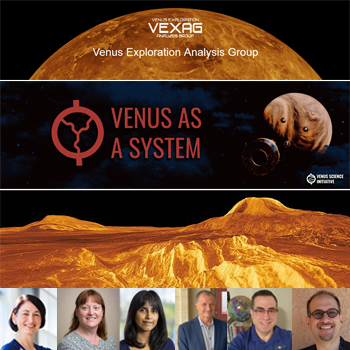
While Earth’s twin, Venus, holds the solar system planetary record for mean surface temperature (464°C), its novel atmosphere contains dramatic thermal fluctuations, with a ‘cryosphere’ layer at ~125 km altitude that is thought to reach a frigid -175°C, possibly cold enough to freeze CO2. With this unique dynamic in mind, the Venus Exploration Analysis Group (VExAG) is set to hold its annual meeting October 30-31 at the New Mexico Museum of Natural History and Science. Open to all interested scientists, VExAG reports to NASA Planetary Advisory Committee on matters which may affect goals defined by National Research Council Planetary Science Decadal Survey and Solar System Exploration Strategic Roadmap. Immediately following, Lunar and Planetary Institute is holding the third meeting of its Venus Initiative, Venus as a System: Coupled Volcanic, Tectonic, Surface, and Atmospheric Evolution November 1-3. Talks will focus on how interrelated aspects of Venusian planetary processes, with research being presented on topics including Venus interior structure and evolution, impacts, geology, atmosphere, tectonics, and ancient Venus. Participants will discuss experiments, landing sites, and future considerations for upcoming exploration missions including NASA Deep Atmosphere Venus Investigation of Noble gases, Chemistry, and Imaging (DAVINCI) and Venus Emissivity, Radio Science, InSAR, Topography, and Spectroscopy (VERITAS) slated for NET 2029 launch as well as ESA EnVision planned for 2031. (Pictured: LPI Organizing Committee members Debra Buczkowski, Tracy Gregg, Indujaa Ganesh, Thomas Widemann, Justin Filiberto, and David Grinspoon; Credits: LPI, JHU APL, University at Buffalo, indujaa.com, Paris Observatory, ResearchGate, NASA)
☆ NET Oct 30 — Tiangong Space Station, Shenzhou-16 Return to Earth, ~390-km LEO: Jing Haipeng, Zhu Yangzhu and Gui Haichao of Shenzhou 16 to return to Earth after planned 155-day mission.
☆ Oct 30 — International Space Station, Expedition 70 / USA EVA #89,~415-km LEO: Loral O’Hara and Andreas Mogensen of Expedition 70 to perform ~6.5-hour spacewalk; starts 06:30 EDT, live coverage available.
● Oct 30-31 — NASA Venus Exploration Analysis Group (VEXAG),Hybrid / Albuquerque NM and Online: VEXAG Annual Meeting; at New Mexico Museum of Natural History and Science.
☆ Oct 30 — Apollo Asteroid 525229 (2004 UU1): Near-Earth Flyby (0.027 AU).
Ongoing…
☾ Sep 6 – NET Jan/March — Smart Lander for Investigating Moon (SLIM), Lunar Landing Trajectory: SLIM Moon mission 4-6 month trajectory to soft land east of Shioli crater (13.2°S, 25.2°E) on Moon near side equatorial region.
☆ Sep 6 – NET Mar — X-Ray Imaging and Spectroscopy Mission (XRISM), ~550-km LEO: XRISM undergoing 6 month check out testing phase before start of science operations to study galactic plasma.
TUESDAY
☆ Oct 31 — Apollo Asteroid 2023 TW6: Near-Earth Flyby (0.049 AU).
☆ Oct 31 — Amor Asteroid 2023 SU: Near-Earth Flyby (0.053 AU).
WEDNESDAY
★ Nov 1 — Lucy, Inner Main Asteroid Belt: NASA spacecraft to fly within 450 km of asteroid 1999 VD57 today.
☆ Nov 1 — Deep Space, Jupiter Orbit: Juno reveals high resolution images of Jupiter moon Io after fly by at 11,645 km distance; planned to perform 1,500-km altitude flyby in February.
☆ Nov 1 — Apollo Asteroid 2023 UZ3: Near-Earth Flyby (0.006 AU).
THURSDAY
☆ Nov 2 — International Space Station, ~405-km LEO: Today marks 23 full years / start to 24th year of continuous Human occupation of ISS; first component Zarya ‘Unity’ launched Nov 20, 1998, occupation began Nov 2, 2000.
☆ Nov 2 — Aten Asteroid 2016 WY: Near-Earth Flyby (0.023 AU).
FRIDAY
o Nov 3-12 — National Space Foundation, NOIRLab, International Dark-Sky Association, AURA, Online / Global: Globe at Night November Campaign; campaign to raise awareness of light pollution by inviting citizen-scientists to measure & submit night sky brightness observations.
☾ Nov 3 — Moon: 4.9° S of Castor, 04:00; 1.44° S of Pollux, 09:00.
☆ Nov 3 — Apollo Asteroid 2016 VW2: Near-Earth Flyby (0.025 AU).
SATURDAY
☆ NET Nov 4 — International Space Station, Expedition 70 / USA EVA #90,~415-km LEO: Loral O’Hara and Jasmin Moghbeli of Expedition 70 to perform ~6.5-hour spacewalk; live coverage available.
☾ Nov 4 — Moon: 3.9° NNE of Beehive Cluster, 14:00; at last quarter, 22:38.
☆ Nov 4 — Apollo Asteroid 2023 TL31: Near-Earth Flyby (0.020 AU).
☆ Nov 4 — Apollo Asteroid 2019 UH7: Near-Earth Flyby (0.025 AU).
SUNDAY
★ Nov 5 — SpaceX, Launch Falcon 9 / SpaceX Dragon CRS 29,LC-39A, Kennedy Space Center FL: Falcon 9 rocket to launch Dragon 2 spacecraft under Commercial Resupply Services for cargo resupply mission to ISS; 12:01 EST.
☆ Nov 5 — CNSA, Launch Long March 2C / Einstein Probe, Xichang Satellite Launch Center, China: Einstein Probe set to launch to LEO to observe sky with Wide-field X-ray Telescope (WXT); developed by CAS, NAOC, IHEP, SITP with participation from ESA.
● Nov 5 — Standard Time (USA): Change clocks back 1 hour from Daylight Saving to Standard Time; does not include Hawai’i, Arizona (except the Navajo Nation), American Samoa, Guam, Northern Mariana Islands, Puerto Rico or U.S. Virgin Islands.
☆ Nov 5 — Southern Taurids Meteor Shower Peak: Appearing to radiate from constellation Taurus, Taurids are associated with Comet Encke and offer about 7 meteors per hour and travel at ~28 km/s.
At the Spokane Convention Center. The meeting will have a broad scope, with a wide-ranging program of science and workforce topics, and celebrating planetary...
Convene, connect, and collaborate at the 19th annual von Braun Space Exploration Symposium! This year’s event will spotlight how bold ideas, emerging technologies, and...
Themes include: Space & the Arctic; Space & AI; Space & International Collaboration. There is a Student Session, a Technical Session, a Frontier Session,...
Oslo Spaceport Norway offers monthly a knowledgeable speaker and opportunity for networking, 17:00-20:00 local time; free entry but registration required. Ground Control is for...
45 satellites to launch for Amazon Leo, formerly named Project Kuiper. This LEO mega constellation will offer broadband internet access with 3,276 satellites.
Occurring 31 October from 09:00-11:00 local time (16:00-18:00 HST, 19:00-21:00 PDT, 22:00-24:00 EDT on 30 October), this Galaxy Forum will be in hybrid format...
Originally planned around this date for Wenchang, China -- TBC (to be confirmed); As the only professional association for astronauts, ASE supports the advancement of...
Coordinating Division Division C Education, Outreach and Heritage The IAU Symposium on Innovative Research and Techniques in Astronomy Communication will take place from November...
Change clocks back 1 hour from Daylight Saving to Standard Time; does not include Hawai’i, Arizona (except the Navajo Nation), American Samoa, Guam, Northern...
ESWW is the main annual event in the European Space Weather and Space Climate calendar. It is an international meeting organised annually within the...
IAU Symposium: IAUS409 - A Journey Towards Effective Astronomy Communication; online and at National Astronomical Observatory of Japan, 2-21-2 Osawa Mitaka, Tokyo. Topics include:...
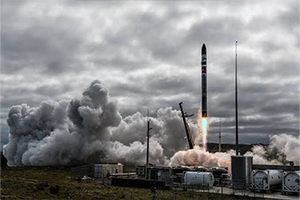
Launch Complex 1, ~39°S, Mahia Peninsula, New Zealand
iQPS Launch 9, an Earth observation satellite with Synthetic aperture radar for Japan-based imaging company iQPS, to launch on "The Sea God Surveys" mission...
Launch window 10:34am - 2:34pm local time for the 15th batch of classified satellites for a reconnaissance constellation built by SpaceX and Northrop Grumman...
Expecting senior government and executives from NASA, Firefly, Blue Origin to discuss innovation, competitive advantages and a "space industrial revolution in LEO". Capped at...
Launch Complex 1, ~39°S, Mahia Peninsula, New Zealand
iQPS Launch 10, an Earth observation satellite with Synthetic aperture radar for Japan-based imaging company iQPS, to launch on “The Mountain God Rises” mission...
Promoting the New Space Economy: The first major national meeting of the space, technology and scientific industries. Three days to connect science, industry and...