Apollo, Challenger, Columbia Astronaut Memorial Week Looks Toward Artemis Missions
In the spirit of remembrance and exploration, this weekend will begin honoring fallen space heroes with the 57th observation Apollo 1 loss of Virgil “Gus” Grissom, Edward H. White and Roger B. Chaffee on January 27; the Challenger STS-51L 38th observation loss of Francis R. “Dick” Scobee, Michael J. Smith, Christa McAuliffe, Ellison S. Onizuka, Judith A. Resnick, Ronald E. McNair, and Gregory B. Jarvis on Jan 28; and the Columbia STS-107 21st observation loss of Richard D. Husband, Laurel Clark, Ilan Ramon, William C. McCool, Michael P. Anderson, David M. Brown and Kalpana Chawla on February 1. Each of their contributions helped advance our ability to reach space and go beyond, a goal undertaken by the re-established USA National Space Council and the Artemis Moon program. Accentuating ‘In Peace for All’ Artemis 3 plans to land the first woman and person of color on the Moon during USA quarter millennial year 2026 while NewSpace commercial enterprise plays a major role in USA return to the Moon under the CLPS program, and international participation in Artemis includes technologies (Orion European Service Module), people (Canada Astronaut Jeremy Hansen on Artemis 2 flight) and policies (33 countries have signed the Artemis Accords). Though rapid development and meeting timelines are critical for mission success, going into space safely, sustainability and inclusively have rightfully been overarching 21st Century principles for the Artemis generation. (Image Credits: NASA, ILOA Hawai’i)
MONDAY
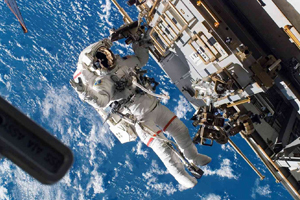
☆ Jan 22 — International Space Station,~415-km LEO: Expedition 70 seven-members working with four members of Axiom 3, planning for Cygnus cargo arrival next week, preparing for upcoming EVA for Radio Frequency Group (RFG) retrieval.
☆ Jan 22 — Tiangong Space Station, ~390-km LEO: Shenzhou-17 three-member crew welcomes Tianzhou 7 cargo ship – the 12th craft to rendezvous with TSS, and its 7,400 kg of supplies.
☆ SolarSystem: Canada-led study of lunar meteorite suggests ancient Moon (4+ bya) was richer in water than previously believed; Phase 1 NASA NIAC-awarded mission concept Sample Return from the Surface of Venus proposes ISRU propellant-powered return capsule delivered via solar airplane; PowerLight Technologies teaming with Blue Origin to develop wireless power technology for Moon under LunA-10 program.
☆ Galaxy: India X-ray space observatory XPoSat on track to commence science operations following XSPECT spectrometer first light of Cassiopeia A; 1.6M solar mass SMBH candidate observed in galaxy GN-z11 with JWST may be oldest yet discovered with origin 400M years after Big Bang; UCF and Cape Canaveral-based biotech company Vaxxinity working to develop therapies to reverse fragility effects associated with long duration human spaceflight.
o Global: Austria-based Moon Village Association to propose International Committee on Lunar Operations to UN COPUOS; Oman to begin construction of Etlaq spaceport in Duqm (19.6° N) NET 2025 with launch operations NET 2030; England / Germany study reproduces Fe – Mg interactions on Moon 3.5 bya which led to creation of high-Ti basalts.
●USA: Researchers at Caltech Space Solar Power Project analyzing data from concluded SSPD-1 demo mission; Kurt Vogel to serve as associate administrator for NASA Space Technology Mission Directorate with $1.2B budget; Space Development Agency awards L3Harris ($919M), Lockheed Martin ($890M) and Sierra Space ($740M) to build 54-satellite layer of PWSA constellation.
● Hawai’i: IfA Director Doug Simons estimates UH-Hilo space engineering facility may be completed by end of 2020s dependent on federal funding; NSF-funded Big Astronomy Planetarium Show featuring Gemini North now available for free download; Program to develop space sensors to be established by this year following MoU between UH Mānoa and MDAA of Virginia.
● = Terrestrial and… o = International terrestrial events
☾ = Moon activity
★ = Space and… ☆ = International space / astro events in Hawaii Standard Time unless noted. Add 10 hours to obtain UT (‘Universal Time’).
IAASS Working to Create International Standard for Civilian Health and Safety in Space
International Association for the Advancement of Space Safety (IAASS) workshop The Human Research Program for Civilians in Spaceflight & Space Habitation (HRP-C) is being held at Helmerich Research Center on the campus of Oklahoma State University-Tulsa Jan 23-24. IAASS is in its 19th year working to establish space safety protocols in effort “to make it possible for everyone who wishes to enter space to realize that dream through advanced science” since founding in April 2004. The upcoming workshop with stated goal is chaired by (L-R) NASA Research Psychologist Bettina Beard, who will give opening remarks and report on the planning and scope of the HRP-C. Angie Bukley of Space Safety Institute and The Aerospace Corporation is to present on Design Reference Missions and Recommendations for the HRP-C. Former NASA director / Oklahoma congressman Jim Bridenstine, whose administration shepherded the Commercial Crew Program and Commercial Resupply Services to fruition, to give talk Significance of an HRP-C: Benefits For All Nations. Italian Space Agency astronaut Roberto Vittori to give international perspective with presentation on global human space research. Global Spaceport Alliance director / New Shepard spaceflight participant George Nield and former UNOOSA director Simonetta Di Pippo will conclude the IAASS workshop with Recommendations for Implementing the HRP-C Nationally and Internationally. Sponsors include Tulsa Innovation Labs, Voyager Space Holdings, KBR, and Redwire. (Image Credits: IAASS, OSU-Tulsa, NASA)
☆ Jan 22 — Aten Asteroid 2020 YK3: Near-Earth Flyby (0.062 AU)
Ongoing…
☾ Sep 6, 2023 – NET Jan 19 — Smart Lander for Investigating Moon (SLIM), Lunar Landing Trajectory: SLIM Moon mission 4-6 month trajectory to soft land east of Shioli crater (13.2°S, 25.2°E) on Moon near side equatorial region.
☆ Sep 6 – NET Mar — X-Ray Imaging and Spectroscopy Mission (XRISM), ~550-km LEO: XRISM undergoing 6 month check out testing phase before start of science operations to study galactic plasma.
●Sep – Feb 15 — Institute for Scientist & Engineer Educators at University of California Observatories, University of Hawaiʻi,Online:Akamai Internship Program; accepting applications from STEM undergrads for 2024 session.
☆ Jan 23 — CAS Space, Launch Kinetica 1 Flight 3, Jiuquan Satellite Launch Center, China: Kinetica rocket to carry 5 Earth and spatial observation satellites manufactured by MINOSPACE to space.
☾ Jan 25 — Moon: Full Wolf Moon, 07:53; 3.5° NNE of Beehive Cluster, 14:00.
☆ Jan 25 — Apollo Asteroid 2017 BG92: Near-Earth Flyby (0.030 AU)
FRIDAY
★ Jan 26 — Virgin Galactic, Launch Galactic 06 / VSS Unity,Spaceport America NM: Launch planned for suborbital flight carrying 4 paying customers TBC: persons from Texas, California, Austria, and jointly from Ukraine and California.
☆ Jan 26 — Aten Asteroid 2011 CQ1: Near-Earth Flyby (0.028 AU)
SATURDAY
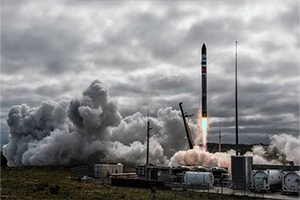
☆ Jan 27 — Rocket Lab, Launch Electron / Skylark Satellites, Launch Complex 1B, Mahia Peninsula, New Zealand: Electron rocket to carry Skylark satellite constellation for Space Situational Awareness services on “Four Of A Kind” (NorthStar 1) mission.
● Jan 27 — Apollo 1 57th Observation, Nationwide USA: Increasing space awareness and education, remembrances and events honor three Apollo 1 crew members lost during a launch pad test: Command Pilot Virgil “Gus” Grissom, Senior Pilot Edward H. White and Pilot Roger B. Chaffee.
● Jan 28 — Challenger STS-51L 38th Observation, Nationwide USA: Educational and ceremonial events held worldwide to advance space technology / education and honor 7 crew members killed in Shuttle accident 28 January 1986: Commander Francis R. “Dick” Scobee, Pilot Michael J. Smith, Astronaut Christa McAuliffe (the 1st ‘Teacher in Space’), Mission Specialists Ellison S. Onizuka, Judith A. Resnick and Ronald E. McNair, along with Payload Specialist Gregory B. Jarvis.
● Jan 28 – Feb 1 —American Meteorological Society, Baltimore MD and Online: AMS 104th Annual Meeting.
At the Spokane Convention Center. The meeting will have a broad scope, with a wide-ranging program of science and workforce topics, and celebrating planetary...
Convene, connect, and collaborate at the 19th annual von Braun Space Exploration Symposium! This year’s event will spotlight how bold ideas, emerging technologies, and...
Themes include: Space & the Arctic; Space & AI; Space & International Collaboration. There is a Student Session, a Technical Session, a Frontier Session,...
Oslo Spaceport Norway offers monthly a knowledgeable speaker and opportunity for networking, 17:00-20:00 local time; free entry but registration required. Ground Control is for...
45 satellites to launch for Amazon Leo, formerly named Project Kuiper. This LEO mega constellation will offer broadband internet access with 3,276 satellites.
Occurring 31 October from 09:00-11:00 local time (16:00-18:00 HST, 19:00-21:00 PDT, 22:00-24:00 EDT on 30 October), this Galaxy Forum will be in hybrid format...
Originally planned around this date for Wenchang, China -- TBC (to be confirmed); As the only professional association for astronauts, ASE supports the advancement of...
Coordinating Division Division C Education, Outreach and Heritage The IAU Symposium on Innovative Research and Techniques in Astronomy Communication will take place from November...
Change clocks back 1 hour from Daylight Saving to Standard Time; does not include Hawai’i, Arizona (except the Navajo Nation), American Samoa, Guam, Northern...
ESWW is the main annual event in the European Space Weather and Space Climate calendar. It is an international meeting organised annually within the...
IAU Symposium: IAUS409 - A Journey Towards Effective Astronomy Communication; online and at National Astronomical Observatory of Japan, 2-21-2 Osawa Mitaka, Tokyo. Topics include:...
Launch Complex 1, ~39°S, Mahia Peninsula, New Zealand
iQPS Launch 9, an Earth observation satellite with Synthetic aperture radar for Japan-based imaging company iQPS, to launch on "The Sea God Surveys" mission...
Launch window 10:34am - 2:34pm local time for the 15th batch of classified satellites for a reconnaissance constellation built by SpaceX and Northrop Grumman...
Expecting senior government and executives from NASA, Firefly, Blue Origin to discuss innovation, competitive advantages and a "space industrial revolution in LEO". Capped at...
Launch Complex 1, ~39°S, Mahia Peninsula, New Zealand
iQPS Launch 10, an Earth observation satellite with Synthetic aperture radar for Japan-based imaging company iQPS, to launch on “The Mountain God Rises” mission...
Promoting the New Space Economy: The first major national meeting of the space, technology and scientific industries. Three days to connect science, industry and...