Earth Day 2024: ESTEC Studies Planetary Protection, MVA Considers Earth-Moon Environmentalism, ESA Astronaut Class Graduates
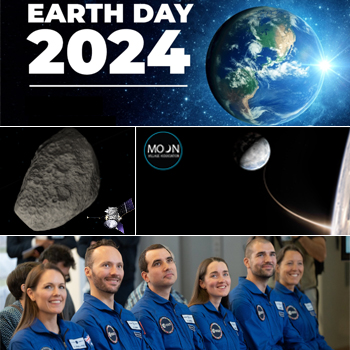
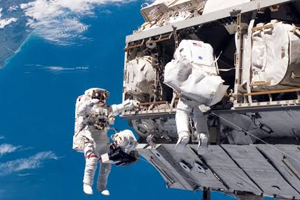
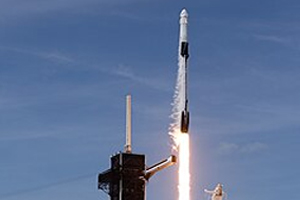
The 54th Earth Day on April 22 will be marked by protest marches, volunteer cleanups, petition drives, tree plantings and educational events around the world, with ~1B participants in 192 countries. The theme of Earth Day is Planet vs. Plastics, with the goal of eliminating single-use plastics via UN Treaty on Plastic Pollution in 2024 and reducing global plastic (synthetic polymer) production by 60% NLT 2040. Currently, over 400,000,000 tons of plastic is produced annually, impacting wildlife and human health by accumulation and introduction of endocrine-disrupting chemicals into the food chain and water supplies. Concurrently, European Space Research and Technology Centre in The Netherlands will be focusing on a different type of planetary protection – the Near-Earth Object 99942 Apophis, a 340-m asteroid which is to make a predicted 0.00025 AU (37,399.5 km) close approach to our planet on April 13, 2029. Apophis is to be the subject of in-situ analysis during OSIRIS-REx extended mission OSIRIS-APEX days after it passes Earth, the science of which will be topic of workshop Apophis T-5 Years: Knowledge Opportunity for the Science of Planetary Defense. Also on Earth Day, Moon Village Association will ponder expansion of the concept of environment in the space age and how lunar exploration may alleviate anthropogenic climate change with Climate Action & Lunar Exploration virtual panel discussion and ESA will graduate 12 reservists / 5 Astronaut candidates including first Australian Space Agency candidate Katherine Bennell-Pegg. (Image Credits: NASA, MVA, ESA)
MONDAY
☆ Apr 22 — International Space Station,~415-km LEO: Expedition 71 seven-member crew planning Russia EVA #62 this week, undocking of Dragon cargo ship with return experiments and cargo.
☆ Apr 22 — Tiangong Space Station, ~390-km LEO: Shenzhou 17 three-member crew to welcome three member of Shenzhou 18 this week for crew overlap / orientation and return to Earth near end of month.
Highlights…
o NewSpace: Landspace of China preparing next Zhuque-3 prototype for 10-km test flight / landing in June; SpaceX CEO to meet with India NewSpace companies Skyroot Aerospace, Agnikul Cosmos, Bellatrix Aerospace, Dhruva Space; Space Solar of UK advances vision of 1.7-km CASSIOPeiA space-based solar power plant with demonstration of 360° pointable energy transmission.
☆ SolarSystem: Dragonfly dual-quadcopter drone mission to explore Saturn moon Titan has NASA approval to proceed with $3.35B funding and July 2028 launch date; Electrodynamic Dust Shield developed at NASA KSC to be tested during Firefly Blue Ghost Mission 1 NET 2024.
☆ Galaxy: 33 M☉ black hole 2,000 ly distant from Earth observed by Gaia space telescope is thought to be 2nd most massive in MWG after Sgr A*; Observation of supernova in M101 via Fermi finds 1/10 of expected Gamma-rays, casting doubt on conventional understanding of cosmic ray origin; Roman Space Telescope 10-mirror Imaging Optics Assembly built by L3Harris to undergo environmental testing following successful vision test.
o Global: Carbon-Carbon engine nozzle developed at Vikram Sarabhai Space Centre in India to increase PSLV payload capacity by 15kg, reduce part mass by 67%; Switzerland and Sweden are 37th and 38th nations to join Artemis Accords; Roscosmos CEO claims methane-fueled Amur rocket will be reusable 50-100x when launched from Vostochny Cosmodrome NET Dec 2028.
●USA: Major revision to Mars Sample Return mission architecture ahead as $11B price and 2040 goal deemed too costly and late by NASA leadership; Southwest Research Institute working with Astroscale to build in-space refueling craft under US$25.5M USSF contract; Boeing Starliner undergoing flight readiness checks following transport from KSC to CCSFS and stacking atop ULA Atlas V.
● Hawai’i: 60-star system Ursa Major III/UNIONS 1 being studied with Keck, CFHT and Pan-STARRS telescopes is faintest and least massive known, may represent first of new class; UH-Hilo Astronomer Pierre Martin reflects on April 8 total solar eclipse he documented from Texas while considering travel to Spain to repeat experience in 2026.
● = Terrestrial and… o = International terrestrial events
☾ = Moon activity
★ = Space and… ☆ = International space / astro events in Hawaii Standard Time unless noted. Add 10 hours to obtain UT (‘Universal Time’).
China Celebrates National Space Day Apr 24, Launches Shenzhou 18 Crew
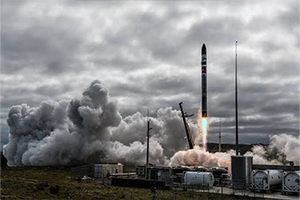
Celebrating the National Day of Space Flight in China on April 24 in honor of the nation’s first satellite Dongfanghong-1 launch in 1970, Chinese Society of Astronautics and China Space Foundation are hosting the 2024 events in Wuhan, Hubei, PRC from April 23-26. The theme Look Afar to Cosmos and Join Together for Space will have academic forums, industrial dialogues, exhibitions, science education, educational activities, roadshows, cultural interactions for “all countries around the world to cooperate to explore the universe better and make space technology benefit human society better”. There will also be an update on the Chang’E-7 mission, launching in 2026 to Shackleton Crater Rim, including its international payloads. In attendance will be Lu Bo (CNSA) and Gong Wei (Vice President of Wuhan University). Main topics are International Rule of Law in Outer Space, Small Satellite Technology, Space Science, Medical Engineering, and Commercial Aerospace Industry. Coinciding with National Day of Space Flight is the planned launch of Shenzhou 18 on Long March 2F from Jiuquan Satellite Launch Center on April 25. This to-be-named 3-member crew will dock to Tiangong Space Station for a 6-month mission and overlap for about 4 days with the Shezhou-17 crew Tang Hongbo, Tang Shengjie and Jiang Xinlin. The TSS crews will celebrate Tianhe core module reaching 3 full years in Space on April 29. (Image Credits: CSA, CSF, CNSA)
o Apr 22 — Earth Day Network,Worldwide: Earth Day; to broaden, diversify & activate the environmental movement worldwide; originally proposed to occur March 21 (first day of Spring) by creator John McConnell.
o Apr 22 — European Space Agency, European Astronaut Centre,Cologne, Germany:ESA Astronaut Graduation for Sophie Adenot, Pablo Álvarez Fernández, Rosemary Coogan, Raphaël Liégeois, Marco Sieber, Katherine Bennell-Pegg.
● Apr 15-22 —The Space Consortium, Massachusetts Space Grant, Greater Boston Chamber of Commerce, Massachusetts (statewide):Massachusetts Space Week 2024; events including space film festival, space career fair, and expanded hours of Draper Museum featuring Space Exploration and 50 Years of Innovation exhibit.
☆ Apr 24 — Rocket Lab, KAIST, NASA, Launch Electron / NEONSAT-1 / ACS3, Māhia Peninsula, New Zealand: Rocket Lab mission “Beginning Of The Swarm” to launch Earth observation satellite for Korea Advanced Institute of Science and Technology and Advanced Composite Solar Sail System for NASA from Launch Complex 1, Pad B.
☆ Apr 24 — Hubble Space Telescope, LEO: Spacecraft with 2.4-meter diameter main telescope reaches 34th full year / begins 35th year in space today, launched Apr 24, 1990; could continue operations until 2040s.
o Apr 24 — People’s Republic of China: National Day of Space Flight 2024; commemorating the launch of China’s first satellite, Dongfanghong-1 on April 24, 1970.
● Apr 24 — Ad Astra Kansas Day: Initiated in 2003 to promote public awareness of the importance of science & technology to Kansas’ growth; marked for Hubble Space Telescope launch, released by Kansas Astronaut Steve Hawley from Space Shuttle Discovery robotic arm the following day.
☆ Apr 25 — International Space Station, Expedition 71 Russia EVA #62,~415-km LEO: First spacewalk for Expedition 71 to be performed today, starts 11:00 EDT, lasts ~7 hours.
☆ Apr 25 — CNSA, Launch Long March 2F / Shenzhou 18, Jiuquan Satellite Launch Center, China: Launch of 3-member crew (to be named) to Tiangong Space Station for 6-month mission; Shezhou-17 crew to depart within ~4 days; launch window 20:49-21:29.
☆ Apr 26 — International Space Station, SpaceX Dragon Cargo SpX-30 Undocking,~415-km LEO: Return of experiments, gear, cargo to Earth via Dragon cargo craft; live coverage of undocking 13:05 EDT.
☾ Apr 26 — Moon: 0.49° ENE of Antares, 12:00.
☆ Apr 26 — Apollo Asteroid 2024 FG5: Near-Earth Flyby (0.032 AU)
SATURDAY
● Apr 27 — Ad Astra Kansas Foundation (AAKF), Space Age Publishing Company, Topeka KS: AAKF Day 2024; at Washburn University, 13:00-16:00.
☆ Apr 27 — Apollo Asteroid 2024 GR1: Near-Earth Flyby (0.050 AU)
SUNDAY
★ Apr 28 — SpaceX, Launch Falcon 9 / Galileo FM25 & FM26, LC-39A, Kennedy Space Center FL: SpaceX to launch Galileo satellites for European Commission.
☆ Apr 28 — Mars: 0.04° SE of Neptune, 19:00.
☆ Apr 28 — Apollo Asteroid 2024 GS4: Near-Earth Flyby (0.027 AU)
At the Spokane Convention Center. The meeting will have a broad scope, with a wide-ranging program of science and workforce topics, and celebrating planetary...
Convene, connect, and collaborate at the 19th annual von Braun Space Exploration Symposium! This year’s event will spotlight how bold ideas, emerging technologies, and...
Themes include: Space & the Arctic; Space & AI; Space & International Collaboration. There is a Student Session, a Technical Session, a Frontier Session,...
Oslo Spaceport Norway offers monthly a knowledgeable speaker and opportunity for networking, 17:00-20:00 local time; free entry but registration required. Ground Control is for...
45 satellites to launch for Amazon Leo, formerly named Project Kuiper. This LEO mega constellation will offer broadband internet access with 3,276 satellites.
Occurring 31 October from 09:00-11:00 local time (16:00-18:00 HST, 19:00-21:00 PDT, 22:00-24:00 EDT on 30 October), this Galaxy Forum will be in hybrid format...
Originally planned around this date for Wenchang, China -- TBC (to be confirmed); As the only professional association for astronauts, ASE supports the advancement of...
Coordinating Division Division C Education, Outreach and Heritage The IAU Symposium on Innovative Research and Techniques in Astronomy Communication will take place from November...
Change clocks back 1 hour from Daylight Saving to Standard Time; does not include Hawai’i, Arizona (except the Navajo Nation), American Samoa, Guam, Northern...
ESWW is the main annual event in the European Space Weather and Space Climate calendar. It is an international meeting organised annually within the...
IAU Symposium: IAUS409 - A Journey Towards Effective Astronomy Communication; online and at National Astronomical Observatory of Japan, 2-21-2 Osawa Mitaka, Tokyo. Topics include:...
Launch Complex 1, ~39°S, Mahia Peninsula, New Zealand
iQPS Launch 9, an Earth observation satellite with Synthetic aperture radar for Japan-based imaging company iQPS, to launch on "The Sea God Surveys" mission...
Launch window 10:34am - 2:34pm local time for the 15th batch of classified satellites for a reconnaissance constellation built by SpaceX and Northrop Grumman...
Expecting senior government and executives from NASA, Firefly, Blue Origin to discuss innovation, competitive advantages and a "space industrial revolution in LEO". Capped at...
Launch Complex 1, ~39°S, Mahia Peninsula, New Zealand
iQPS Launch 10, an Earth observation satellite with Synthetic aperture radar for Japan-based imaging company iQPS, to launch on “The Mountain God Rises” mission...