July 2024 Space Month Challenges and Opportunities
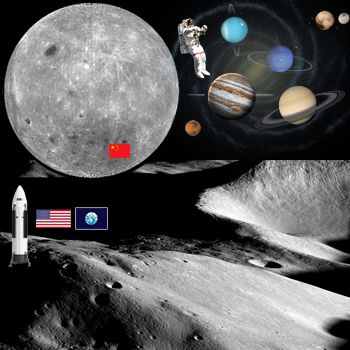
Monday start to July 2024 International Space Month begins with inspired visions of a human return to the lunar surface, possibly 2026. USA with its Artemis international and commercial partners could accelerate work for a human lunar landing near the Moon South Pole during the nation’s quarter-millennium / 250th birthday observation. China and its 12 international and 12 NGO partners advance the International Lunar Research Station for a crewed landing in the late 2020s through step-by-step robotic missions—the latest of which, Chang’E-6, deploys the first national flag on the Moon far half. The first return in the 21st Century of the USA 50 star flag landed on the lunar surface near the Malapert A crater on Intuitive Machines IM-1 mission in February 2024. Future NASA Commercial Lunar Payload Services (CLPS) and Human Landing System (HLS) task orders might be issued asap for the highly valuable, high ground at ~5,000 meters on Malapert Massif “the mountain on the Moon”. Exploration of the South Pole, being first to touchdown at the unvisited, relatively smooth summit of Malapert ~86° S to raise a flag In Peace for All could have profound effects for generations to come. Earth’s 8th continent, Luna, remains the first stop in enabling a Multi Planet Civilization while reaching for the Stars and towards Solar System Complete habitation. (Image Credits: NASA, GSFC, Arizona State University, SpaceX)
MONDAY
☆Jul 1 — International Space Station,~415-km LEO: Two members of Boeing Starliner CST-100 awaiting final review of thrusters (5 of 28 had issues) and helium gas leaks to determine date for return to Earth – could board SpaceX Dragon for return if needed; Expedition 71 seven-member crew may attempt EVA 90 this week; ISS prepared for Progress 89P launch / arrival in August after orbit altitude reboosted by Progress 87P thrusters during 23.25-minute burn.
☆Jul 1 — Tiangong Space Station, ~390-km LEO: Shenzhou 18 three-member crew working with ~5,600 kg of cargo and supplies from Tianzhou 7 while filling ship with waste for future Earth atmosphere disposal; Tianzhou 8 to launch in Sep from Wenchang; Tiangong ‘Heavenly Palace’ able to be tracked for possible viewing from Earth using Heavens Above.
☆ Jul 1 — Deep Space: Juno producing detailed images of moon Io lava lakes from 35,000 km distance with Infrared Auroral Mapper; at Jupiter since July 4, 2016, Juno’s next Perijove (63) planned to occur ~2 weeks, last Perijove (75) set for Sep 2025.
Highlights…
o NewSpace: ispace of Japan Hakuto-R Mission 2 Resilience lunar lander onto next analyses after successful 10-day thermal testing, planned to launch Winter 2024; ILOA Hawai’i aiming for flagship ILO-1 to Malapert Mountain NLT 2026 while planning precursor ILO-C to Shackleton, and lunar-focused Galaxy Forum China 2024 Hainan; under US$843M contract SpaceX to build United States Deorbit Vehicle (USDV) to control re-entry / end ISS mission possibly 2031.
☆ Galaxy: Research suggests metal-rich, older stars, such as those found in Orion-Cygnus arm, may be most hospitable for accompanying exoplanets to harbor life; ESO studying galaxy located 360M ly from Earth undergoing ‘brightening’ likely from black hole energetic material consumption; exoplanets, near Gliese 12 discovered ~40 ly away by TESS, sized between that of Earth and Venus may be considered for Webb telescope future observations.
India Space Research Organisation (ISRO) Leads a Vibrant Indian Space Environment
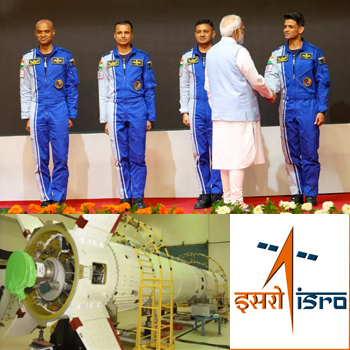
India aims to be the next country with humans in its own spacecraft, joining USA, China and (former) Soviet Union. Out of ~4,000 Indian Air Force pilots, four astronauts have been chosen for the Gaganyaan mission. Three are to enter LEO for three days and return safely in 2025; the fourth may travel to the ISS this year aboard the Axiom Space Ax-4, or NET 2025 via a USA-India collaboration. New facilities for Hindustan Aeronautics Limited will support an increase in yearly LVM-3 rocket launches to six. The new ISRO spaceport, Kulasekarapattinam, ~700 km south of Satish Dhawan Space Centre, provides a great location for launch to polar orbit. ISRO has signed an MoU with Tamil Nadu Industrial Development Corporation Limited for a 2000-acre Space Industrial and Propellant Park in Kulasekarapattinam for companies that design, manufacture and test launch vehicles, satellites and ground station equipment or foster education and skill-building programs. India has the Chandrayaan-2 orbiter entering its sixth year in lunar orbit, is the fourth country to land on the Moon, the first near the Moon South Pole, and plans launches NET October for theNASA-ISRO Synthetic Aperture Radar, NET December for its first mission to Venus and NET 2029 for a Human Moon Mission. India will host the International Astronautical Federation in New Delhi next May 7-9 for the Global Space Exploration Conference, GLEX-2025. (Image Credits: Office of Indian PM Modi, ISRO)
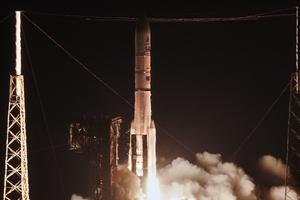
☆ Jul 1 — JAXA, Launch H3 / ALOS-4, Tanegashima Space Center, Japan: Mitsubishi Heavy Industries H-3 rocket will launch Advanced Land Observing Satellite-4 (ALOS-4) Earth observation satellite.
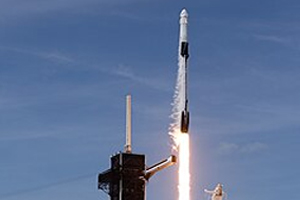
★ Jul 1 — SpaceX, Launch Falcon 9 / Starlink 8-9, SLC-40, Cape Canaveral SFS FL: Falcon 9 to launch next batch of Starlink v2-mini satellites.
o Jul 1-5 — European Astronomical Society (EAS), Kuoni Tumlare, Padova, Italy: EAS Annual Meeting; at Padova Congress.
o Jul 1 – Aug 30 — Academia Sinica Institute of Astronomy and Astrophysics, Taipei, Taiwan: 2024 Summer Student Program; students conduct original research under supervision of professional astronomers.
☾ Jul 1 — Moon: 3.8° NNW of Mars, 07:00; 3.8° NNW of Uranus, 23:00.
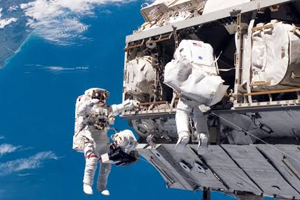
☆ NET Jul 2 — International Space Station, U.S. EVA #90,~415-km LEO: Expedition 71 planning 6.5-hour spacewalk, Tracy C. Dyson and Mike Barratt will exit Quest airlock to complete the removal of a faulty electronics box; starts 07:30 EDT, live coverage available.
o Jul 2 — CNES, Promethée Earth Intelligence, Monaco Space Affairs Office, et al, Monaco Ville, Monaco: The (2nd) Ocean Space Forum; to highlight the contribution of NewSpace technologies to ocean preservation and sustainable management.
☾ Jul 2 — Moon: 0.41° ESE of Pleiades, 07:00; 4.9° N of Jupiter, 21:00.
WEDNESDAY
☆ Jul 3 — Apollo Asteroid 585310 (2017 YZ1): Near-Earth Flyby (0.071 AU)
THURSDAY
★ Jul 4 — Juno, Jupiter Orbit: Spacecraft reaches 8th full year at Jupiter today; one-way transmission signal to Earth is 48 minutes, mission extended through September 2025.
● Jul 4 — Space Age Publishing Company, Palo Alto CA: Galaxy Forum USA 2024 Silicon Valley; featuring Pascal Lee (Mars Institute), Simon Steel (SETI Institute), Steve Durst (SPC and ILOA Hawai’i); at the Vi, 09:30-11:30am.
☆ Jul 4 — Earth: At aphelion, 1.0167 AU from Sun, 20:00.
☾ Jul 4 — Moon: 4.1° N of M35 cluster, 16:00.
FRIDAY
o Jul 5-6 — Space Generation Advisory Council, NASA, Lockheed Martin, UK Space Agency, et al, San Andrés Cholula, Puebla, México: SG [Mexico] 2024; at Instituto Nacional de Astrofisica, Optica y Electronica.
☾ Jul 5 — Moon: New Moon, 12:58.
☆ Jul 5 — Dwarf planet 1 Ceres: At opposition in longitude, magnitude 7.3, 05:00.
☾ Jul 7 — Moon: 3.2° NNE of Beehive Cluster, 09:00; with Mercury and Beehive Cluster within circle of diameter 3.20°, 09:00; 3.1° NNE of Mercury, 21:00.
☆ Jul 7 — Apollo Asteroid 2017 ND: Near-Earth Flyby (0.067 AU)
At the Spokane Convention Center. The meeting will have a broad scope, with a wide-ranging program of science and workforce topics, and celebrating planetary...
Convene, connect, and collaborate at the 19th annual von Braun Space Exploration Symposium! This year’s event will spotlight how bold ideas, emerging technologies, and...
Themes include: Space & the Arctic; Space & AI; Space & International Collaboration. There is a Student Session, a Technical Session, a Frontier Session,...
Oslo Spaceport Norway offers monthly a knowledgeable speaker and opportunity for networking, 17:00-20:00 local time; free entry but registration required. Ground Control is for...
45 satellites to launch for Amazon Leo, formerly named Project Kuiper. This LEO mega constellation will offer broadband internet access with 3,276 satellites.
Occurring 31 October from 09:00-11:00 local time (16:00-18:00 HST, 19:00-21:00 PDT, 22:00-24:00 EDT on 30 October), this Galaxy Forum will be in hybrid format...
Originally planned around this date for Wenchang, China -- TBC (to be confirmed); As the only professional association for astronauts, ASE supports the advancement of...
Coordinating Division Division C Education, Outreach and Heritage The IAU Symposium on Innovative Research and Techniques in Astronomy Communication will take place from November...
Change clocks back 1 hour from Daylight Saving to Standard Time; does not include Hawai’i, Arizona (except the Navajo Nation), American Samoa, Guam, Northern...
ESWW is the main annual event in the European Space Weather and Space Climate calendar. It is an international meeting organised annually within the...
IAU Symposium: IAUS409 - A Journey Towards Effective Astronomy Communication; online and at National Astronomical Observatory of Japan, 2-21-2 Osawa Mitaka, Tokyo. Topics include:...
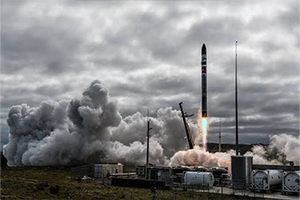
Launch Complex 1, ~39°S, Mahia Peninsula, New Zealand
iQPS Launch 9, an Earth observation satellite with Synthetic aperture radar for Japan-based imaging company iQPS, to launch on "The Sea God Surveys" mission...
Launch window 10:34am - 2:34pm local time for the 15th batch of classified satellites for a reconnaissance constellation built by SpaceX and Northrop Grumman...
Expecting senior government and executives from NASA, Firefly, Blue Origin to discuss innovation, competitive advantages and a "space industrial revolution in LEO". Capped at...
Launch Complex 1, ~39°S, Mahia Peninsula, New Zealand
iQPS Launch 10, an Earth observation satellite with Synthetic aperture radar for Japan-based imaging company iQPS, to launch on “The Mountain God Rises” mission...