Humans in Space: Space Station Activities Leading Toward Future Lunar / Deep-Space Missions
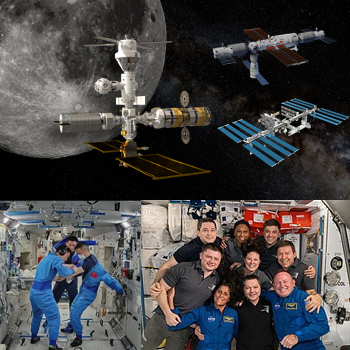
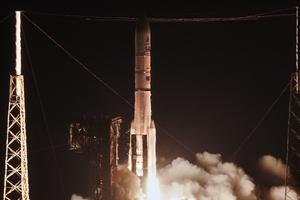
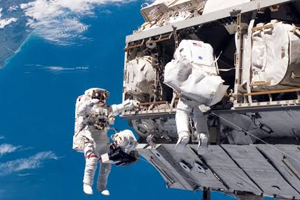
As Tiangong Space Station heads into its 4th full year in space, the International Space Station will soon enter its 25th year of continuous human occupation in November. It is currently occupied by Expedition 71 and two members of Boeing Starliner CST-100. About 3,720 kilograms of food, scientific gear and other supplies recently arrived at the station via NG-21 dubbed S.S. Richard “Dick” Scobee, and the Progress MS-28 (89P) launch is scheduled for August 15 from Soyuz 2.1 in Baikonur Cosmodrome, Kazakhstan. The SpaceX Crew 9 mission with Zena Cardman, Nick Hague, Stephanie Wilson and Alexander Gorbunov will be postponed ‘significantly’ due to the continued delay of Sunita Williams and Butch Wilmore returning to Earth. The Boeing Starliner CST-100 is awaiting final confirmations to determine a date for undocking. At present, the planned end of the ISS may come around 2031 with the recent contract of the United States Deorbit Vehicle being won by SpaceX. Commercial space stations that are under development are Haven-1 (NET 2025), Axiom Space (first module Hab One may attach to ISS in 2026), Orbital Reef (2027) and Starlab (2028). Russia has indicated it may operate its own space station ~2027. India is planning Bharatiya Antariksha Station commencing 2028. Meanwhile humanity’s first outpost beyond LEO, Lunar Gateway, is underway for first module launches in 2028 to support Artemis 4 and future missions. (Image credits: NASA, CNSA, ESA)
MONDAY
☆Aug 12 — International Space Station,~415-km LEO: Expedition 71 seven members and 2 Boeing Starliner crew working with 3D-printing experiment, troubleshooting CloudNet local area network issues, measuring crew quarters airflow in 7 areas for planned future improvements; Tracy Dyson and Jeanette Epps to participate in live-stream activities this week with public.
☆Aug 12 — Tiangong Space Station, ~390-km LEO: Shenzhou 18 three-member crew about 2.5 months from returning to Earth, planning to overlap with Shenzhou-19 crew in late October; Tianzhou 8 cargo ship with 5,600 kg of supplies being prepared at Wenchang Spacecraft Launch Site for Sep 25 (TBC) flight.
★ Aug 12 — Parker Solar Probe,Heliocentric Orbit: NASA craft comes within 6.16M km of the Sun, well within the orbit of Mercury and ~7 times closer than any previous spacecraft – reaches 6th full year / enters 7th year in space today; launched Aug 12, 2018.
☆ Aug 12 — Perseid Meteor Shower: 2nd of 2 peak nights; appearing to radiate from constellation Perseus, up to 100 meteors per hour, which are fast, bright and frequently leave persistent trains, 03:00-06:00.
o Jul 1 – Aug 30 — Academia Sinica Institute of Astronomy and Astrophysics, Taipei, Taiwan: 2024 Summer Student Program; students conduct original research under supervision of professional astronomers.
o Aug 6-15 — International Astronomical Union, South Africa National Research Foundation, African Astronomical Society, South African Institute of Physics, Academy of Science of South Africa, Cape Town and Western Cape Convention Bureau, et al,Cape Town, South Africa:XXXII (32nd) IAU General Assembly.
● = Terrestrial and… o = International terrestrial events
☾ = Moon activity
★ = Space and… ☆ = International space / astro events; in Hawaii Standard Time unless noted. Add 10 hours to obtain UT (‘Universal Time’).
SpaceX Works to Increase Starship Launches, Crucial for Artemis 3 Mission
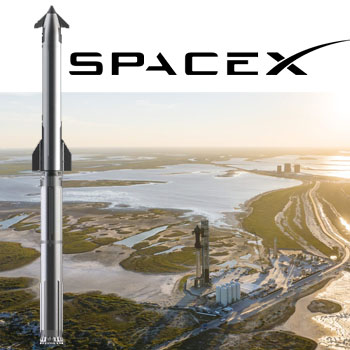
The Federal Aviation Administration is holding public hearings for response to the SpaceX request to launch yearly up to 25 Starship / Super Heavy rockets from Boca Chica in Texas – “Starbase”. Four in-person meetings will be held August 13 and 15 in two Texas towns, and a virtual meeting will be held August 20. The Starship spacecraft and Super Heavy rocket (collectively “Starship”) are being designed / developed for taking up to 100 people and cargo to Earth orbit, the Moon and beyond. Some of the original visions for Starship included landing on an icy world in the Jovian system, and on Mars. The plan is for Starship and the SpaceX Human Landing System to be ready for Artemis 3 Human Moon Landing in 2026. Currently the 5th launch of Starship (NET August) is pending FAA approval. The plan is for its Super Heavy Booster to be caught after separation by the launch tower “chopstick” arms. June 6 was the 4th test flight of the 9-meter-diameter rocket. The 50-meter-tall Starship and 71-meter Super Heavy comprise the vehicle. The Starship will have 6 Raptor engines, which are reusable, methane-oxygen, staged-combustion with twice the thrust of the Falcon 9 Merlin engine, and three are Raptor Vacuum (RVac) engines for use in the vacuum of space. The Super Heavy will be powered by 33 Raptor engines, 13 in center and 20 around the aft perimeter. (Image credits: SpaceX)
☆ NET Aug 14 — ISRO, Launch SSLV / EOS-08/Microsat-2C, Satish Dhawan Space Center, India: India Small Satellite Launch Vehicle to carry Earth observation micro-satellite for ISRO designed to test new technologies for building an Earth observation satellite in a micro-satellite bus; SSLV has payload capacity of 500 kg to Low Earth orbit or 300 kg to SSO.
★ Aug 15 — SpaceX, Launch Falcon 9 / Transporter 11 (Dedicated SSO Rideshare),SLC 4E, Vandenberg SFB CA: Next Transporter mission to carry dedicated rideshare mission of many microsatellites and nanosatellites for commercial and government customers to Sun-Synchronous Orbit (SSO).
☆ Aug 17 — Aten Asteroid (2024 OY2): Near-Earth Flyby (0.011 AU)
SUNDAY
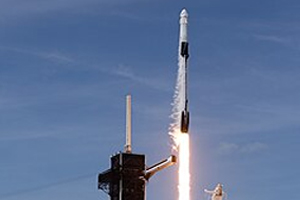
★ NET Aug 18 — SpaceX, Launch Falcon 9 / Polaris Dawn Crew Dragon,LC-39A, Kennedy Space Center FL: Jared Isaacman, Scott Poteet, Sarah Gillis and Anna Menon to reach apogee of 1,400 km, perform first commercial EVA, and test spacecraft-to-spacecraft communications with Starlink on 5-day mission.
★ Aug 18 — Juno, Perijove 64 / 63rd Science Flyby,Jupiter Orbit: NASA craft to perform Jupiter flyby during Perijove 64, its 64th close flyby of Jupiter and 63rd science flyby with instruments turned on.
● Aug 18 — The Space Show, Online / Las Vegas NV: Dr. David Livingston hosts Leonard David, space journalist for over 50 years, author of book Moon Rush: The New Space Race and others.
☆ Aug 18 — Mercury: At inferior conjunction with the Sun, 16:00.
At the Spokane Convention Center. The meeting will have a broad scope, with a wide-ranging program of science and workforce topics, and celebrating planetary...
Convene, connect, and collaborate at the 19th annual von Braun Space Exploration Symposium! This year’s event will spotlight how bold ideas, emerging technologies, and...
Themes include: Space & the Arctic; Space & AI; Space & International Collaboration. There is a Student Session, a Technical Session, a Frontier Session,...
Oslo Spaceport Norway offers monthly a knowledgeable speaker and opportunity for networking, 17:00-20:00 local time; free entry but registration required. Ground Control is for...
45 satellites to launch for Amazon Leo, formerly named Project Kuiper. This LEO mega constellation will offer broadband internet access with 3,276 satellites.
Occurring 31 October from 09:00-11:00 local time (16:00-18:00 HST, 19:00-21:00 PDT, 22:00-24:00 EDT on 30 October), this Galaxy Forum will be in hybrid format...
Originally planned around this date for Wenchang, China -- TBC (to be confirmed); As the only professional association for astronauts, ASE supports the advancement of...
Coordinating Division Division C Education, Outreach and Heritage The IAU Symposium on Innovative Research and Techniques in Astronomy Communication will take place from November...
Change clocks back 1 hour from Daylight Saving to Standard Time; does not include Hawai’i, Arizona (except the Navajo Nation), American Samoa, Guam, Northern...
ESWW is the main annual event in the European Space Weather and Space Climate calendar. It is an international meeting organised annually within the...
IAU Symposium: IAUS409 - A Journey Towards Effective Astronomy Communication; online and at National Astronomical Observatory of Japan, 2-21-2 Osawa Mitaka, Tokyo. Topics include:...
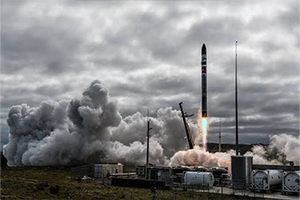
Launch Complex 1, ~39°S, Mahia Peninsula, New Zealand
iQPS Launch 9, an Earth observation satellite with Synthetic aperture radar for Japan-based imaging company iQPS, to launch on "The Sea God Surveys" mission...
Launch window 10:34am - 2:34pm local time for the 15th batch of classified satellites for a reconnaissance constellation built by SpaceX and Northrop Grumman...
Expecting senior government and executives from NASA, Firefly, Blue Origin to discuss innovation, competitive advantages and a "space industrial revolution in LEO". Capped at...
Launch Complex 1, ~39°S, Mahia Peninsula, New Zealand
iQPS Launch 10, an Earth observation satellite with Synthetic aperture radar for Japan-based imaging company iQPS, to launch on “The Mountain God Rises” mission...