International & Commercial Exploration of the Moon and Deep Space: China Hosts 2nd IDSEC / Tiandu Forum
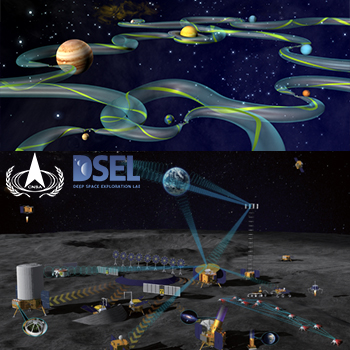
The 2nd International Deep Space Exploration Conference (2nd IDSEC) also known as the Tiandu ‘Deep Space’ Forum is being held in Huangshan, China on September 4-6 and hosted by the newly formed Deep Space Exploration Laboratory (DSEL). It plans to convene over 500 international delegates for 100 keynotes speeches, discussing the International Lunar Research Station (ILRS), developments of the Chang’E missions, and international cooperation on the Moon and beyond. In particular, the Chang’E-8 mission will be a major focus as its international payloads are to be announced, and a scientific forum on the mission will occur Sep 7-10. Preceding the IDSEC / Tiandu Forum, on Sep 4 in Harbin is the Third Workshop on ILRS by Asia-Pacific Space Cooperation Organization (APSCO), where member states will discuss their participation. Currently there are 13 nations / space agencies and 13 non-government agencies that have signed onto ILRS, which is a good start toward the goal of having participation from 50 countries and 500 international research institutions (as stated by CLEP Chief Designer Wu Weiren). Unlike ILRS, the Artemis Accords have not yet added commerce / NGO signatures to its lunar base plans per se, but the NASA Commercial Lunar Payload Services (CLPS) program has allowed commercial enterprise partners to collaborate on lunar mission (Intuitive Machines IM-1 landed on the Moon February 22). China / CNSA could do well to advance lunar commercial PPP programs in the near-future. (Image credits: CNSA, DSEL, JPL, NASA)
MONDAY
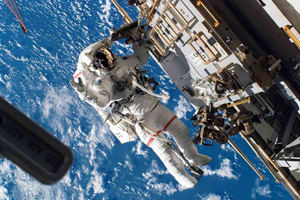
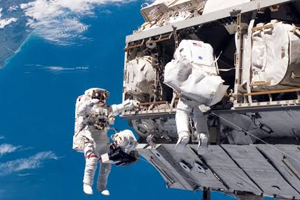
☆Sep 2 — International Space Station,~415-km LEO: Expedition 71 and Boeing Starliner members to remain 9-member crew until Sunita Williams and Butch Wilmore depart with SpaceX Crew 9 in February; Starliner CST-100 to officially return to Earth uncrewed.
☆Sep 2 — Tiangong Space Station, ~390-km LEO: Shenzhou 18 three-member crew continuing work with zebra fish, plant growth, maintaining equipment, exercising with various equipment and testing eye-hand coordination.
☆ Sep 2 — Hubble Space Telescope, LEO: Spacecraft to make visible pass from WNW to NE over Hawaiian Islands; rises 19:16:16, magnitude 2.6.
☾ Sep 2 — Moon: New Moon, 15:56.
☆ Sep 2 — Apollo Asteroid (2007 RX8): Near-Earth Flyby (0.02 AU)
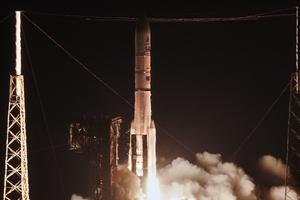
☆ Sep 3 — Arianespace, Launch Vega / Sentinel-2C, Guiana Space Centre, French Guiana: Lift off from Ariane Launch Area 1 (ELV) into SSO, Sentinel-2C is third satellite in constellation to provide high-resolution optical imagery for land services; 22:50 French Guiana Time (GMT-3).
● Sep 3 — The Space Show, Online / Las Vegas NV: Dr. David Livingston hosts Steve Howell to talk about the latest in Exoplanets.
o Sep 3-6 — European Astrobiology Network Association (EANA), ESA, Austrian Academy of Sciences IWF Space Research Institute, Graz University of Technology, et al,Graz, Austria: EANA 2024 Conference; 24th annual event to foster collaborations between Solar System and Exoplanet researchers from diverse fields; student contest; Graz University of Technology, 80-130 €.
International Space Elevator Consortium (ISEC) Envisions the Green Road to Space
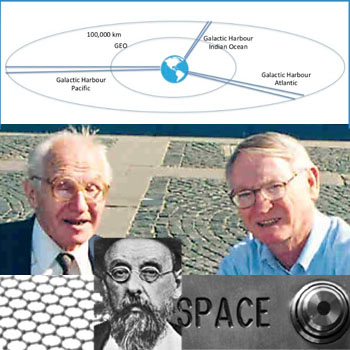
ISEC promotes a space elevator (SE) infrastructure as the efficient way to space for all of humanity. Konstantin Tsiolkovsky, deaf from age 10, determined that escape velocity from Earth is 8 km / second with a rocket fueled by liquid oxygen and nitrogen. In 1895 he envisioned a permanent 38,000 km link from Earth to orbital height. Yuri Artsutanov and Jerome Pearson are called co-inventors of the modern SE concept, although publishing independently in location and time, and both were presenters at the 2010 ISEC conference. Arthur C. Clarke published a white paper in 1981 giving further history, choice of “space elevator” (SE) as best of possible names, research to that date, possible catastrophes associated with an elevator, and his prediction “The Space Elevator will be built about 50 years after everyone stops laughing” about it. ISEC began in 2008 the work of bringing this concept to reality, and their rich website gives a wealth of information on the progression of ideas / technology, space elevators on the Moon, simulation software, video library, comprehensive SE history and publications. Topics to be addressed at the 2024 ISEC Conference include delivering power to the SE climber, tether deployment, SE in science fiction and materials science for a 100,000 km “tether”, currently envisioned as 1 meter wide and 10 μm thick, made of carbon nanotubes, hexagonal boron nitride, single crystal graphene or graphene super laminate. (L-R: Artsutanov, Tsiolkovsky, Pearson; Image credits: ISEC)
☆ Sep 4 — Mercury: At ascending node through the ecliptic plane, 13:00; At westernmost elongation; 18.0° from Sun in morning sky, 16:00.
☆ Sep 4 — Apollo Asteroid (2021 RS2): Near-Earth Flyby (0.06 AU)
THURSDAY
★ Sep 5 — Voyager 1, Interstellar Space: NASA spacecraft reaches 47th full year / begins 48th year in space today, launched Sep 5, 1977; farthest spacecraft from Earth, first to reach interstellar space.
☆ Sep 5 — BepiColombo, 4th Mercury Flyby / Gravity Assist,Mercury Flyby: European Space Agency / JAXA Mercury Planetary Orbiter (MPO) and Mercury Magnetospheric Orbiter (dubbed Mio ‘waterway or fairway’) to perform its fourth Mercury flyby today on its planned schedule to enter Mercury orbit December 5, 2025 after being launched 2018.
☾ Sep 5 — Moon: 1.05° SSW of Venus, 00:00 – occultation; At apogee (distance 406,225 km), 05:00.
☆ Sep 5 — Mars: At ascending node through the ecliptic plane, 16:00.
o Sep 7-10 — Lunar Exploration and Spaceflight Engineering Center of CNSA, Chinese Academy of Sciences, Harbin, China: Forum on the scientific exploration and research of the Chang’E-8 mission, including basics, scientific objectives / tasks / payloads, preliminary technical plan and modes of operation.
☆ Sep 7 — Saturn: At opposition in longitude, 18:00.
☆ Sep 7 — Apollo Asteroid (2022 SR): Near-Earth Flyby (0.01 AU)
SUNDAY
☆ Sep 8 — Mars: 0.85° S of M35 cluster, 09:00.
☆ Sep 8 — Mercury: 0.48° NNE of Regulus, 23:00.
☆ Sep 8 — Apollo Asteroid (2024 PL1): Near-Earth Flyby (0.06 AU)
At the Spokane Convention Center. The meeting will have a broad scope, with a wide-ranging program of science and workforce topics, and celebrating planetary...
Convene, connect, and collaborate at the 19th annual von Braun Space Exploration Symposium! This year’s event will spotlight how bold ideas, emerging technologies, and...
Themes include: Space & the Arctic; Space & AI; Space & International Collaboration. There is a Student Session, a Technical Session, a Frontier Session,...
Oslo Spaceport Norway offers monthly a knowledgeable speaker and opportunity for networking, 17:00-20:00 local time; free entry but registration required. Ground Control is for...
45 satellites to launch for Amazon Leo, formerly named Project Kuiper. This LEO mega constellation will offer broadband internet access with 3,276 satellites.
Occurring 31 October from 09:00-11:00 local time (16:00-18:00 HST, 19:00-21:00 PDT, 22:00-24:00 EDT on 30 October), this Galaxy Forum will be in hybrid format...
Originally planned around this date for Wenchang, China -- TBC (to be confirmed); As the only professional association for astronauts, ASE supports the advancement of...
Coordinating Division Division C Education, Outreach and Heritage The IAU Symposium on Innovative Research and Techniques in Astronomy Communication will take place from November...
Change clocks back 1 hour from Daylight Saving to Standard Time; does not include Hawai’i, Arizona (except the Navajo Nation), American Samoa, Guam, Northern...
ESWW is the main annual event in the European Space Weather and Space Climate calendar. It is an international meeting organised annually within the...
IAU Symposium: IAUS409 - A Journey Towards Effective Astronomy Communication; online and at National Astronomical Observatory of Japan, 2-21-2 Osawa Mitaka, Tokyo. Topics include:...
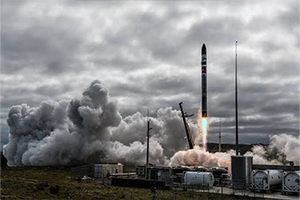
Launch Complex 1, ~39°S, Mahia Peninsula, New Zealand
iQPS Launch 9, an Earth observation satellite with Synthetic aperture radar for Japan-based imaging company iQPS, to launch on "The Sea God Surveys" mission...
Launch window 10:34am - 2:34pm local time for the 15th batch of classified satellites for a reconnaissance constellation built by SpaceX and Northrop Grumman...
Expecting senior government and executives from NASA, Firefly, Blue Origin to discuss innovation, competitive advantages and a "space industrial revolution in LEO". Capped at...
Launch Complex 1, ~39°S, Mahia Peninsula, New Zealand
iQPS Launch 10, an Earth observation satellite with Synthetic aperture radar for Japan-based imaging company iQPS, to launch on “The Mountain God Rises” mission...