September Equinox
The Sun rises exactly in east traveling through sky for 12 hours, sets exactly in west; every place on Earth experiences a ~12-hour day, 18:19 UTC (08:19 HST).
The Sun rises exactly in east traveling through sky for 12 hours, sets exactly in west; every place on Earth experiences a ~12-hour day, 18:19 UTC (08:19 HST).
Occurs 05:01 HST, 15:01 UTC; It is the winter solstice in the Northern Hemisphere, resulting in the shortest day and longest night of the year; and conversely, it is the summer solstice in the Southern Hemisphere, bringing the longest day and shortest night.
08:00 HST, 18:00 UTC; Earth perihelion is the point in its orbit when it is closest to the Sun, occurring annually in early January.
Total solar eclipse, starts 17:02:06 UTC (07:02:0 HST), will sweep across the Arctic, Greenland, Iceland, and northern Spain, offering up to 2 minutes of totality; Maximum Eclipse: 17:45:53
Begins 11:42 UTC (01:42 HST), maximum at 12:13 UTC, creating a "ring of fire" visible primarily over remote parts of Antarctica and the southern ocean; 96% of the sun obscured.
Occurs 04:45 HST / 14:45 UTC; March equinox is known as the vernal equinox (or spring equinox) in the Northern Hemisphere and as the autumnal equinox (or fall equinox) in the Southern Hemisphere; it is the equinox on the Earth when the subsolar point appears to leave the Southern Hemisphere […]
Occurs 07:30 HST / 17:30 UTC; Earth aphelion is the point in its elliptical orbit where it is farthest from the Sun, occurring annually in early July; at aphelion , Earth is about 94.5 million miles from the Sun, or roughly 3% farther than its closest point, perihelion, in January.
Lāhainā Noon is a phenomenon where the sun passes directly overhead, causing vertical objects to cast zero shadow. It occurs twice a year in the tropics. On the Big Island Lāhainā Noon will occur: Waimea: Hilo: Kailua-Kona: July 24 at 12:30 p.m. HST
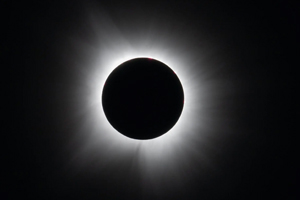
A total solar eclipse with a magnitude of 1.0386 (greatest eclipse 17:47:06 UTC) will be visible in parts of Greenland, Iceland, northern Russia, the Atlantic Ocean, Spain and a small corner of Portugal. Viewers in other places in the Northern Hemisphere also will have the chance to experience a partial solar […]
14:02 HST (04:02 UTC); the Sun rises exactly in east traveling through sky for 12 hours, sets exactly in west; every place on Earth experiences a ~12-hour day.