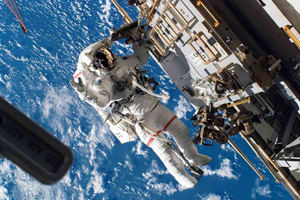
• “Save NASA” at NASA Headquarters in Washington DC, 300 E St SW, Mary W Jackson Building

    Washington DC, USA

    Expected speakers include: Rep. Suhas Subramanyam, VA-10 – House Cmte on Space, Science, and Technology Monica Gorman, Area Vice President, Goddard Engineers, Scientists and Technicians Association (GESTA) – Union representing Goddard technical civil servants Colette Delwalla, Executive Director, Stand Up For Science Dr. Mollie Manier, National Institutes of Health, signer […]
  • September Equinox

    Worldwide

    The Sun rises exactly in east traveling through sky for 12 hours, sets exactly in west; every place on Earth experiences a ~12-hour day, 18:19 UTC (08:19 HST).

  • Draconids Meteor Shower Peak

    Worldwide

    Appearing when Earth passes through the tail of Comet 21P / Giacobini-Zinner, the comet was a perihelion in 2025; speculation has arisen this may be a year with peak yielding many hundreds per hour. However, the Full Moon the day prior may compromise viewing. Most years show 10-20 per hour, […]

  • Orionids Meteor Shower Peak

    Worldwide

    One of 2 showers yearly from Halley’s Comet dust, one dust cloud from Halley's path toward the Sun, and one from its path away. Orionids appear to radiate from Constellation Orion, are swift (~67 km/sec), and can be bright and leave persistent trains. Between 10 and 75 meteors per hour […]

  • Southern Taurids Meteor Shower Peak

    Worldwide

    Known for fireballs in a swarm year such as 2025, they will have to compete with a Full Moon Nov 5. Appearing in the Constellation Taurus, they emanate from Comet Encke (2P). Traveling relatively slowly, ~27km / second, there may be 5-7 per hour. Southern Taurids are active Sep 20 […]

  • Astronaut Scholarship Foundation Fall Auction

    Online

    Online auction to raise scholarship funds, of items such as NASA Astronaut mementos. 99% / 4-star rating from Charity Navigator for Astronaut Scholarship Foundation.

  • Leonids Meteor Shower Peak

    Worldwide

    From Comet Tempel-Tuttle (55P) dust cloud, peak rate 15 per hour. Moon is 9% full.

  • Autumn Equinox for Mars North Hemisphere

    Mars Surface

    The northern hemisphere's autumn equinox on Mars marks the beginning of the autumn season in the northern hemisphere and coincides with the start of the planet's dust storm season. Unlike Earth, which has a nearly circular orbit, Mars' elliptical orbit causes its seasons to vary in length.

  • Hubble Space Telescope Visible Pass Over Hawai’i

    Low Earth Orbit (LEO)

    Appearing at brightest magnitude 0.9, traveling from SW to E, Hubble Space Telescope will appear over Hawaiian Islands from 18:56:02 to 19:03:04 HST.

  • Geminids Meteor Shower Peak

    Worldwide

    Usually strongest meteor shower yearly, up to 150 hourly. Moon is 30% full.

  • December Solstice

    Low Earth Orbit (LEO)

    Occurs 05:01 HST, 15:01 UTC; It is the winter solstice in the Northern Hemisphere, resulting in the shortest day and longest night of the year; and conversely, it is the summer solstice in the Southern Hemisphere, bringing the longest day and shortest night.

  • Ursids Meteor Shower Peak

    Low Earth Orbit (LEO)

    From Comet Tuttle (8P), with up to 10 per hour. Moon only 3% full helps viewing on peak nights; active Dec 17-26.

  • Deep Space: Jupiter System Update

    Jupiter System

    NASA Juno indicates Europa ice may be 6x deeper than thickest Antarctic ice; timing of craft planned plunge into Jupiter clouds TBD | ESA JUICE heading toward Earth gravity assist Sep 2026.

  • Quadrantids Meteor Shower Peak

    Worldwide

    The Quadrantid shower is known for its brief, intense peak, lasting only a few hours. Appearing to radiate from Constellation Quadrans Muralis, there can be 25-120 meteors per hour. Comets are traveling ~40km/second and come from the debris trail of Asteroid 2003 EH1, discovered in 2003 by the Lowell Observatory […]

  • ISS Visible Pass Over Hawai’i

    Low Earth Orbit (LEO)

    Visible at -3.9 magnitude, the International Space Station will travel over Hawaiian Islands from NW to SE, rising at 04:48:07 to 04:54:02 HST.

  • Total Eclipse of the Sun

    Global / Inter-Global

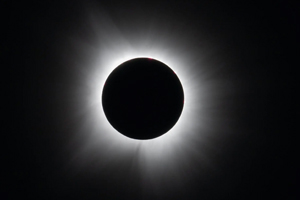
    Total solar eclipse, starts 17:02:06 UTC (07:02:0 HST), will sweep across the Arctic, Greenland, Iceland, and northern Spain, offering up to 2 minutes of totality; Maximum Eclipse: 17:45:53

  • Alpha Centaurids Meteor Shower Peak

    Worldwide

    Best-known for occasional rare, intense bursts and bright, long-lasting fireballs, they average 3–6 meteors per hour, up to 25+; body producing them is still unknown; seen in the constellation Centaurus, making them most-visible in the Southern Hemisphere with viewing also from Hawai'i and southern Florida / Texas / Asia.

  • Annular eclipse of the Sun

    Global / Inter-Global

    Begins 11:42 UTC (01:42 HST), maximum at 12:13 UTC, creating a "ring of fire" visible primarily over remote parts of Antarctica and the southern ocean; 96% of the sun obscured. 

  • Planetary Parade: 6 Planets Form a Celestial Arc

    Worldwide

    Mercury, Venus, Jupiter, Saturn, Uranus and Neptune form an arc across the sky, most visible in the west 20-40 minutes after sunset. Venus and Jupiter will be easily visible. Saturn and Mercury may be visible, but they will be lower on the horizon and set quickly. Uranus and Neptune will […]

  • Worm / Blood Moon, Total Eclipse of Moon

    Moon Orbit

    Maximum eclipse 11:33 UTC (01:33 HST); visible across North America, the Pacific, East Asia, and Australia. The total phase (totality) lasts from 11:04 to 12:02 UTC. 

  • March Equinox

    Worldwide

    Occurs 04:45 HST / 14:45 UTC; March equinox is known as the vernal equinox (or spring equinox) in the Northern Hemisphere and as the autumnal equinox (or fall equinox) in the Southern Hemisphere; it is the equinox on the Earth when the subsolar point appears to leave the Southern Hemisphere […]

  • Perihelion of Comet C / 2026 A1 (MAPS)

    Deep Space

    Predicted date for the comet to make a close pass by the Sun (perihelion), potentially triggering a sudden brightening and dramatic tail. If it survives the encounter, it may become visible to the naked eye. This event is part of a rare opportunity in April to potentially view two comets—C/2026 […]

  • Lyrids Meteor Shower Peak

    Worldwide

    Best seen from Northern Hemisphere, with a lower hourly rate in the Southern Hemisphere, Lyrids seem to stream from the Constellation Lyra. They actually derive from the debris trail of Comet C/1861 G1 Thatcher, which has a period of 415 years. Can be "fireball" bright but usually lack persistent trains, […]

  • Eta Aquariids Meteor Shower Peak

    Low Earth Orbit (LEO)

    Strongest viewed from southern tropics; north of the equator, expect medium rates of 10-30 per hour just before dawn, with this year's waning gibbous Moon reducing viewing to less than 10. Originating from Halley's Comet, seen in constellation Aquarius from April 19 to May 28, 2026.

  • Blue Moon

    Moon Orbit

    22:46 HST on May 30 | 08:46 UTC on May 31.

  • Arietids Meteor Shower Predicted Peak

    Low Earth Orbit (LEO)

    Seen in the sunrise direction in the dark hour before dawn, with a predicted rate of 60 to 200 per hour, 2026 will have a thick waxing crescent Moon so watch from a place in the Moon shadow or with a distant object that blocks moonlight. Called the most-active daytime […]