May 4-10, 2026 | Vol 45, Week 18 | Hawai`i Island, USA
Canadian Space launch conference etc.
and update on Canada lunar program (They have changed / canceled things) — half is general Canada update.
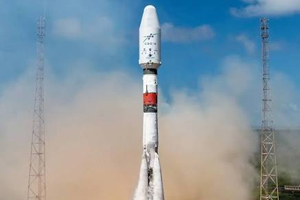
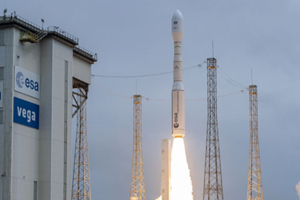
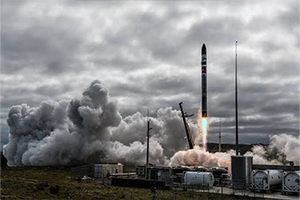
the government has a $200-million spaceport lease to not rely on foreign launch providers. $24.9 million into NordSpace, Canada Rocket Company (CRC), and Reaction Dynamics (RDX) as Phase 1 of $105 million IDEaS “Launch the North” program that transforms the East Coast into a vital, rapid-response launch hub, promoting commercial efforts to build around this hub, a dream of Maritime Launch Services when it first was scouting the area some 10 years ago. “Spaceport Nova Scotia is ready to serve as Canada’s choice for sovereign orbital launch capability. We are readying the site to welcome launch customers from around the world for commercial, civil, and defense missions. “Safe over-ocean launch corridors and access to highly sought-after orbital inclinations, providing a unique capability that only a limited number of global launch locations can support,” said Stephen Matier, President and CEO, Maritime Launch Services Inc.
NordSpace: Canada’s answer to SpaceX or Rocket Lab, $8.3-million award, the company is advancing its Tundra orbital launch vehicle—a two-stage rocket utilizing the 3D-printed, multi-fuel Hadfield engine.
Reaction Dynamics: Aurora-8 launch vehicle using storable, non-cryogenic propellants.
Canada Rocket Company has assembled a roster of engineers with over 100 years of combined orbital launch experience to meet the aggressive 2028 deadline.
confirmed Canada’s intention to become a full member of NATO’s STARLIFT initiative
Planned “Stream 2” initiative to 2030 looks for medium-lift capabilities, up to 4,000 kg into orbit.
several other domestic firms applied.
(Image Credits: )
Space Cooperation Groups Invite New Members
The Artemis Accords are subtitled Principles for Cooperation in the Civil Exploration and Use of the Moon, Mars, Comets, and Asteroids for Peaceful Purposes. Merely 7 pages of text, 63 nations have agreed to harmonious space exploration, building on Outer Space Treaty of 1967. Latvia and Jordan signed this month, Portugal and Oman in January, 7 nations in 2025, 19 in 2024, 10 in 2023, 9 in 2022 and 9 in 2020.(58!) ILOA sought to sign as an NGO and did join ILRS on July 20, 2023. Not mentioning Mars, comets nor asteroids but with similar aims of peaceful development of the Moon for science, exploration and eventual human habitation, International Lunar Research Station Guide for Partnership (ILRS) is “open to all interested countries and international partners.” Anchor nations China and Russia now have 11 other nations and numerous NGOs joining in the effort. Joining both Artemis and ILRS is in the spirit of true human collaboration in space and on the Moon. Geo-Informatics and Space Technology Development Agency (GISTDA) of Thailand signed the Accords, while National Astronomical Research Institute of Thailand (NARIT) joined ILRS. This is an inspiring move by Thailand – contributing to peaceful, scientific exploration of the Moon within both international frameworks. Phase 4 of the Chang’E program, CE-7 and CE-8 missions, are for lunar construction of ILRS starting this year. ILRS further development comes with 5 missions (ILRS 1-5) between 2030-2035, the last of which includes the establishment of “lunar-based astronomy and Earth observation capabilities”. (Image Credits: ) (251! — will be cut)
Humans in Space
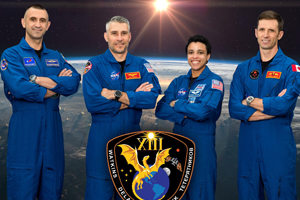
☆ International Space Station, ~415-km LEO: Expedition 74 seven members comprised of crews from Soyuz MS-28 and SpaceX Crew-12, working with ongoing science experiments in quantum physics, biomedicine, DNA radiation repair, stem cells, and computing tech, plus routine maintenance and life support tasks. A possible spacewalk preparation may occur. Also docked at ISS are Northrop Grumman Cygnus XL, Progress 94P and 95P cargo craft, as well as Bigelow Expandable Activity Module (BEAM).
☆ Tiangong Space Station, ~390-km LEO: Shenzhou-21 three-member crew now in orbit over 5 months,
◐ Lunar Enterprise News: Preparing for Artemis III (launching late 2027), core stage assembly shipped to Cape Canaveral FL. | elements of NASA’s new plan Moon base and more, 3-phase campaign, robotic lunar missions — including the VIPER rover, the LuSEE-Night radio observatory and a fleet of rocket-powered Moonfall reconnaissance drones. 2nd semi-habitable lunar infrastructure, 3rd permanent habitats and heavy-duty lunar rovers. Radioisotope batteries and nuclear reactors would be developed to power NASA’s moon base. https://www.universetoday.com/articles/nasa-lays-out-ambitious-plans-for-moon-base-and-nuclear-mars-mission
policy frameworks, international cooperation, and infrastructure development must converge to enable a viable lunar base and cislunar logistics network. Legal clarity, economic support, technical coordination, and ethical oversight must work together. https://www.chicagospace.org/policy-for-sustainable-cislunar-economy-and-lunar-base-development/
Symbiotic mixtures of fungi and compost could transform sterile lunar regolith into a soil suitable for growing crops on the moon. regolith contains no microorganisms and no organic material in general. And, while it does contain some vital nutrients, it is also full of toxic metals such as aluminum, copper and zinc. Moreover, it isn’t particularly permeable to water — a problem for when you want to water your crops. chickpea plants only flowered and produced seeds in samples that had been treated with both the vermicompost and the AMF, and which contained no more than 75% regolith. It isn’t clear how suitable the chickpeas grown in regolith are for eating https://www.space.com/astronomy/moon/making-hummus-on-the-moon-scientists-just-grew-chickpeas-in-simulated-lunar-dirt
Mike Gold: The government’s role should always be to push the envelope of what is possible. NASA should focus on returning to the moon with Artemis, and then move onward to Mars, rather than on owning and operating spacecraft for taking astronauts to and from low-Earth orbit. more ambitious exploration and science missions. If you look at the international field of play, we are in an existential competition with China over the moon: Whoever reaches the moon first to establish a permanent foothold will establish the rules of the road in space. They will, in turn, wield influence over everything from trade to national security alliances terrestrially. Whoever controls the moon will eventually control the Earth. The American private sector is our greatest tool in that competition, the best arrow in the quiver to defeat the Chinese. Inevitably, China will eventually spend more than we do on space, so we must out-entrepreneur the Chinese. Christopher Johnson: if a private rocket of a USA company gets to the Moon, 1967 Outer Space Treaty says USA still responsible. Geoff Nunn: I would also hope that the first Starship to land on the moon and return would be preserved, even though it needs a building the size of a shopping mall. https://aerospaceamerica.aiaa.org/departments/in-the-age-of-commercial-space-who-should-own-the-hardware/
Steve Altemus: Regular flights to the Moon allow systems to be tested, refined, and reused in a way that single serial missions cannot support. Each mission contributes data, informs designs, improves reliability, and reduces uncertainty for the next. Over time, that sequence builds confidence in both the hardware and the teams operating it. This cadence builds reliability in our supply chains. This cadence allows a burgeoning lunar economy to take root and flourish in the United States. https://www.intuitivemachines.com/discover/news/ignition-sets-a-challenge-the-space-industry-must-meet
lunar-rover builder Astrolab and Moon-appropriate nuclear battery builder Zeno Power have joined the Commercial Space Federation. https://commercialspace.org/news_events/commercial-space-federation-csf-welcomes-two-new-associate-members/
This experiment has successfully demonstrated the potential for “biomining,” which could be used by future astronauts exploring the Moon, to extract palladium, platinum and other elements. https://www.universetoday.com/articles/astronauts-use-bacteria-and-fungi-to-harvest-metals-in-space
ispace of Tokyo has reached agreement with a ground station communications company for involvement in ispace Lunar Connect Service. https://ispace-inc.com/news-en/?p=8731
Near-Earth Objects Close Approaches – Tue May 5: Apollo Asteroid 2026 HK4 (0.028 AU); Wed May 6: Apollo Asteroid 2026 HN1 (0.023 AU); Thu May 7: Apollo Asteroid 2026 HA4 (0.010 AU); Thu May 7: Apollo Asteroid 2026 HY2 (0.012 AU); Sat May 9: Aten Asteroid 2020 GE3 (0.028 AU)
First Woman Lands on the Moon …
NET (no earlier than)
Loading Moon data for your location...
Loading planet data...
Land your name on the Moon!
Have your name sent to the Moon for FREE on the ILO-1 lunar mission via Astrolab FLEX rover (NET 2027). You will automatically be signed up for our weekly Space Calendar.