Cislunar Developments, New Moon Vision with ULA, Lockheed, Boeing, NASA Planning
|
MONDAY Ongoing…
|
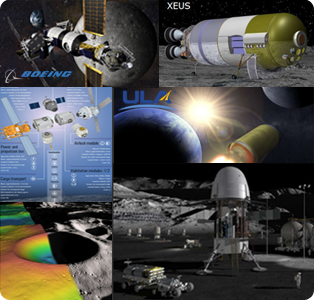 The Race to Cislunar Space is at the forefront of public / private plans, one of which may see GLXP contestants launch to the Moon before 2018. United Launch Alliance CEO Tory Bruno is promoting Cislunar 1000 transportation system utilizing Vulcan rockets, Advanced Cryogenic Evolved Stage (ACES) and Xeus VLVT lunar lander to support a potential US$3 trillion cislunar economy. He envisions commercial habitats & space metals prospecting within 5 years, space tourism & Moon mining in 15, and asteroid mining, Moon settlement and 1,000 people living in space in 20-30 years. Boeing Co. is advancing Deep Space Gateway concept powered by a Solar Electric Propulsion system for global government or commercial partnership opportunities. Lockheed Martin proposal for a cislunar habitat would take full advantage of Orion capabilities including radiation protection and life support systems. Bill Gerstenmaier stresses NASA’s immediate priority to choose technologies to be launched on SLS missions to support cislunar outpost development. U.S. administration is requesting NASA to study feasibility of sending Astronauts on the 1st SLS flight, EM-1 in 2018. NASA and ISS partners (ESA, RSA, CSA, JAXA) are outlining initial plans for Power and Propulsion Bus to launch in 2023 to elliptical Lunar orbit (1,500 km to 70,000 km altitude) to house 4 people for 90 days at a time. It could serve as hub for robotic and human landers returning from Moon surface, and may include China collaboration. (Image Credit: ULA, Boeing, NASA, Off World Consortium, Zuber, M.T., Nature, et al)
 Apr 17 —
  Apr 17 — Global: Russia
  Apr 17 — NewSpace: SpaceX
 = All times
for terrestrial events in local time unless noted.
 = All times for international terrestrial events in local time unless noted.
 = All times for space events, and…
 = All times for international space / astro events in Hawaii Standard Time unless noted. Add 10 hours to obtain UT (‘Universal Time;’ Greenwich, England).
Weekly Planet Watch – Evening Planets: Mars (W), Jupiter (ESE); Morning Planets: Venus (E), Saturn (S).
Space Debris Conferences in Germany Exploring New Solutions and Opportunities
|
Apr 17 — NASA, Online / Washington DC: Martian Moons eXploration (MMX) Neutron and Gamma-Ray Spectrometer (NGRS) Preproposal Teleconference.
Continued from…
TUESDAY
|
WEDNESDAY
Apr 19 — NASA Solar System Exploration Research Virtual Institute (SSERVI), Online / Moffett Field CA: Abstracts Due: 4th annual NASA Exploration Science Forum (2017); to be held Jul 18-20.
Apr 19-21 — Europlanet, National Centre for Scientific Research (CNRS), Pierre and Marie Curie University, Roscoff, France: Workshop: Planetary Mapping and Virtual Observatory.
Apr 19 — Mercury: At inferior conjunction, 20:00.
Apr 19 — Apollo Asteroid 2014 JO25 Near-Earth Flyby: Near-Earth Flyby at 0.012 AU or about 4.6 times the distance from Earth to Moon of estimated 650-meter wide rocky asteroid.
Apr 19 — Aten Asteroid 2014 UR: Near-Earth Flyby (0.048 AU).
THURSDAY
Apr 20 — Roscosmos State Corporation, Launch Soyuz MS-04 / ISS 50S, Baikonur Cosmodrome, Kazakhstan: Expedition 51/52 members Fyodor Yurchikhin of Roscosmos and Jack Fischer of NASA to launch to ISS.
Apr 20 — CNSA, Launch Long March 7 (Y2) / Tianzhou-1, Wenchang Satellite Launch Center, Hainan Island, China (19° N): Cargo ship to launch to Tiangong-2 space lab for 305-day mission; will test technologies related to cargo transport, propellant re-supply, rapid rendezvous, docking, other experiments; will be 2nd Long March 7 launch.
Apr 20 — Library of Congress Science, Technology and Business Division, Washington DC: Lecture: Tides: The Science and Spirit of the Ocean; by Jonathan White, NASA.
Apr 20 — AIAA San Francisco Section, Mountain View CA: Dinner Meeting: History of Lick Observatory; featuring Rod Norden Public Outreach Telescope Operator at Lick Observatory.
Apr 20-21 — United Nation’s Institute for Disarmament Research’s (UNIDIR), Secure World Foundation, Simons Foundation Canada, Geneva, Switzerland: 2017 UNIDIR Space Security Conference – The Outer Space Treaty’s 50th Anniversary: Reviewing the Regime.
Apr 20-21 — The National Academies, Washington DC: Meeting: Advice to the US Global Change Research Program.
Apr 20 — Mars: 3.4° N of Pleiades, 22:16.
Apr 20 — Apollo Asteroid 2017 GM4: Near-Earth Flyby (0.034 AU).
Apr 20 — Amor Asteroid 2017 GL4: Near-Earth Flyby (0.045 AU).
FRIDAY
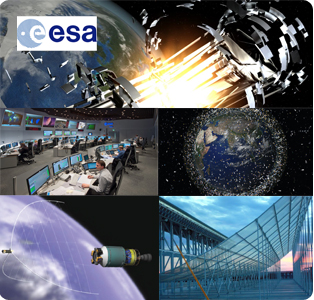
Apr 21 — Secure World Foundation, ESA, ESTEC, Darmstadt, Germany: Workshop on Principles for Safe and Responsible Active Debris Removal; during 7th European Space Debris Conference.
Apr 21 — `Imiloa Astronomy Center, University of Hawai`i – Hilo, Hilo HI: Mauna Kea Skies Talk; astronomers from Mauna Kea observatories speak about recent discoveries; this session features Submillimetre Array (SMA); 19:00 HST, US$8-10.
Apr 21-22 — University of Massachusetts, Lowell MA: Conference to Focus on Space Exploration in Next Decade: The Domestication of Space; celebrating the 60th anniversary of the start of the Space Age, focusing on Space travel, human off-Earth habitats and research that benefits life on Earth.
Apr 21 — Apollo Asteroid 2016 UW80: Near-Earth Flyby (0.072 AU).
SATURDAY
Apr 22 — Cassini, Saturn Orbit: Spacecraft scheduled to begin orbits inside Saturn D ring, the innermost ring.
Apr 22 — Earth Day Network, Worldwide: Earth Day 2017: Environmental & Climate Literacy; “Adopt the Planet” campaign; and the 2017 March for Science; to broaden, diversify & activate the environmental movement worldwide; originally proposed to occur March 21 (first day of Spring) by creator John McConnell.
Apr 22 — Ad Astra Kansas Foundation, Washburn University, Topeka KS: Ad Astra Kansas Day Space Celebration; TRAPPIST-1 Planetary Discoveries in the “Goldilocks” Zone; featuring panel led by KU Professor of Astronomy Dr. Barbara Anthony-Twarog, 19:00.
Apr 22 — British Interplanetary Society, Droitwich, United Kingdom: British Interplanetary Society Midlands Talks; at the Gardeners Arms.
Apr 22 — Skolkovo Institute of Science and Technology (Skoltech), SpaceUp, Moscow, Russia: SpaceUp Skoltech; space unconference, where participants decide the format, subject, presentations; 10:00-19:00.
Apr 22 — Lyrid Meteor Shower Peak: Lyrids derived from Comet C/1861 G1 Thatcher with period 415 years, are medium-swift (49 km/sec), often bright with persistent trains and can offer 15-20 per hour, peak 02:00.
Apr 22 — Aten Asteroid 2016 JP: Near-Earth Flyby (0.065 AU).
SUNDAY
Apr 23 — ISRO, Launch PSLV / Cartosat 2E, Satish Dhawan Space Center, Sriharikota, India: Polar Satellite Launch Vehicle, flying on PSLV-C38 mission, to launch ISRO satellite 2E of the Cartosat series, the current generation of Indian remote sensing satellites.
Apr 23-28 — EGU, Vienna, Austria: European Geosciences Union: General Assembly 2017.
Apr 23 — Moon: 5.2° S of Venus, 07:59.
Apr 23 — Apollo Asteroid 2017 GK4: Near-Earth Flyby (0.092 AU).